
Review
Marvel's Wolverine Hits Hard, but Its Claws Eventually Start Repeating Themselves
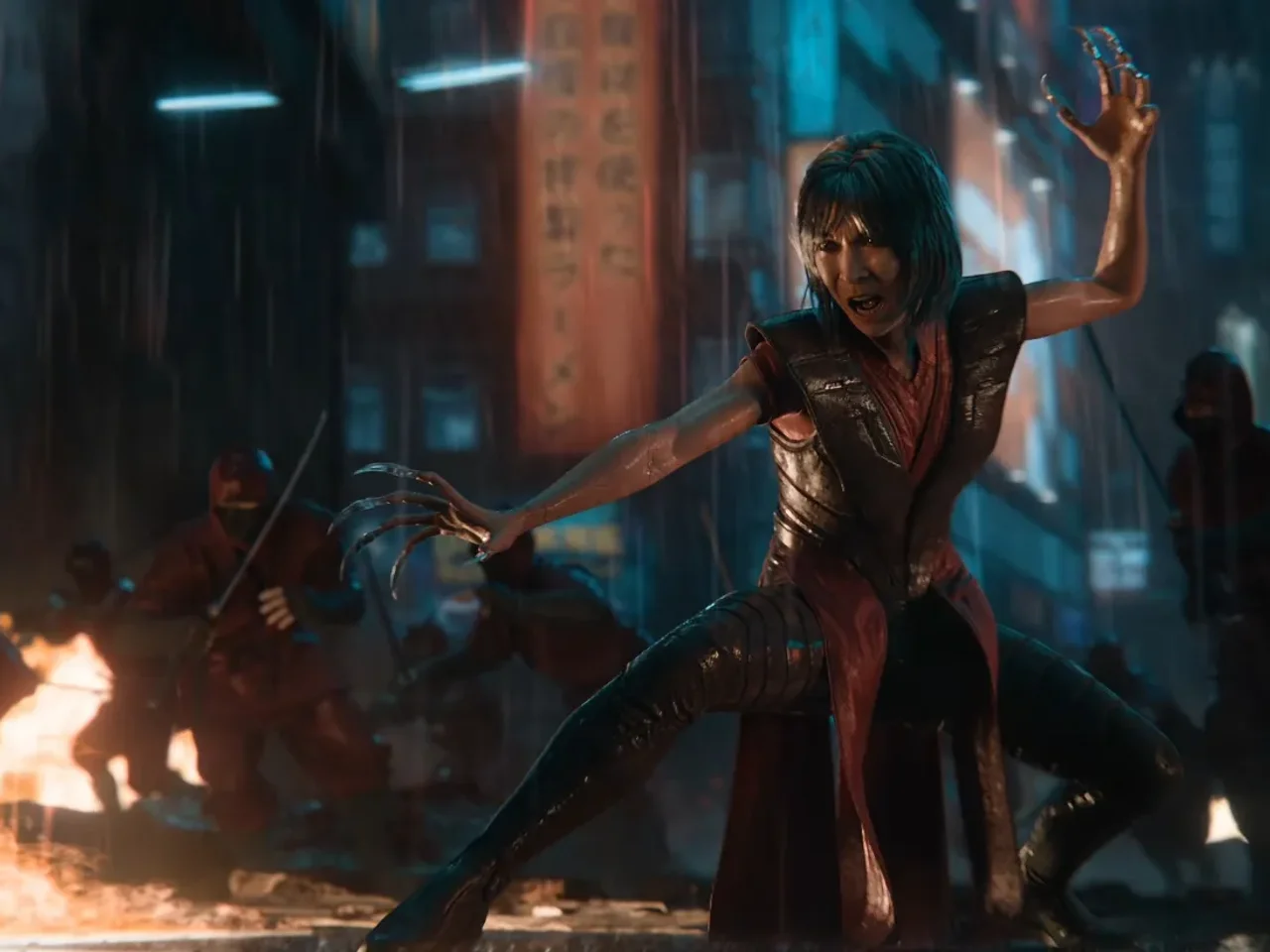
Insomniac gets the essential part right: playing Wolverine is fast, brutal and immediately satisfying. Beneath that excellent combat loop, however, sits a much simpler action game than its spectacle suggests, with repetition and heavy guidance limiting its depth.
The critical consensus around Marvel's Wolverine rests on a fairly clean contradiction: Insomniac understands exactly how Logan should feel in a fight, while reviewers are much less convinced by what the game asks him to do between those fights.
Game Informer, Shacknews and Push Square all return to the same central strength. Attacks have weight, parries and dodges keep the player engaged, Rage rewards pressure, and executions make every combat space feel far more savage than anything in Insomniac's Spider-Man games.
Aggression is the real resource
Wolverine lacks Spider-Man's aerial freedom and gadget-heavy toolset, so his combat is built around proximity. The player is strongest when pushing forward, reading attacks and keeping momentum alive rather than retreating.
Techniques and Adaptations provide some build flexibility, but the system's real success is rhythm. Logan can flow through a group with attacks, counters and finishers that feel less like disconnected cooldown abilities and more like one continuous assault.
That character fantasy is the element most consistently praised across the review corpus. Wolverine does not merely look violent. His mechanics make hesitation feel wrong.
The same clarity eventually exposes the limits
The question is whether that loop has enough mechanical growth to support the full campaign.
Push Square found the skill tree limited, while Shacknews praised the satisfaction of combat but also identified repetition as one of the game's main weaknesses. More negative reviews go further, arguing that enemy variety and player expression do not evolve enough once the initial thrill of the claws settles.
The combat is not shallow because it is bad. Its problem is that so much of Wolverine depends on it that every missing layer becomes easier to see.
Exploration never becomes an equal pillar
Outside combat, Logan tracks scents, follows footprints, navigates narrow routes and handles light environmental tasks. Nightmare challenges provide optional combat or traversal sequences and reveal fragments of his past.
Few reviews treat this material as a compelling second half of the design. It mostly exists to pace the next encounter.
Linearity itself is not the issue. Several critics welcomed a focused superhero game after years of open-world structures. The frustration comes from how visible the rails can become, with objective markers, invisible boundaries and inconsistent traversal rules making the authored path feel less elegant than it should.
At least it knows when to stop
That focus also protects the game from another kind of bloat.
Wolverine is not a map-cleaning exercise. It moves through international locations, throws in cinematic set pieces, then ends before turning itself into a service routine. New Game Plus and combat challenges provide reasons to return without pretending the game needs to last forever.
The strongest reading of Marvel's Wolverine is therefore not that it reinvents character action. It is that Insomniac has built an unusually convincing character-specific combat system and wrapped it in a simpler adventure than the production values might imply.
Those claws are worth using. They just deserved a few more kinds of problems to solve.
Strengths
- Brutal, readable and immediately satisfying melee combat
- Rage, parries and Adaptations create a strong offensive rhythm
- Animation and finishers sell Logan's physical power extremely well
- Focused campaign avoids open-world checklist bloat
Weaknesses
- Mechanical and enemy variety starts to wear thin
- Exploration and puzzles remain secondary
- Progression is frequently over-guided and visibly constrained
- Skill growth is less deep than the presentation suggests
Marvel's Wolverine succeeds first as character-driven combat design: fast, aggressive and remarkably coherent with Logan. Its weakness is building so much of the game around one excellent idea without adding enough layers to keep that idea equally surprising all the way through. A strong, focused action game, but not Insomniac's deepest design work.