
News News Official
Fable finally let people play its combat, and this is now the part Playground most needs to fix
Fable has finally crossed the line between a beautifully edited presentation and something journalists can actually play. That is good news for understanding Playground Games' reboot, but less flattering for its combat. Seamlessly weaving melee, ranged weapons and magic creates plenty of tactical possibility. The hands-on build also makes several unfinished parts much easier to see: awkward animation, unreliable targeting and opponents that do not always apply enough pressure. February 23, 2027 is still months away. Combat suddenly looks like the system that needs those months most.
 By Hugat Fable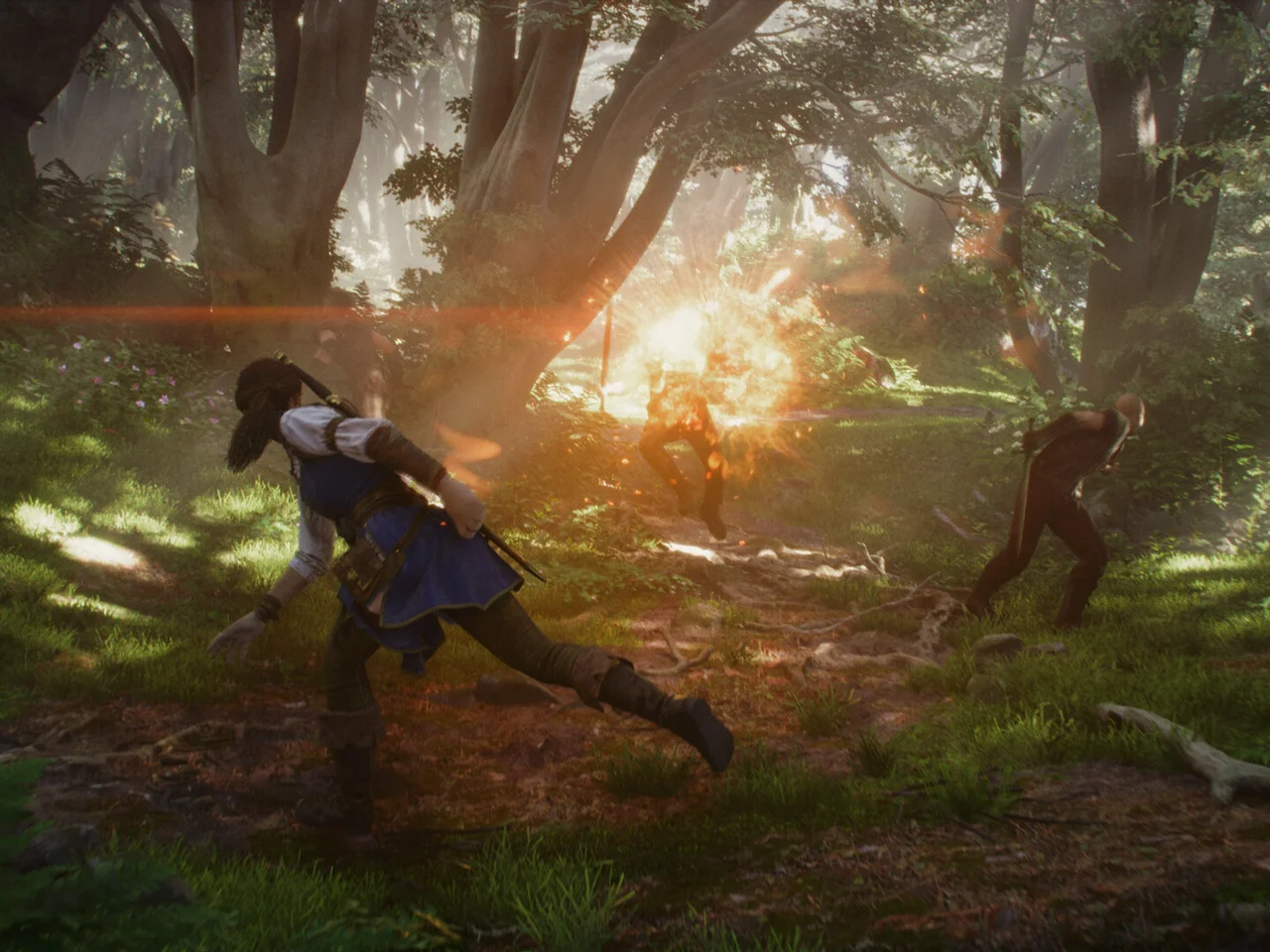
Playground Games has spent much of Fable's marketing making Albion look irresistible.
The towns are dense, individual NPCs remember reputation, property can be purchased and ridiculous magical interactions sit naturally beside the social simulation.
Combat cannot depend on that charm. A button press either feels right or it does not.
Style-weaving is a strong foundation
The reboot rebuilds Fable's traditional Strength, Skill and Will philosophy around rapid switching rather than rigid archetypes.
The Mud and Death demo combines heavy melee weapons with bows or a repeating crossbow and a selection of spells. Levitation, displacement, area attacks and the wonderfully silly ability to turn enemies into chickens all create obvious combo potential.
An enemy can be disabled with magic, finished with a hammer or picked off from range without opening a separate combat mode.
There is no shortage of things to do.
The physical feedback is less convincing
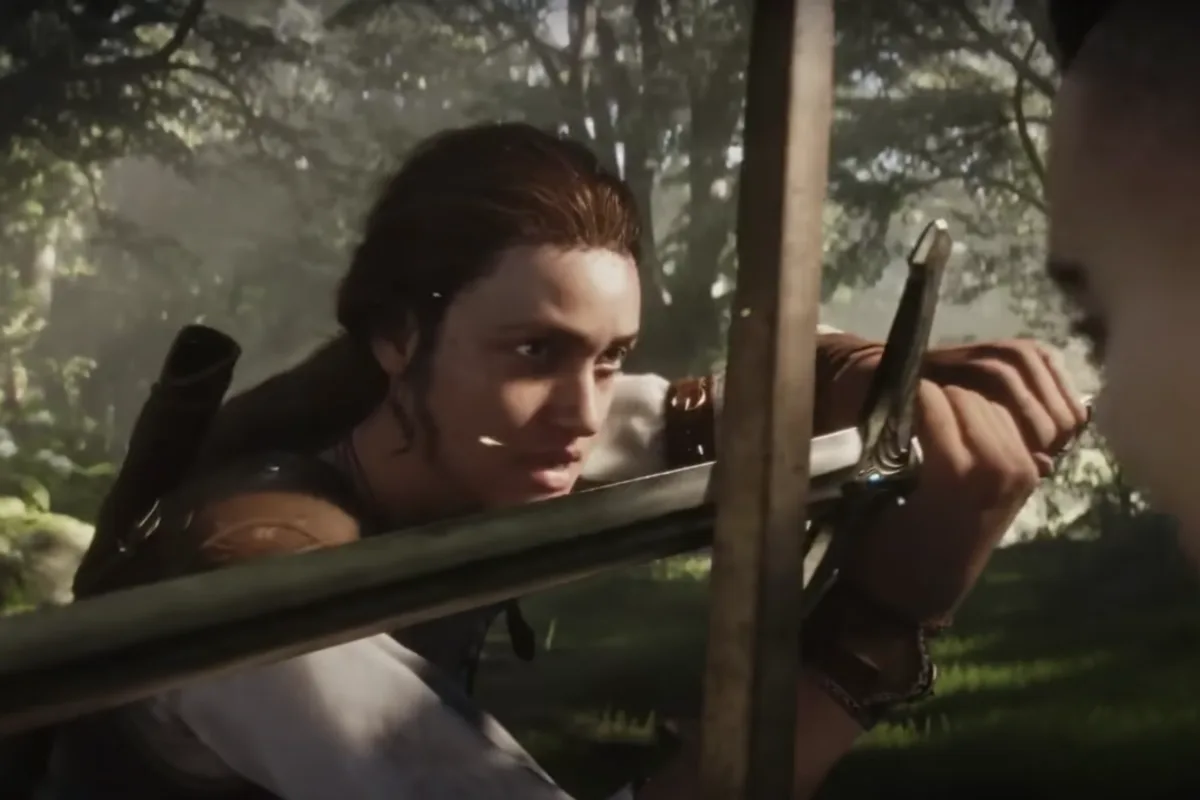
GamesRadar's hands-on identifies visible stiffness in the Hero's head and neck when transitioning into a run.
That sort of animation issue becomes particularly noticeable in a combat model built around constant transitions between ranges and abilities.
Separate Gamescom footage also attracted criticism over enemy hit reactions. Moon Studios CEO Thomas Mahler publicly argued that the footage lacked several combat fundamentals, drawing particular attention to how enemies responded to attacks.
Mahler did not play the full game for that criticism, and his comments should not be treated as a review. The underlying concern is still relevant: a powerful strike needs audiovisual and physical feedback strong enough to sell the impact.
A giant hammer should feel like more than a damage value
GamesRadar actually came away enjoying a heavy hammer despite normally preferring faster RPG weapons.
That is encouraging because strong weapon identity is exactly what this system needs.
The harder task is making weight consistently visible. Animation response, sound, timing and enemy movement all contribute to whether a hit feels substantial.
Fable does not need Souls combat. Its own weapons simply need enough feedback to justify their size.
Automatic targeting becomes a problem in crowded encounters
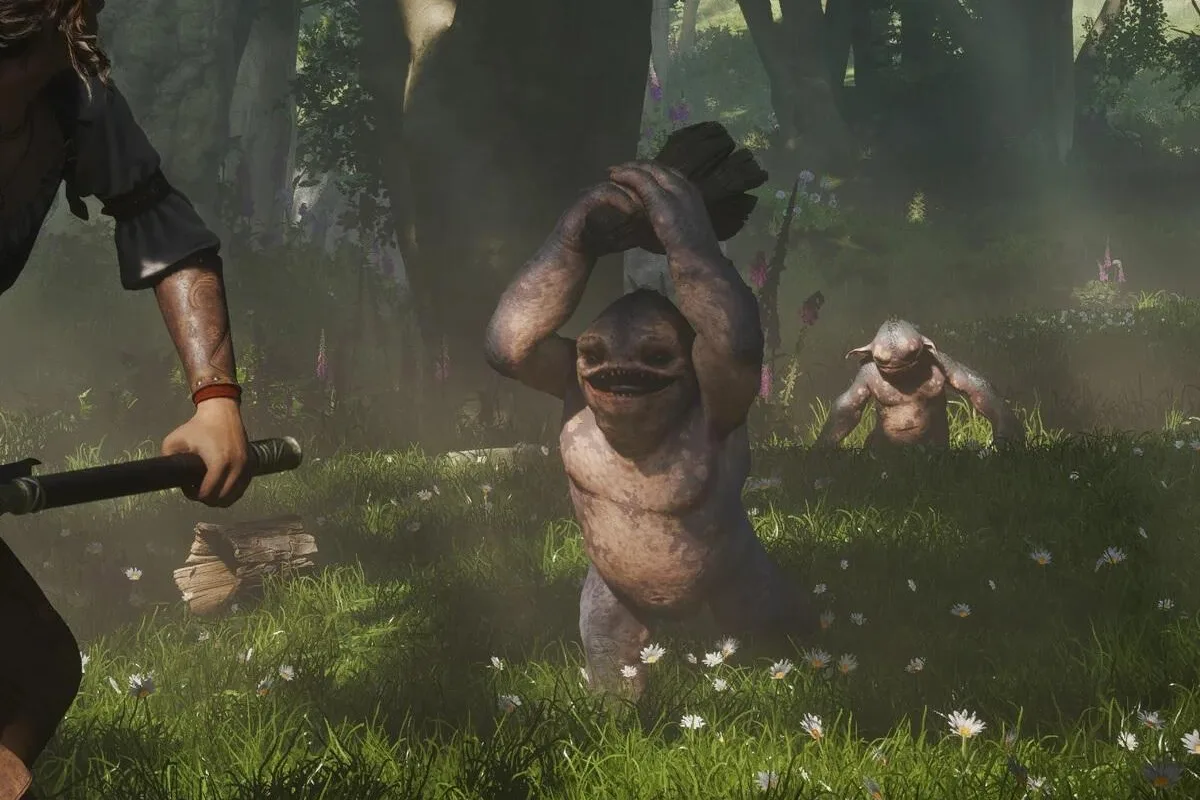
Playground deliberately throws groups of Hollow Folk and Wraiths at the player. Some enemies can create additional opponents, causing encounters to grow rapidly if priorities are ignored.
That places enormous importance on target selection.
GamesRadar reports that the apparently automatic lock-on became frustrating when the Hero was surrounded.
That problem cuts directly against style-weaving. Switching from a nearby melee enemy to a flying Wraith and then back to another threat needs to feel more effortless than switching the weapon itself.
The repeating crossbow was not consistently repeating
The Repeater Crossbow is intended to fire a fast barrage while the trigger is held.
During the hands-on, GamesRadar found that the weapon occasionally stopped behaving that way and required repeated button presses.
The preview could not determine whether this represented a bug, a mechanical feature or an input problem.
That uncertainty is exactly why it stands out in a press demo specifically designed to demonstrate combat flow.
Legend difficulty does not yet sound particularly heroic
The larger concern is enemy pressure.
GamesRadar says the demo did not feel especially challenging even on the highest Legend setting available. Crossbow-wielding skeletons could spend long enough reloading for the player to close the distance and eliminate them without much urgency.
The roster itself has useful roles. Armoured Hollow Folk resist ranged attacks, Wraiths fly and can generate more enemies, while the Lantern Keeper has a large health pool, explosive projectiles, summons and an unblockable fire attack.
The pieces are there. Their behaviour still needs tuning.
More bodies do not automatically create more difficulty
Xbox's own hands-on repeatedly emphasises how many enemies can appear at once.
That can create spectacle, but encounter pressure depends on timing and behaviour rather than raw population.
A room full of enemies waiting through long attack or reload animations is often easier to solve than a smaller group whose roles overlap intelligently.
Fable already has enough enemy types to create good priority puzzles. Their aggression needs to make those priorities matter.
Too much flexibility could create another balancing problem
Style-weaving is designed around freedom. The Hero can answer a close-range problem with melee, a distant problem with a bow and a crowd with magic.
That creates an obvious question for buildcraft.
If every Hero always has an effective response to every situation, specialisation can lose meaning.
The full progression system may provide the necessary trade-offs through equipment and skill investment, and the Gamescom demo is far too limited to settle that question. Playground will still need meaningful costs somewhere in the system if Strength, Skill and Will are supposed to represent more than three tool drawers carried simultaneously.
This is new territory for Playground Games
The studio has extraordinary experience with responsive controls, but almost all of that reputation was built through cars.
A third-person action RPG requires an entirely different collection of tiny decisions: attack distances, cancellation windows, hit reactions, camera behaviour, target selection, enemy aggression and readability during crowded fights.
Gamescom has made some of those unfinished edges visible for the first time.
Other hands-on reports are considerably more positive
Xbox Wire praises the number of viable approaches and the ability to create melee, ranged, evasive and area-of-effect builds.
Playground says its goal is explicitly to make transitions between Strength, Skill and Will smooth and responsive.
Windows Central also highlights parries, dodges, projectile returns and disarming, describing the system as significantly deeper than combat in the original trilogy.
The negative observations therefore do not amount to a consensus that Fable's combat is bad.
They show that the first playable build has exposed problems trailers could previously hide.
February is far enough away for polish to matter
Fable launches on February 23, 2027 for Xbox Series X|S, PC and PlayStation 5.
The remaining development period is significant, particularly for issues involving animation polish, AI tuning, targeting behaviour and bugs rather than an entire redesign of the underlying combat concept.
Style-weaving already has a coherent identity. Spell interactions are imaginative. Enemy archetypes provide the necessary ingredients.
The next job is making all of that feel as good as it reads.
Combat has become the reboot's biggest visible risk
Albion already has a clear visual personality. The Living Population system gives the social simulation a strong hook. Reputation and choice provide obvious differentiation from other open-world RPGs.
Combat will be repeated far more often than most individual jokes, conversations or moral decisions.
If targeting remains irritating, top-difficulty enemies remain passive and heavy weapons still lack convincing reaction, those problems will follow the player through the entire adventure.
Playground finally showed Fable without hiding behind a trailer cut.
That transparency is welcome. It also makes the February deadline look considerably more important than it did a week ago.