
News News Official
WARDOGS explained: 100 players, three armies and a war where even the taxi driver gets paid
WARDOGS entered Early Access loudly enough to overwhelm its servers and sell more than 1.25 million copies within its opening hours. The more interesting part is the game underneath that launch: 100 players, three competing teams, no rigid class system and an economy that puts a price on your rifle, your helicopter and even the ride you give another soldier.
 By Nolind WARDOGS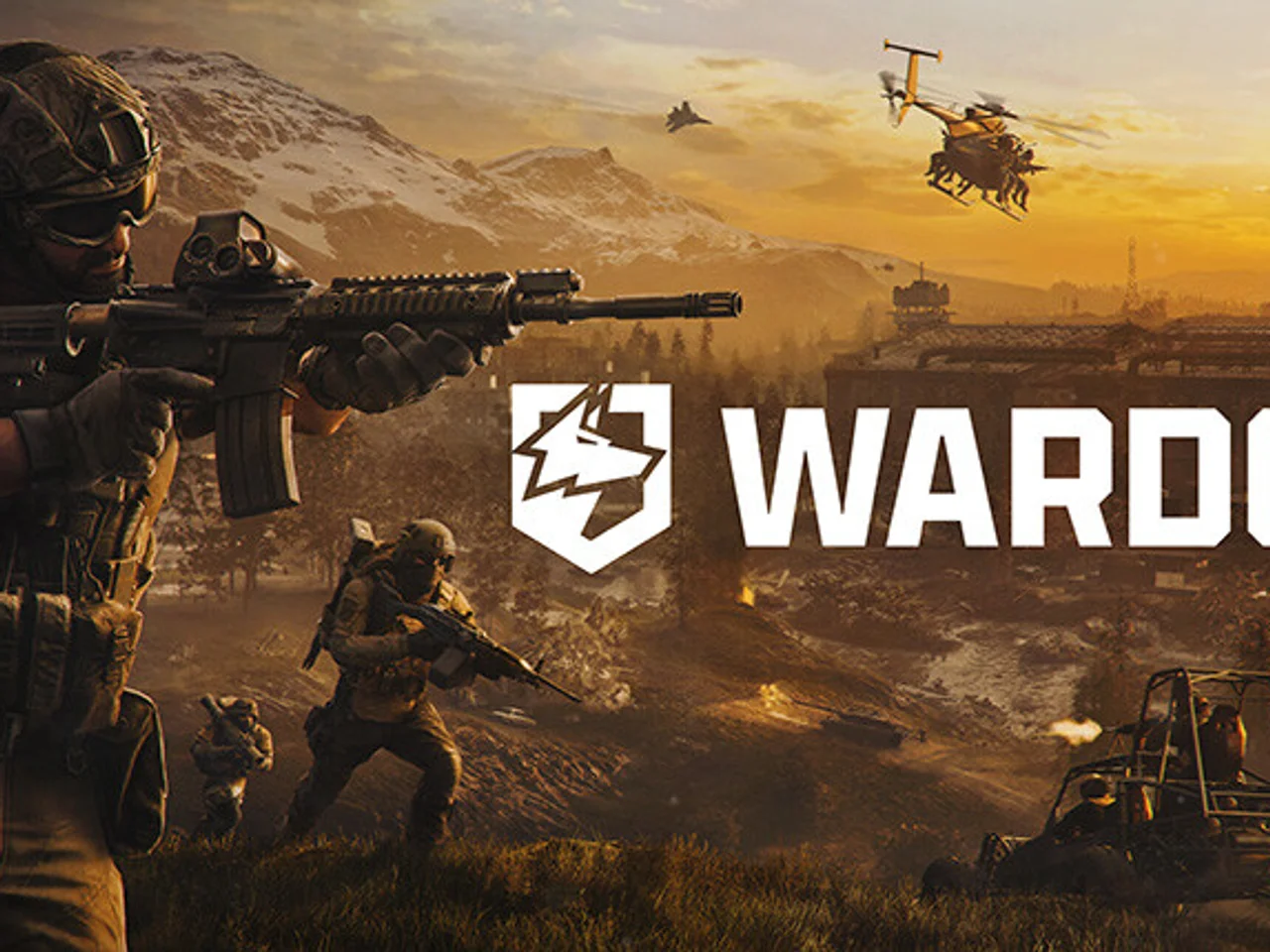
At a glance, WARDOGS looks like another game descended from Battlefield.
There are large maps, modern infantry, helicopters, vehicles, destructible structures and enough automatic weapons to make subtlety an optional extra.
The structure becomes stranger once the match begins.
Up to 100 players are split across three teams. Instead of spending the entire match rotating through a predictable chain of flags, those teams fight around a randomized 2x2km Control Zone positioned inside a much larger battlefield.
The team with the greatest presence in the zone earns points. First to 100 wins.
Three teams make the front line messy
Two armies create an understandable conflict. Three create opportunities for somebody else to benefit from almost everything you do.
Push the leading team too aggressively and the third faction may take the objective behind you. Defend against one attack and another can arrive from a direction that was irrelevant thirty seconds earlier.
That triangular structure is one of WARDOGS' strongest ideas. The scale remains immediately readable as a military FPS, while the strategic picture is less comfortable than a conventional red-versus-blue battle.
Every life has a budget
Cash is the other defining system.
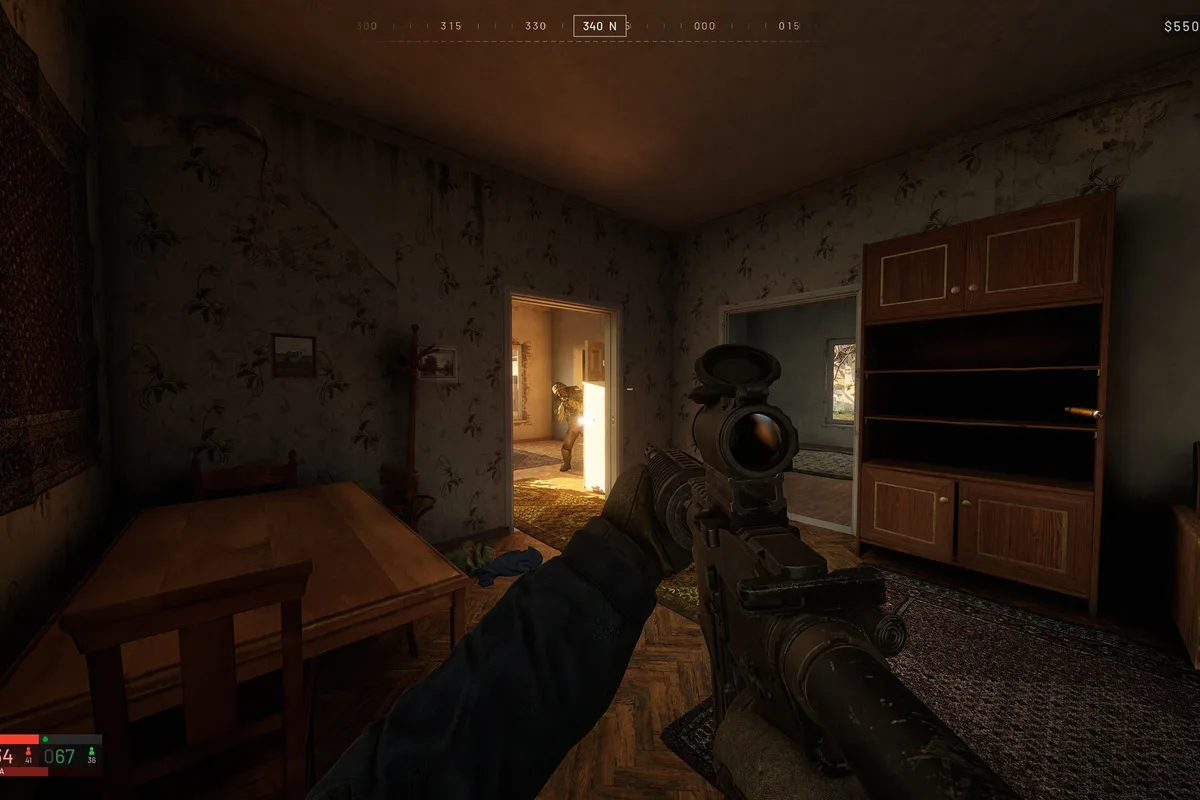
WARDOGS does not simply hand every player a fixed loadout after each death. Weapons, equipment, utility and vehicles cost money earned through play.
That gives death a financial consequence.
Running an expensive rifle, premium optic and heavy collection of equipment means putting more money at risk than entering the fight with a cheap kit.
There is a little of the extraction-shooter mindset here without turning the entire match into an extraction game.
You can respawn and keep fighting. Your wallet remembers the mistake.
Healing, driving and building can be actual careers
The clever part is that money does not belong exclusively to whoever kills the most people.
Spotting enemies can generate rewards when teammates use that information. Reviving allies pays. Building useful infrastructure pays. Transporting players earns money, and passengers can even tip drivers.
That gives helicopter pilots and logistics players an economic reason to perform jobs that traditional shooters often depend on without properly rewarding.
It is an unusually direct solution to a very old multiplayer problem: every team wants support players, while most scoreboards spend the evening congratulating the people holding rifles.
There are no rigid classes
WARDOGS does not lock players into a traditional medic, engineer, sniper or assault framework.
Equipment defines the role.
Buy medical gear and you can function as support. Bring construction tools and you can shape defensive positions. Spend money on a vehicle and an entire match can revolve around transport or fire support.
Freedom creates its own balancing problem, of course.
If everybody can buy anything, nothing guarantees that a team will buy what it actually needs.
Fifty independent players can all reach the perfectly democratic conclusion that somebody else should bring the medical equipment.
Building and destruction happen on the same battlefield
BULKHEAD combines destructible environments with construction systems.
Players can damage structures to change sightlines and defensive positions, while the opposing direction lets teams create useful infrastructure of their own.
Vehicles extend the sandbox through ground transport, armored assets and helicopters. The Early Access roadmap includes broader vehicle categories, with fighter jets among the additions BULKHEAD has discussed.
The goal is not absolute military simulation.
Gunplay is intended to feel grounded, but the systems are still tuned around making a 100-player match function as a game rather than a training exercise.
The launch was enormous and very messy
WARDOGS entered Steam Early Access on September 10.
BULKHEAD reported 1.25 million copies sold within the launch period, while concurrent Steam players climbed beyond 340,000.
The infrastructure buckled under the attention.
Players encountered login queues, failed joins, unexpected kicks and authentication problems. BULKHEAD deployed a launch stability hotfix and temporarily admitted users in controlled waves while it worked on capacity.
That turbulence hit Steam reviews quickly.
A multiplayer game's underlying design can be excellent; people who cannot connect still have a perfectly reasonable complaint.
Early Access means the current game is the foundation
WARDOGS currently costs $39.99 on Steam and remains an Early Access release.
BULKHEAD expects development in this phase to continue for roughly one to two years, although that window can change.
The studio plans more maps, weapons, vehicles and objective variations, alongside deeper progression and a stronger seasonal metagame.
The core loop is already playable: 100-player battles, three teams, cash and XP progression, vehicles, logistics, building, destruction and proximity voice chat.
Console versions are planned for 2028.
Why WARDOGS has attracted so much attention
Its appeal sits in the space between several established shooters.
Battlefield generally prioritizes accessibility and spectacle. Arma demands more patience and organization. Extraction shooters make equipment loss central but often structure the entire session around escaping alive.
WARDOGS borrows pieces from all three without fully becoming any of them.
You can sprint toward the shooting. You can coordinate a squad. You can fly transport. You can build a logistics chain. You can also lose an expensive kit because crossing an open road seemed like a good idea five seconds earlier.
Most importantly, those activities feed the same economy.
That may be the game's strongest idea.
Not the 100-player number. Not the destruction. Not even the helicopters.
WARDOGS wants the person driving the truck to feel as economically relevant to the war as the person holding the rifle.