
News News Official
Tomb Raider: Legacy of Atlantis has no interest in rebuilding 1996 room by room
Remastering the original Tomb Raider has already been done. Legacy of Atlantis therefore has a more interesting problem: how do you return to Peru, St. Francis' Folly, Egypt and the Scion without turning a 1996 classic into a playable museum?
 By Nolind Tomb Raider: Legacy of Atlantis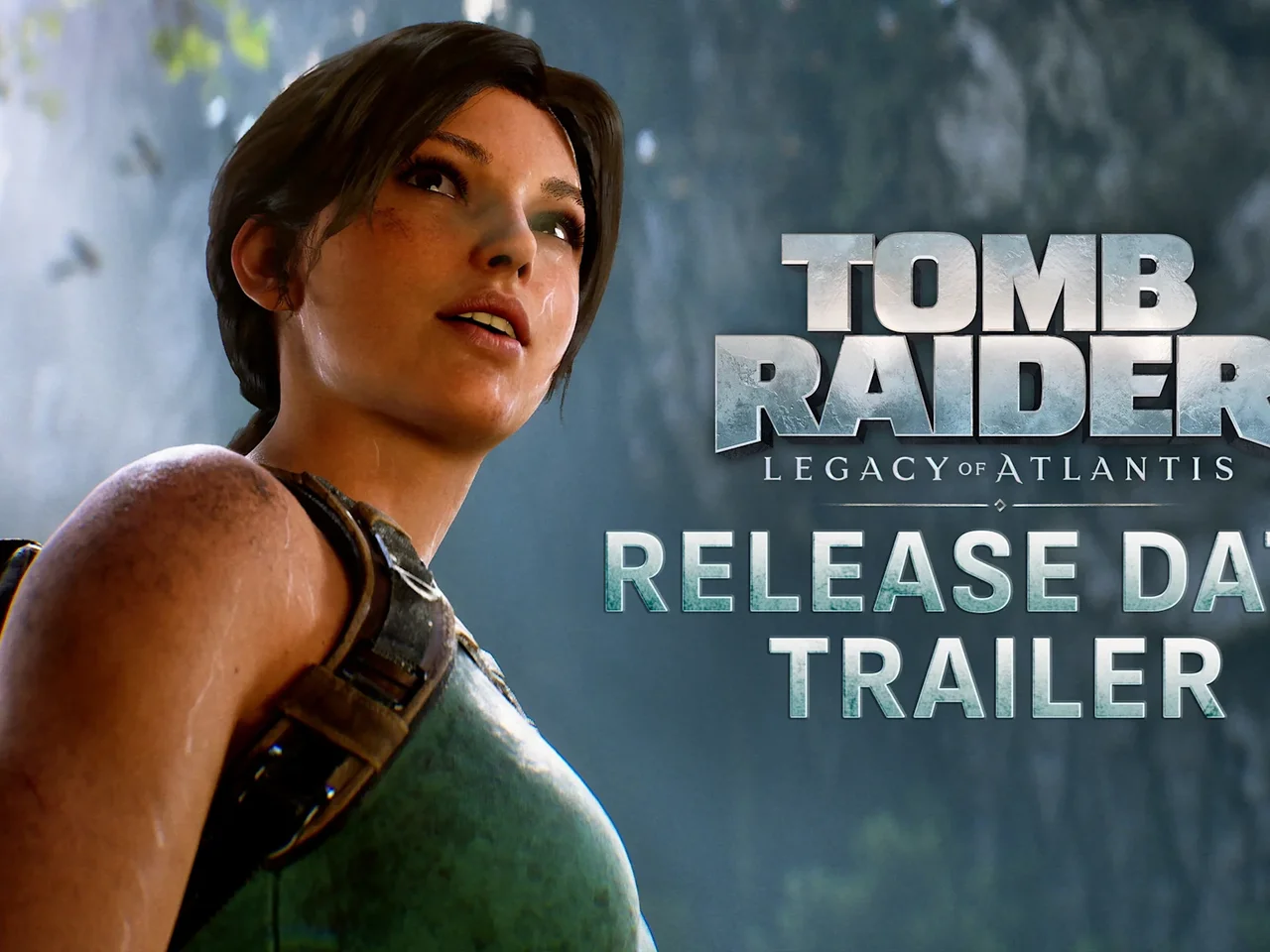
Tomb Raider: Legacy of Atlantis launches February 12, 2027 on PC, PlayStation 5, Xbox Series X|S and Nintendo Switch 2. Switch 2 pre-orders have now opened, confirming the Nintendo version for the same worldwide launch.
Crystal Dynamics consistently describes the project as a reimagining rather than a remaster.
That distinction is visible in the structure.
The route still follows Lara's original adventure through Peru, Greece, Egypt and a mysterious Mediterranean island as she hunts the scattered pieces of the Scion. The individual spaces inside that route are being rebuilt in Unreal Engine 5 with co-developer Flying Wild Hog.
Familiar locations no longer mean identical rooms
Crystal Dynamics says environments have expanded substantially rather than simply receiving new geometry and textures.
In Peru's Lost Valley, rooms that were once isolated spaces now connect more directly. Lara can approach parts of the environment from new angles, find additional routes and move through them with a modern traversal system.
Even recognizable mechanisms such as the original cog puzzle have been redesigned.
The intention is not to test whether players remember the exact position of every switch from 1996. It is to preserve the identity and logic of those locations while making exploration capable of surprising people who already know them.
St. Francis' Folly becomes “traversable grandeur”
The recently demonstrated Greece material pushes the idea further.
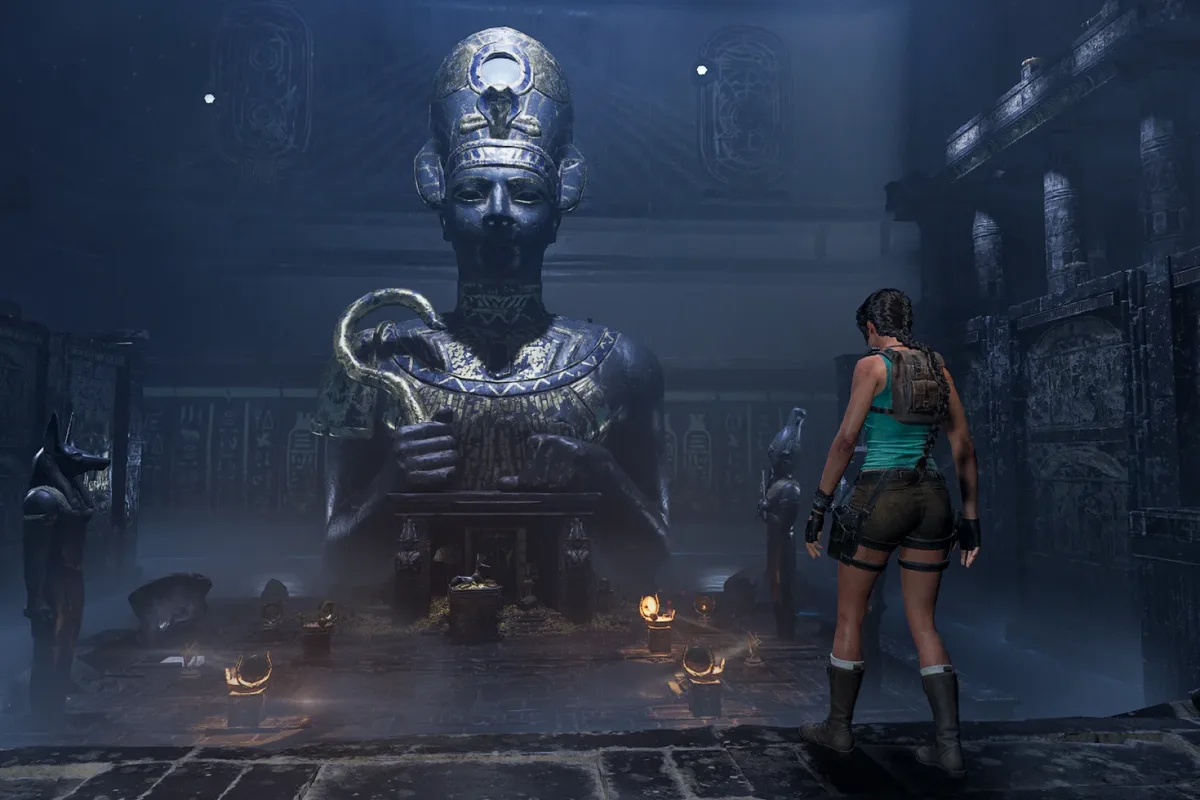
Crystal Dynamics design director Jason Epps describes the guiding principle as “traversable grandeur.” Monumental architecture is not supposed to function merely as scenery; scale itself becomes something Lara navigates.
St. Francis' Folly is an obvious test case. Its enormous vertical chamber and themed rooms were already among the original game's defining spaces.
Legacy of Atlantis increases that sense of scale while rebuilding how the individual areas connect and how their puzzles work.
Puzzle design has become more systemic
Official material now highlights water flow, reflected light, pressure plates and symbol interpretation as recurring environmental systems.
Solutions can require information Lara discovers elsewhere in the space rather than a single isolated interaction.
That is partly a consequence of modern visual density. In 1996, a strange texture or unusually shaped block could immediately signal that something mattered. A highly detailed Unreal Engine environment contains far more visual information competing for attention.
The new design therefore has to communicate interactivity differently.
Lara gains a grappling hook without losing the dual pistols
Traversal has been comprehensively modernized.
Lara climbs, leaps and uses a grappling hook to swing across gaps or manipulate elements in the environment. The rigid spatial logic behind the original game's grid-based movement has been replaced by a much more fluid system.
Combat is expanding alongside it.
The dual pistols remain central, with additional unlockable weapons and acrobatic attacks designed for encounters with wildlife, mercenaries and mythological creatures.
The Tyrannosaurus rex is also very much still involved.
The actual 1996 game still exists beside it
That gives Legacy of Atlantis more creative freedom than many remakes.
Tomb Raider I-III Remastered already provides a modern, readily available way to play the original adventure while preserving its level design.
Legacy of Atlantis does not need to replace that version.
It can disagree with it.
Expanding a tomb, moving a solution or connecting two spaces becomes easier to justify when the preserved original is still available for anyone who wants exactly that structure.
Switch 2 joins the worldwide launch
Amazon Games opened Nintendo Switch 2 pre-orders on September 9. The game will be sold digitally, while selected physical editions use Nintendo's Game-Key Card format.
The Deluxe Edition includes a post-launch story pack and a Parisian Fugitive outfit. Eligible pre-orders for Deluxe and Collector's editions also include 48-hour early access, although that benefit is unavailable in certain regions.
Amazon Games says the Switch 2 edition is fully optimized for the platform.
Detailed resolution and frame-rate targets have not yet been published, so the quality of that optimization remains something to evaluate rather than assume.
The difficult part is keeping Tomb Raider inside a modern Tomb Raider
Bigger ruins, Unreal Engine 5 rendering and more sophisticated animation are the obvious changes.
They may not be the dangerous ones.
The original Tomb Raider depended heavily on solitude, observation and the need to understand a space before Lara could safely cross it.
A remake can make movement more responsive while accidentally removing the pauses that made players study the room.
Legacy of Atlantis therefore has to modernize what aged without sanding away the friction that made exploration strange, lonely and occasionally intimidating.
Crystal Dynamics is not simply putting new textures over 1996.
The more ambitious question is what that adventure might have looked like if its designers had thirty additional years of tools.