
Review
World of Tanks in 2026: Sixteen Years Later, Battles Can Still Be Won Before the First Shot

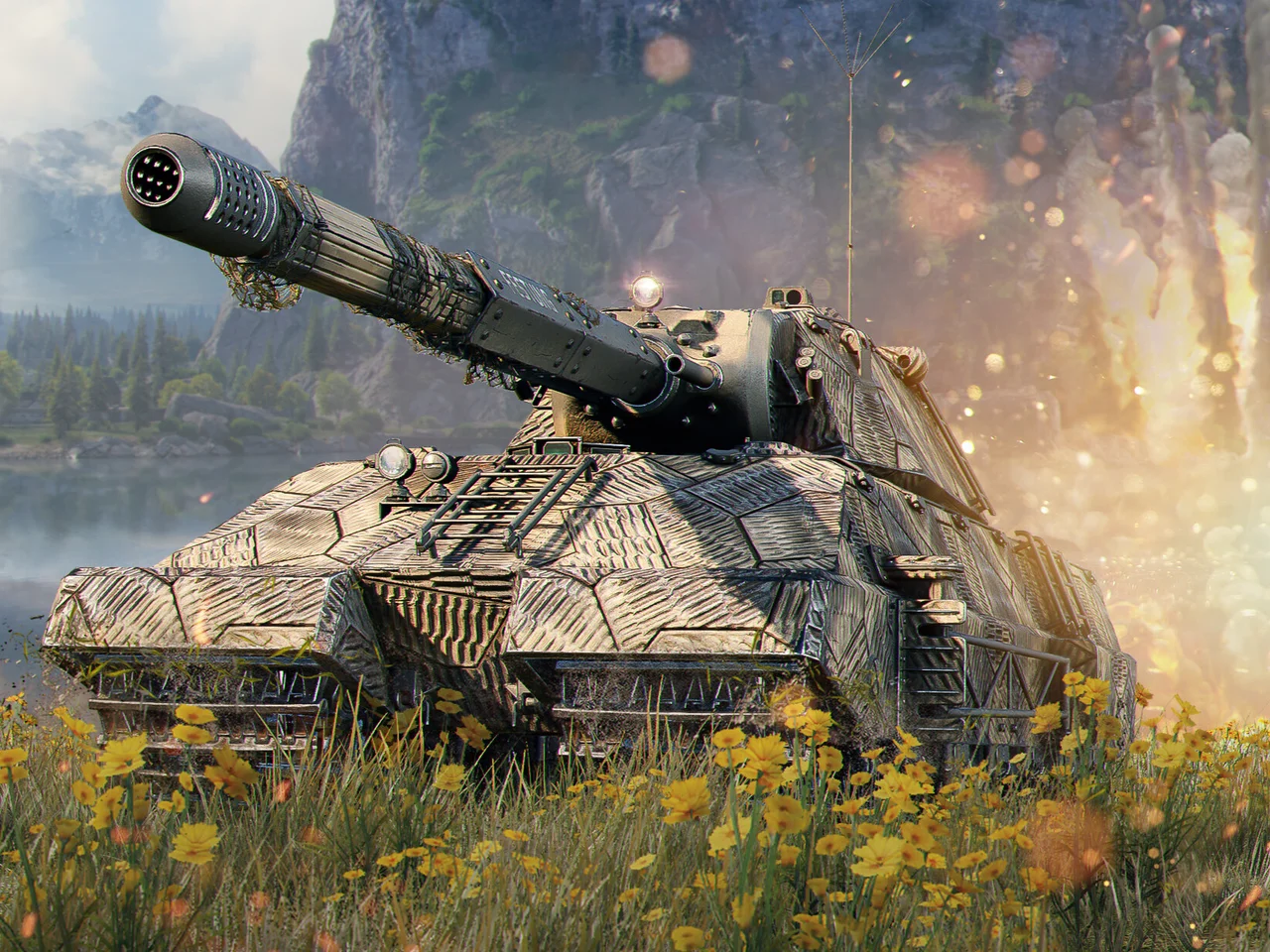
World of Tanks is still built around a brilliant idea: make armored combat immediately understandable without discarding armor geometry, spotting, firing lanes or map knowledge. Updates 2.0 and 2.4 modernized matchmaking, progression and the vehicle roster all the way to Tier XI. Its problem is no longer a lack of depth, but everything accumulated around it: grind, premium economics and occasional balance problems make learning the game far messier than actually fighting a good battle.
Driving the tank is easy; understanding the battlefield is not
GameSpot identified the foundation years ago: World of Tanks does not require simulation knowledge before it becomes playable. Movement, aiming and firing are intentionally straightforward.
Depth arrives through consequence. A hit is not automatically damage. Armor angle, effective thickness, penetration, shell choice and impact location all determine what follows after the reticle closes.
It is an arcade control scheme attached to a much less arcade decision model.
Map knowledge eventually matters more than mechanical speed
A hull-down heavy tank, an unseen tank destroyer and a light vehicle controlling vision are solving different tactical problems on the same battlefield.
Small terrain features become resources. A ridge can hide vulnerable hull armor. Vegetation can break sight lines. Leaving one route uncontested can create a flank that determines the match several minutes later.
That is why World of Tanks survives repetition better than its simple objectives suggest it should.
Update 2.0 finally disturbed systems that had become historical artifacts
Wargaming's September 2025 overhaul changed hundreds of vehicles, simplified stock progression, rebuilt the Garage interface and introduced a new matchmaker alongside Tier XI.
PCGamesN highlighted just how unusually broad the patch was. It did not erase the accumulated complexity of fifteen years, but it improved several of the places where an old account and a new account previously experienced radically different levels of friction.
The redesigned Armor Inspector is particularly useful because one of the game's most important pieces of knowledge—where a shell can penetrate—is now available inside the client rather than being delegated entirely to outside websites.
Tier XI is more convincing when it adds rules rather than statistics
The strongest Tier XI designs add mechanics that change decision-making instead of merely inflating damage and hit points.
Update 2.4 continues that direction with six additional Tier XI vehicles. The new German branch culminates in the Pz.Kpfw. Neu and its shell-calibration mechanic, while other nations receive their own alternative firing or reconnaissance systems.
It creates variety at the top end. It also gives every returning player another collection of exceptions to learn.
Light tanks expose why matchmaking details matter
Overdrive splits light tanks into Scout, Versatile and Support roles and rebalances more than thirty vehicles around those identities.
The matchmaker now attempts to mirror those functions between teams. That sounds minor until one remembers how disproportionately a skilled vision-control vehicle can influence an open map.
At Tier VII and above, teams are also restricted to no more than two light tanks, while wheeled vehicles retain tighter matching rules.
Progression is smoother, not frictionless
GameSpot was already criticizing slow unlocks and expensive premium purchases in its updated review. The modern economy has more reward channels, more events and more catch-up systems, but it is also substantially larger.
Credits, vehicle experience, Free XP, crews, equipment and seasonal currencies all feed progression. Premium time explicitly boosts both experience and credit income by 50 percent, which becomes increasingly meaningful as high-tier operating costs rise.
The game can still be played without paying. The amount of patience required is not evenly distributed.
The finest battles are often quiet before they become violent
World of Tanks is at its most interesting when both teams understand a position well enough that nobody wants to make the first mistake.
Its weakest matches are the opposite: one flank collapses, vehicle losses compound and the remaining minutes become cleanup.
Sixteen years of development have not eliminated that volatility. They have preserved enough tactical depth that learning why it happened can still be compelling.
Strengths
- Armor, spotting, penetration and positioning create genuine tactical depth
- Vehicle classes demand very different approaches to the same maps
- Strong terrain knowledge and timing can offset part of a hardware disadvantage
- Update 2.0 improved many stock configurations and progression paths
- Tier XI vehicles introduce distinct mechanics rather than merely larger statistics
- Update 2.4 further differentiates light-tank roles and aims for more symmetrical matchmaking
Weaknesses
- High-tier progression remains considerably slower without Premium time
- Credit economics can discourage experimentation near the top of the tech tree
- Accuracy and damage RNG can turn a sound decision into a frustrating result
- The knowledge gap between newcomers and veterans is enormous
- Fifteen-versus-fifteen battles can snowball rapidly with little room for recovery
- Premium vehicles, Battle Passes and other monetization layers continue to complicate perceptions of fairness
World of Tanks remains an excellent tactical game trapped inside a much more debatable live-service economy. Simple controls conceal effective armor, angling, camouflage, vision, penetration, mobility and positional knowledge, enough that a decision made thirty seconds earlier can explain an apparently instant death. Update 2.0 removed some old progression friction, improved stock vehicles and introduced Tier XI; Overdrive further refines light-tank roles and matchmaking. Progression is still lengthy, the economy strongly encourages Premium use, and particular vehicles or ammunition choices continue to fuel balance arguments. When thirty players meaningfully interact with a map, World of Tanks can still be superb. When a match collapses within minutes or a newcomer is simply trying to understand why a shell failed, its accumulated age becomes much easier to see.