
News News Official
No Man’s Sky finally rebuilt space itself — Cosmos turns the old void into somewhere you can actually live
No Man’s Sky has rebuilt almost everything around its universe at least once. Planets changed. Base building appeared. Multiplayer grew. Ships became customizable. Space itself somehow remained comparatively familiar. Cosmos finally makes the distance between planets a destination instead of a corridor.
 By Hugat No Man's Sky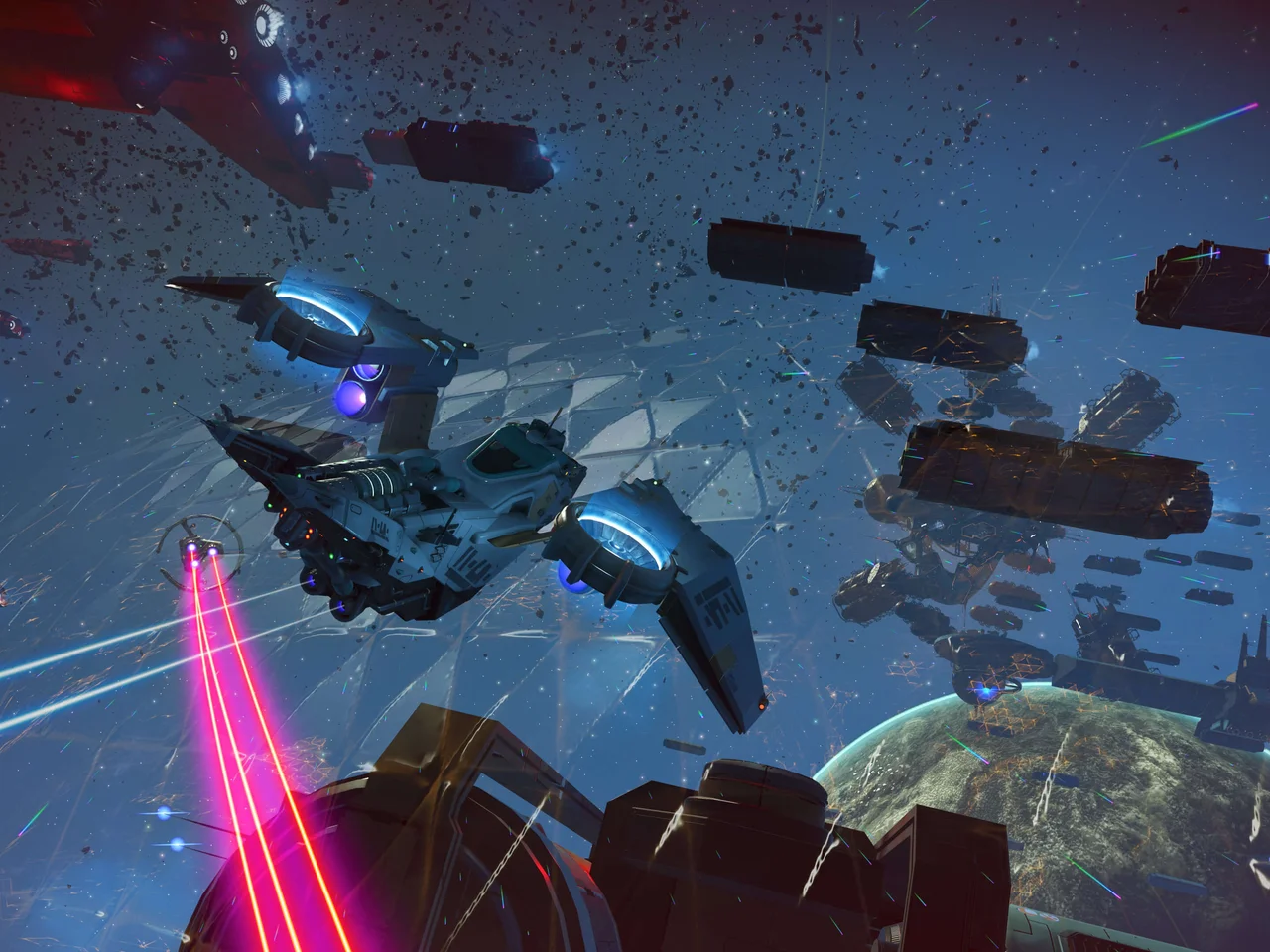
Cosmos launched as a free update on September 9 and moves No Man’s Sky to version 7.0.
Hello Games calls it one of the biggest updates the game has received.
The motivation is surprisingly straightforward. Sean Murray says that despite No Man’s Sky being understood primarily as a space game, the team had never fundamentally overhauled space since launch.
Cosmos is the answer ten years later.
A solar system now has places instead of empty distance
The new local Star System Map changes how players initially read a system.
A quick scan can reveal planets, the station and fixed deep-space locations that can be marked for navigation.
Those destinations include rocky and icy asteroid belts, alien outposts, biologically infested facilities, debris fields, orbital platforms and procedurally varied hulks.
The simple effect is important: space now has geography.
Salvage is physical, valuable and capable of exploding
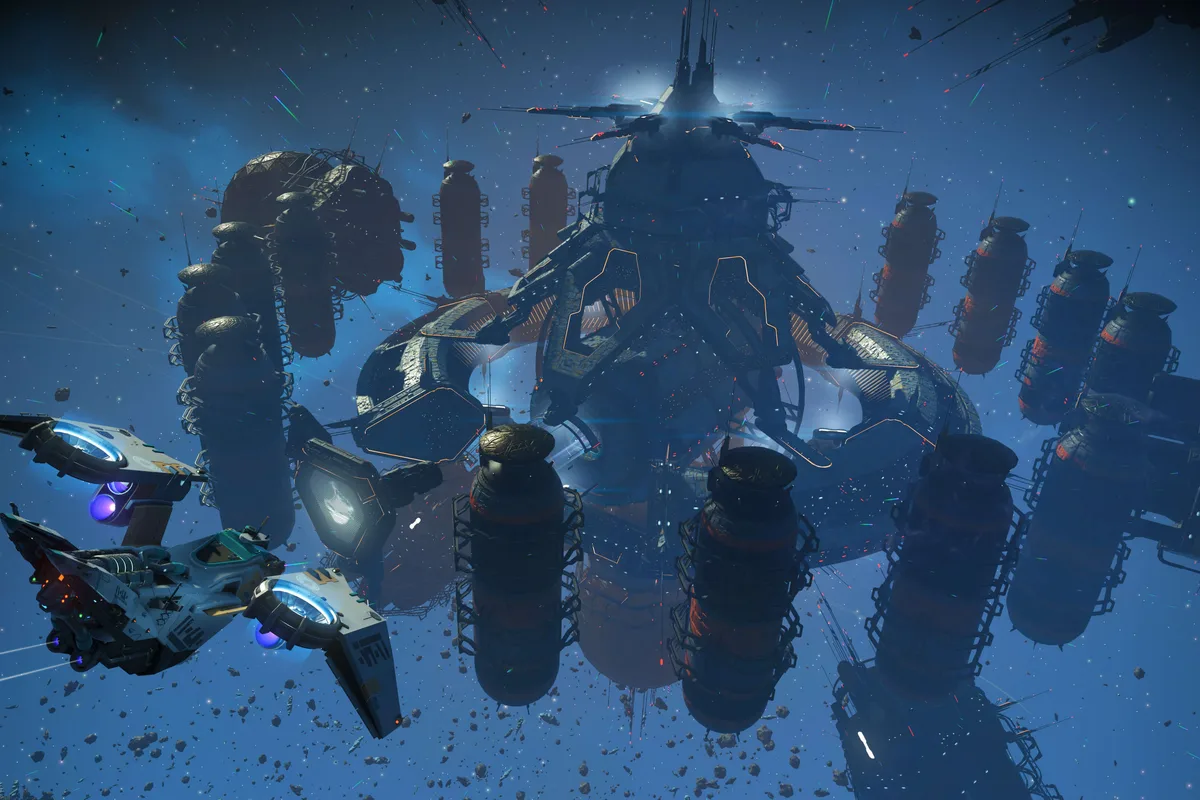
The hulks provide one of Cosmos' clearest new gameplay loops.
Players can spacewalk through colossal derelicts, use the Gravitino Coil to tear physical components loose and feed salvage into a Corvette Tractor Beam.
Every valuable object creates a temptation.
Removing too much can compromise the wreck's structural integrity and start a meltdown.
The sensible strategy is therefore to scan first, identify the expensive pieces and decide how greedy to become before the entire structure turns into a countdown.
Base building has left the ground
The construction system can now operate directly in space.
Large natural asteroid platforms can support buildings, but players do not actually need a rock underneath them.
A deep-space base computer can claim an empty orbital volume, allowing structures to be built freely in the void.
That moves one of No Man’s Sky's most developed creative systems into the area Cosmos is specifically trying to reinvent.
Space stations can finally belong to someone
Players can earn the right to become directors of existing stations.
Directorship opens their interiors and exteriors to customization.
The central hub can be rearranged and decorated, additional rooms can extend the station, and large external modules can reshape its silhouette.
For the first time, one of No Man’s Sky's most familiar pieces of generated infrastructure can function as personal architecture.
Owning a station gives alliances a physical home
Station directors can found galactic alliances.
Other Travellers can join them at owned stations, teleport between allied systems and contribute to a shared community.
Players may belong to as many as three alliances.
Activity, membership and territorial reach feed alliance leaderboards displayed through station cores.
No Man’s Sky has supported large player civilizations informally for years. Cosmos begins pulling that behavior into the game itself.
Spacewalking is no longer a specialized trick
Pilots can now eject from standard starships rather than requiring a Corvette for every extravehicular activity.
Movement in space has been expanded to true six degrees of freedom, including roll.
Cold protection drains while exposed to vacuum, and nearby explosions can physically push the player away.
Those rules tie directly into the new salvage, outpost and orbital-building loops, making on-foot space traversal a system rather than a novelty.
The sun is not a painted background anymore
Stars can now be reached through long-haul flight.
They are spectacular, extremely hot and generally lethal.
Hello Games' first post-Cosmos hotfix arrived a day later and included the wonderfully specific correction of a Creative Mode bug that allowed players to fly inside the sun.
That may be the most No Man’s Sky patch note imaginable.
The anniversary expedition turns patch history into progression
Our Journey Continues is the game's twenty-third community expedition and serves as a retrospective on a decade of development.
Its milestones represent major moments and updates from launch through Cosmos.
Developer commentary read by Sean Murray accompanies the journey, while rewards resurrect artifacts from earlier versions and pre-release footage.
The original Rasamama ship returns in gold. Old concept art becomes a Multi-Tool. A vintage Interceptor and the famous early-trailer diplodocus are brought back as rewards.
Cosmos is not pretending the past never happened
That may be the most interesting part of the tenth-anniversary framing.
Hello Games is no longer trying to move the conversation away from No Man’s Sky's launch history. It can turn that history into a museum.
More than forty major updates later, the uncomfortable version of the game from 2016 has become the first chapter of a much longer development story.
Cosmos does not conclude that story.
It simply found another foundational piece of No Man’s Sky that was still waiting to be rebuilt.