
News News Official
Graveyard Keeper 2 Launches Today, and Its Biggest New Features Hide Some Very Suspicious Secrets
Eight years after the original Graveyard Keeper, the Keeper is back on September 22 with a considerably larger job description. Cemetery management remains intact, but the sequel adds Town restoration, industrial automation, zombie warfare and a world rebuilt in 3D. The loud features are easy to spot. The more entertaining part is what Lazy Bear has quietly buried between them.
 By Kader Graveyard Keeper 2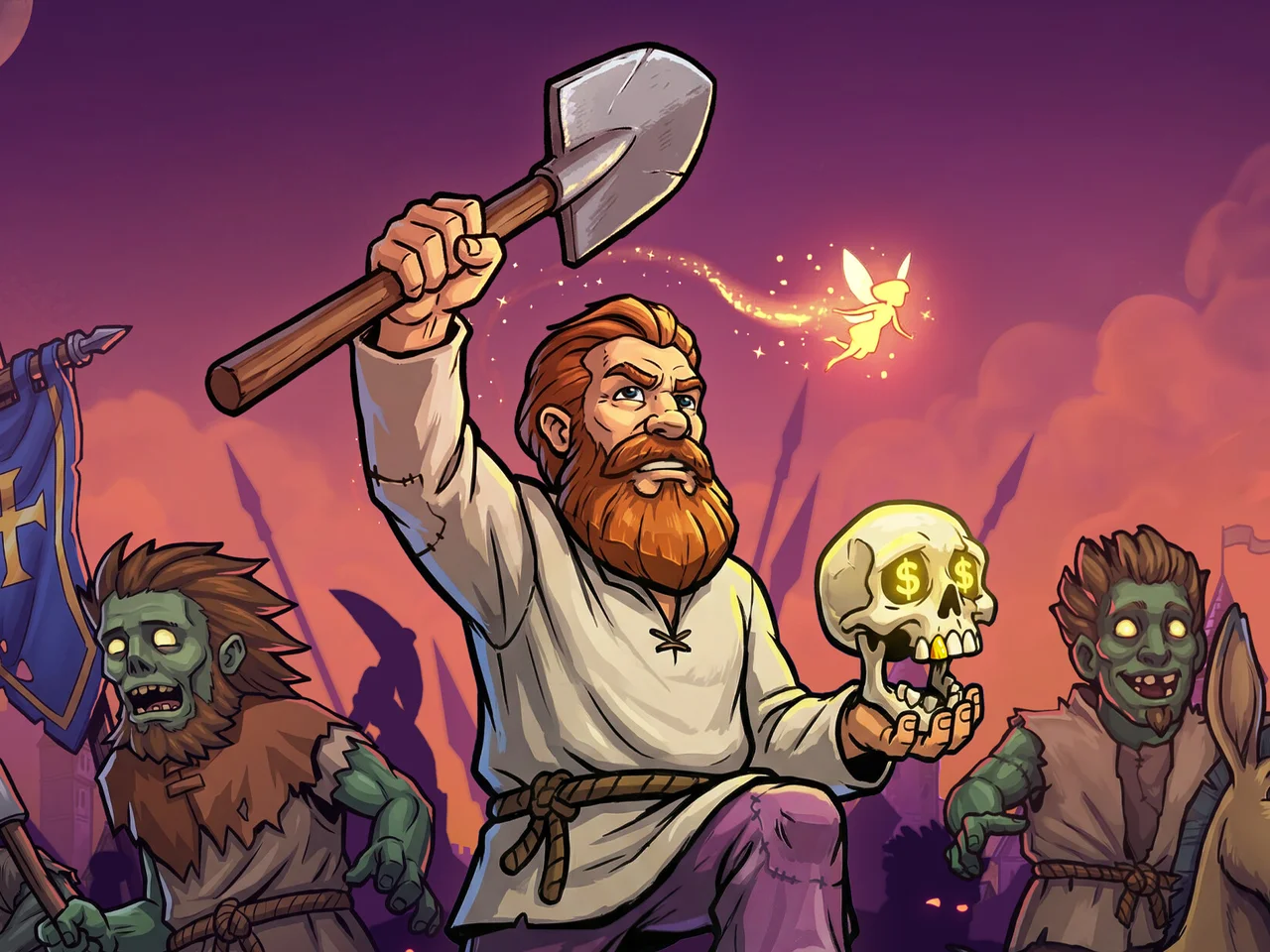
The Town finally opens its gates
The Town spent much of the first Graveyard Keeper feeling like an elaborate joke. Roads pointed toward it, characters supposedly came from it, and players repeatedly heard about a place they could never properly enter.
Graveyard Keeper 2 makes it one of the central systems. The settlement has been overrun and must be reclaimed district by district before homes, shops and other infrastructure can return. Naturally, helping the population is only half the objective. The other half is finding profitable ways to solve their problems.
The map extends beyond the city as well. Lazy Bear has named southern outskirts, another village, tavern, forest, swamp, church and graveyard. The sequel is deliberately opening parts of this world that were previously implied rather than visited.
Automation has moved from useful zombies to actual production lines
Undead workers are not new to Graveyard Keeper. The first game already let them farm, quarry and perform repetitive jobs. The sequel turns that useful labor force into something closer to an industrial system.
Conveyor-driven production and semi-automated machinery are now part of the economy, including underground workplaces powered by zombies. Materials can flow through multiple stages rather than constantly being carried by the Keeper.
The important shift is not simply saving a few trips. Graveyard Keeper 2 increasingly asks players to design an operation rather than personally execute every step of it.
The other zombies are getting swords
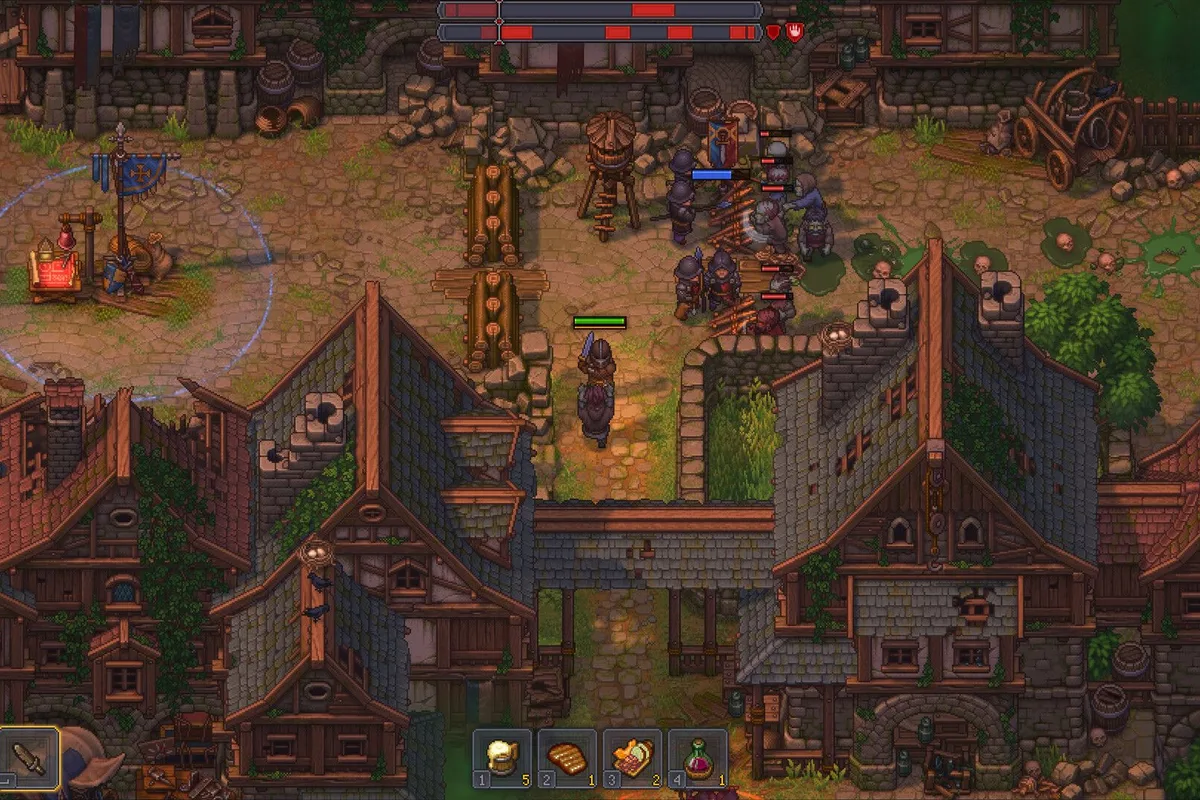
Combat is one of the sequel's genuinely new pillars. Reclaiming The Town requires battles fought directly in its streets, and the Keeper brings an undead army along.
Different districts use different objectives. The Town Square is defended against attacks arriving from multiple directions, while central streets involve pushing several fronts and capturing control points. Barricades and towers can be positioned beforehand, zombie squads can be equipped, and the Keeper can personally join the fight.
Lazy Bear even describes deliberately different tactics: archer-heavy formations, fortification-focused defenses or simply stocking combat potions and doing much of the killing personally.
One easy-to-miss detail: city battles remain tied to the weekly calendar
The Town cannot simply be cleared in one uninterrupted campaign. Its liberation battles are only available on a particular day of the in-game week, preserving one of Graveyard Keeper's defining scheduling systems.
On the other six days, players looking for violence can enter the sewers beneath the settlement. Those tunnels also contain zombies and, according to Lazy Bear, something deeper underground called the Sewrena.
The developer has declined to explain that name any further.
The sequel looks like pixel art, but its world is now 3D
The fixed viewpoint and familiar art direction make the technological change easy to overlook. Lazy Bear rebuilt the sequel's environments in three dimensions rather than constructing them with the original game's primarily 2D approach.
The change allows more flexibility in terrain, structures and lighting. The sun now actually travels around the world — following the finest medieval scientific traditions, as the developer jokes — while dynamic shadows become much more pronounced after dark.
That underlying structure also makes a much larger and more vertical Town possible without abandoning the visual identity of the first game.
Eight real years became eight fictional years
Graveyard Keeper released in 2018. Its sequel arrives eight years later, and Lazy Bear decided to make the same amount of time pass inside the story.
The world continued without its Keeper, and the studio rather cheerfully says that things did not go especially well in his absence. That gap gives returning characters time to change while allowing most of the sequel's cast to be new.
Old characters will appear, however, and the sequel promises answers about what happened to others.
It is the same Keeper — except apparently it isn't
Lazy Bear has deliberately phrased one story detail in the most suspicious possible way. The sequel keeps the same Keeper. Then the studio immediately adds: not exactly.
Players familiar with the Stranger Sins expansion are told they may already have the right idea. Nothing beyond that has been officially confirmed, so treating the hint as a solved plot twist would be premature.
It is still one of the clearest examples of the sequel being written on two levels. New players are supposed to understand the main story, while veterans are being handed continuity clues before launch.
That talking skull is not Gerry
Another deliberately misleading piece of familiarity has already been dismantled. The talking skull seen alongside the Keeper is officially not Gerry.
Lazy Bear describes him as another charming talking skull with a dark sense of humor. The statement answers one question and immediately creates a better one.
Where is Gerry?
Teleportstone is dead; Milestones replace it
The original Teleportstone has been removed. Lazy Bear openly jokes that many players never found it or never understood how to use it anyway.
Fast travel itself survives through Milestones scattered across the world. Unlocking them creates a network of travel points while keeping exploration relevant before each location becomes connected.
NPC scheduling has also been softened. Important characters who once visited the Village only once per week can now usually remain at their normal locations because The Town itself exists. Specific activities can still be day-gated, preserving weekly planning without making the person disappear entirely.
Progression adds talents without throwing away the Technology Tree
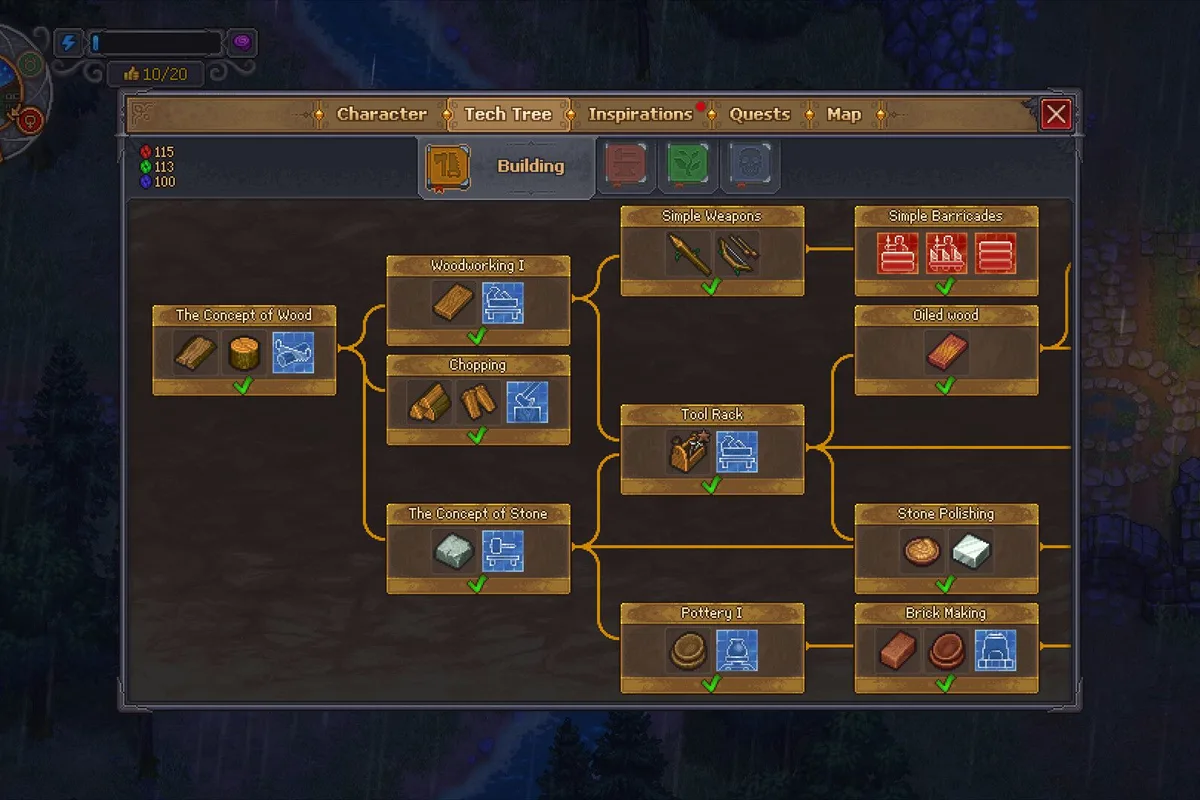
The familiar Technology Tree returns alongside a new talent system. Lazy Bear says the second layer is intended to make repetitive work more rewarding and, remarkably, promises less grinding than before.
That sentence may need to be preserved as evidence. Graveyard Keeper has never exactly been shy about asking players to repeat profitable labor.
The free demo released on September 14 already introduces the opening systems and runs for roughly three to four hours. Saves transfer into the full game.
More than 4,000 zombies are apparently doomed
The September 18 combat diary contains one final piece of extremely specific trivia. Lazy Bear says players will put a little over 4,000 hostile zombies back to rest over the course of the game.
Mouse-and-keyboard combat has also been designed so it can be controlled with one hand. The developer officially recommends using the other for a drink or for scratching an ear. Whose ear is deliberately left open to player choice.
The real sequel is the way all these systems connect
Graves, crafting, fishing, trading and questionable corpse economics remain. The difference is that more systems now feed directly into one another. Production creates equipment, zombies run production, equipment supports the army, battles reclaim the Town and the restored Town creates new economic opportunities.
That is more interesting than simply doubling the number of crafting recipes. Graveyard Keeper 2 is attempting to turn its collection of grim little jobs into a connected machine.
The full game launches September 22 on PC and consoles. The mystery surrounding the almost-same Keeper, the missing Gerry and whatever the Sewrena turns out to be can finally leave the developer diary and enter the graveyard properly.