
News News Official
Acer shrinks its Predator handheld to 7 inches without giving up the 80Wh battery
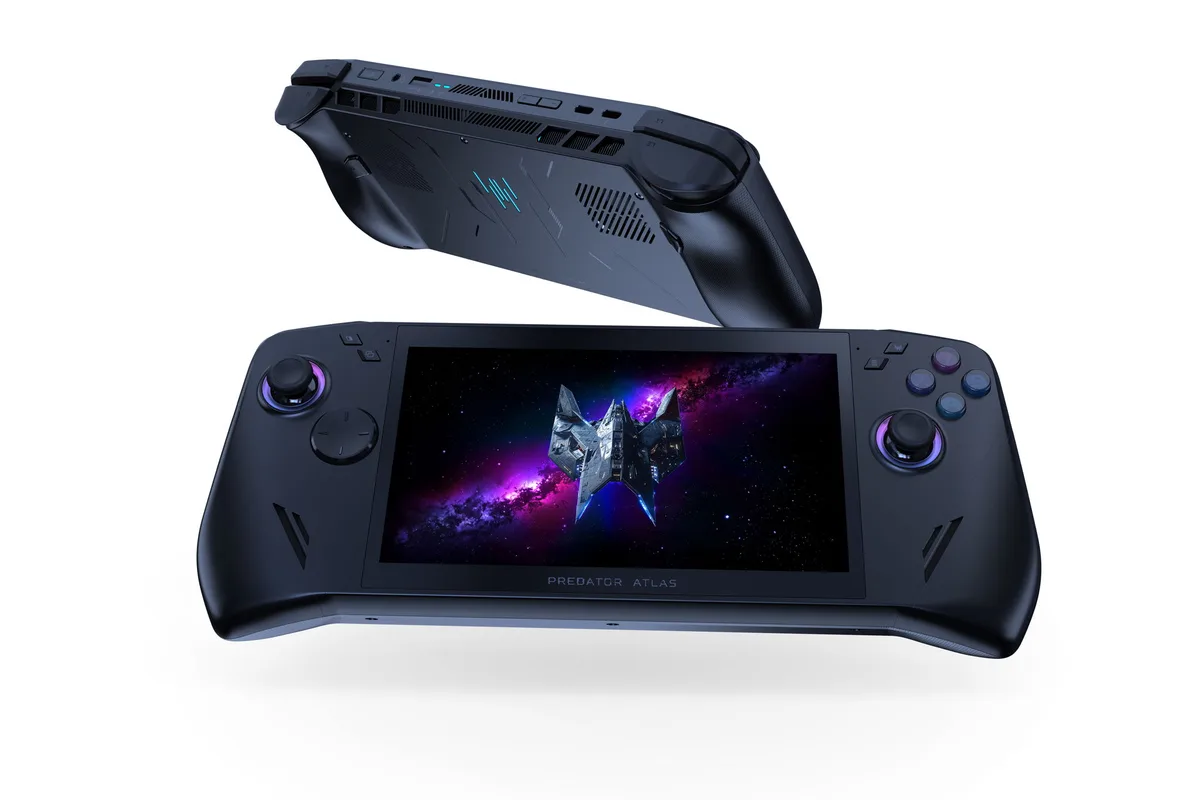
Acer's new handheld gets smaller in the place users will notice immediately and stays surprisingly large where battery capacity is concerned. Predator Atlas 7 moves the flagship design to a 7-inch chassis while retaining an optional 80Wh pack and most of the hardware found in its larger sibling.
 By Kader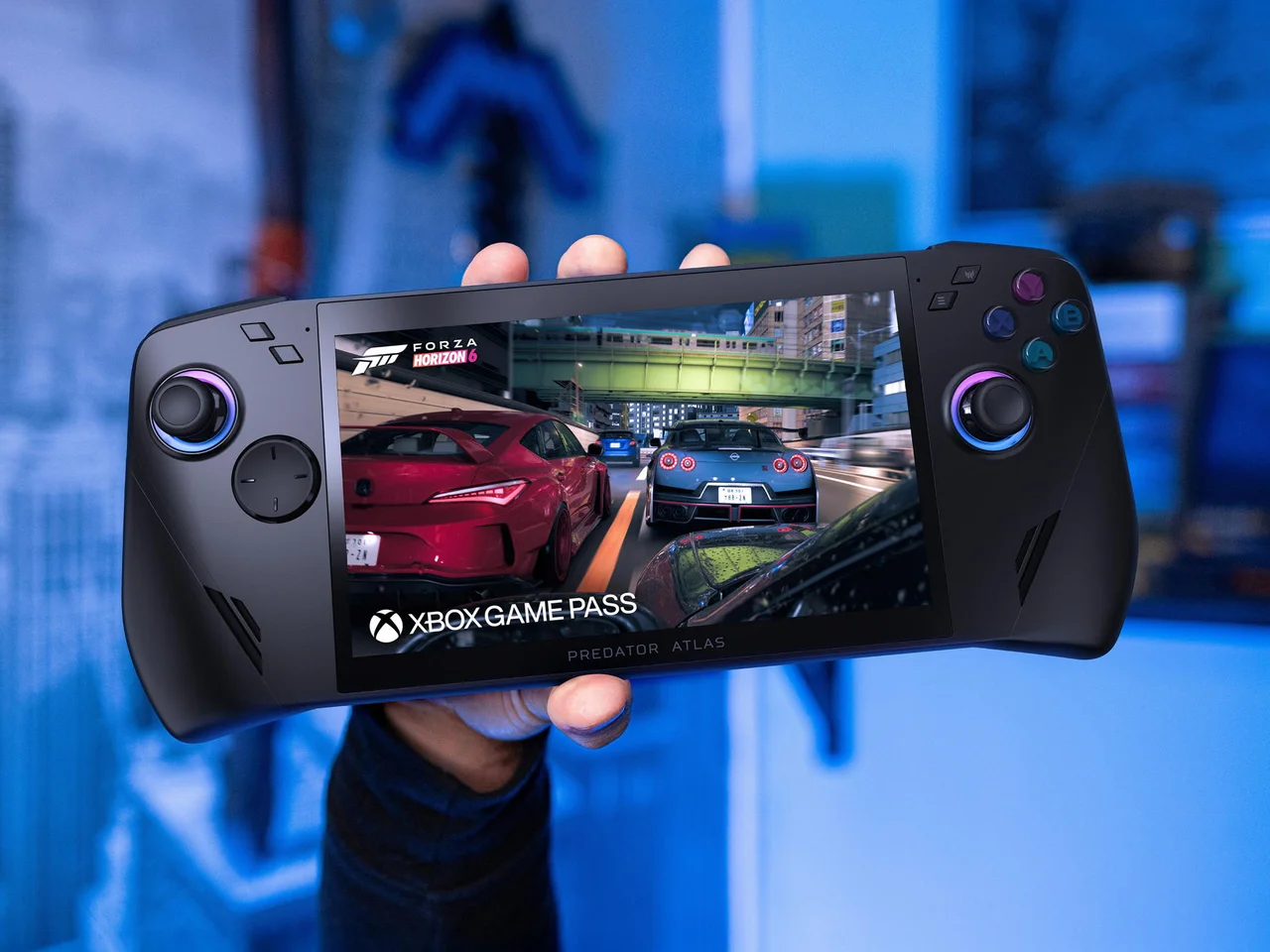
Arc G3 Extreme sits at the top of the configuration list
Acer announced Predator Atlas 7 in Berlin on September 2. The PA07-I51 can be configured with Intel's Arc G3 Extreme processor and Arc B390 integrated graphics, or an Arc G3 configuration using Arc B370 graphics.
Memory reaches 24GB of LPDDR5X at 7,467MT/s. Storage goes up to a 1TB PCIe Gen4 NVMe SSD using a full-size M.2 2280 slot, with UHS-II microSD expansion available as well.
Intel's Arc B390 uses the Xe3 graphics architecture and supports XeSS 3, including Intel's newer frame-generation technology.
Acer kept the 1080p panel
The 7-inch IPS-level touchscreen runs at 1920 × 1080 and 120Hz. Variable Refresh Rate is supported, and Acer quotes 500 nits of peak brightness.
Corning Gorilla Glass Victus with DXC surface treatment protects the panel. Acer also includes a tempered-glass screen protector rather than selling one as another accessory.
Ten-point touch input is supported.
The 80Wh model stays under 750 grams
Acer will offer two battery capacities. The 80Wh configuration weighs under 750g, while the 60Wh version is listed below 700g.
No gaming-runtime figure is attached to either battery in Acer's announcement, so capacity is currently more useful than any claim about hours away from a charger.
The chassis measures 292mm across, 112.7 to 123mm tall and 28.5 to 48.4mm thick depending on the part being measured.
One of the two cooling fans is metal
Predator Atlas 7 uses a dual-fan cooling system. Its main AeroBlade fan is built from metal with 89 blades just 0.1mm thick.
Acer says that design can provide more than 10 percent additional airflow compared with a plastic fan in its internal testing. A second plastic fan works alongside it, while Vortex Flow channels direct hot air through the chassis.
The 10 percent number is an Acer laboratory claim rather than an independent measurement of Atlas 7 temperatures or acoustic performance.
TMR sticks are optional
Acer offers full-size TMR joysticks as an option, alongside conventional carbon-film sticks depending on configuration.
Tunneling magnetoresistance sensing avoids the physical contact used by traditional potentiometers and is designed to improve precision and resistance to stick drift.
The analog triggers use Hall-effect sensors. Two rear macro buttons are included, as are dedicated PredatorSense and Xbox Game Bar controls.
Two Thunderbolt 4 ports leave room for a real desk setup
A pair of Thunderbolt 4 connectors handle high-bandwidth peripherals, docks and external displays. There is also a 3.5mm audio jack and the UHS-II card reader.
Wireless connectivity includes Intel Killer Wi-Fi 7 and Bluetooth 5.4.
Two 2W speakers support DTS:X Ultra, while dual microphones use Acer PurifiedVoice noise reduction.
November in Europe, price still missing
Predator Atlas 7 is scheduled to reach EMEA in November 2026 and North America during the fourth quarter.
Acer has not announced pricing.
That missing number will define the machine more than another specification. Atlas 7 has enough premium hardware to compete well above entry-level handheld PCs, but its value against Steam Deck and the growing field of Windows handhelds cannot be judged until Acer attaches a price.
Do not confuse it with the DualPlay Mini concept
Acer also used IFA to show Project DualPlay Mini, an 8-inch convertible handheld with a hidden physical keyboard and a display that can rotate into a miniature laptop layout.
The company explicitly describes DualPlay Mini as a concept only. No retail launch is promised.
Predator Atlas 7 is the actual November product.