
Review
Sea of Thieves: Eight Years Later, Rare's Pirate Sandbox Has Found Its True Form

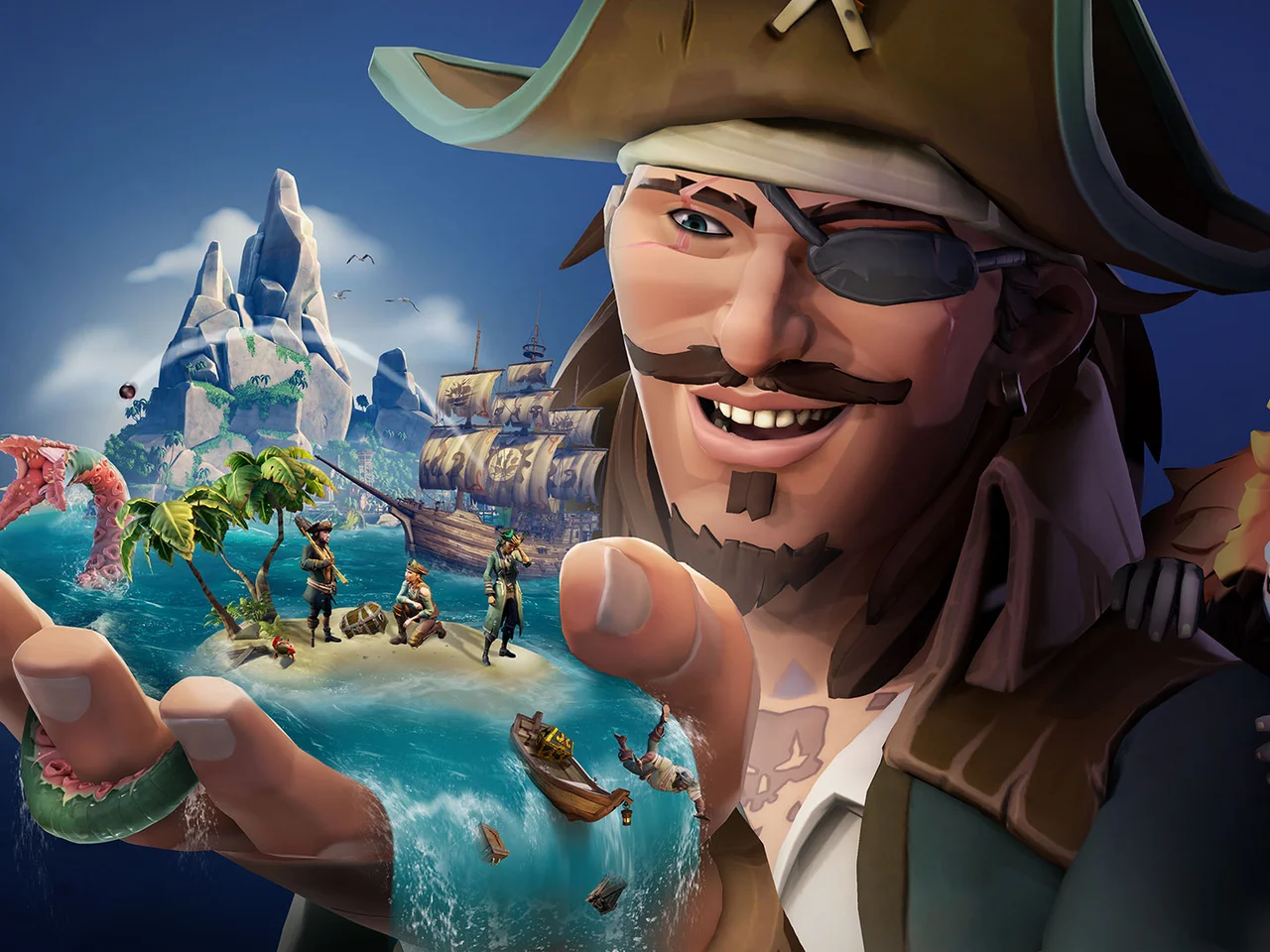
Sea of Thieves still does not rely on dramatic stat progression or an endless ladder of stronger gear. Rare spent years expanding its original idea instead: excellent ships, simple interacting systems and unpredictable players capable of turning an ordinary treasure hunt into a memorable disaster.
Sea of Thieves used to be easier to admire than to recommend. The 2018 reviews already identified the brilliant parts: beautiful water, tactile sailing and the simple joy of making a ship function with other people. The problem was how little structure existed around them.
Rare spent the following years expanding the sea rather than replacing the boat.
The ship is still the game
A Sea of Thieves vessel is valuable because it refuses to collapse teamwork into a menu. Someone has to steer. Someone adjusts sail angle. Cannons need loading. Holes need repairing below deck while another player throws water overboard and the person on the wheel tries not to hit the island everyone forgot was there.
A galleon turns communication into a mechanical resource. Abandoning one job to solve another has consequences, and a good crew gradually learns how to redistribute itself without needing explicit classes.
GameSpot's 2020 reassessment highlighted how satisfying each ship type remained, from the nimble sloop to the demanding galleon. Years of updates have not diluted that foundation.
Veterans own experience, not stronger cannons
Progression remains predominantly cosmetic. That decision matters more now than it did at launch because eight years of seasonal content could easily have produced an intimidating hierarchy of weapons, builds and mandatory gear.
Instead, the veteran advantage is knowledge. Experienced sailors understand wind, cannon arcs, boarding routes and the meaning of a distant silhouette. New pirates can still use fundamentally equivalent equipment.
Push Square identified that structure as one reason the PS5 version remained unusually approachable despite arriving six years into the game's life.
There is finally enough sea around the sailing
Tall Tales, emissaries, world encounters, factions and years of seasonal additions have solved much of the original content problem. The game can now support very different evenings without requiring a new character build for each one.
The emissary system is still one of its smartest designs. Better rewards gradually increase the value of remaining at sea, but the same system makes a successful crew a more attractive target. Progress and danger grow together.
Season 20's Custom Seas pushes in another direction, giving private groups control over sessions of up to 24 players and exposing more of Rare's sandbox as a configurable playground.
Risk remains deliberately uncomfortable
Sea of Thieves can still erase a productive evening with one disastrous battle. Some progression goals require a substantial time commitment, and GameSpot's mature review was right to flag how extended sessions can become part of the optimisation problem.
The alternative would damage the game's defining tension. A ship carrying valuable loot feels different precisely because another crew can take it.
The sword is less interesting than the ship
On-foot combat remains one of the weaker pieces. Sword fighting and gunplay are functional, but neither creates the physical cooperation or cascading emergencies that make naval encounters special. Push Square reached a similar conclusion in its otherwise highly positive PS5 review.
Fortunately, Sea of Thieves is built around the part Rare got right.
At 17/20, the current game feels like the completed argument for a concept first released in unfinished form. Rare kept the unusual mechanics, added reasons to engage with them and resisted turning experience into raw statistical superiority. The sea is much busier now. The sailing still makes it worth crossing.
Strengths
- Sailing and ship handling remain outstanding
- Excellent co-op where every crewmate has a tangible job
- An open world capable of producing genuinely unpredictable situations
- Cosmetic progression prevents veterans from becoming walls of superior stats
- Vastly more activities and systems than at launch
Weaknesses
- Swordplay and gunfights are less refined than naval combat
- Losing a large haul can make a long session feel brutally punishing
- Some long-term goals demand a considerable time investment
Modern Sea of Thieves finally delivers on an idea that felt almost too sparse in 2018. Sailing remains superb, naval combat demands genuinely physical cooperation and years of added activities now provide far more freedom than the launch game ever could. On-foot combat remains comparatively shallow and long sessions can still end painfully, but that vulnerability feeds the risk system responsible for the game's best unscripted stories. Rare did not turn Sea of Thieves into a conventional progression RPG. It made the sandbox rich enough that it no longer needed to.