
News News Official
Crescent Tower: RISING expands to 14 classes and makes mapping part of the adventure
Crescent Tower deliberately looked like an RPG recovered from the 1980s. Its sequel is much less interested in remaining small. Crescent Tower: RISING keeps the pixels, command battles and mysterious tower, then adds five chapters, fourteen classes and a skill system where abilities literally have to fit together.
 By Hugat Crescent Tower: RISING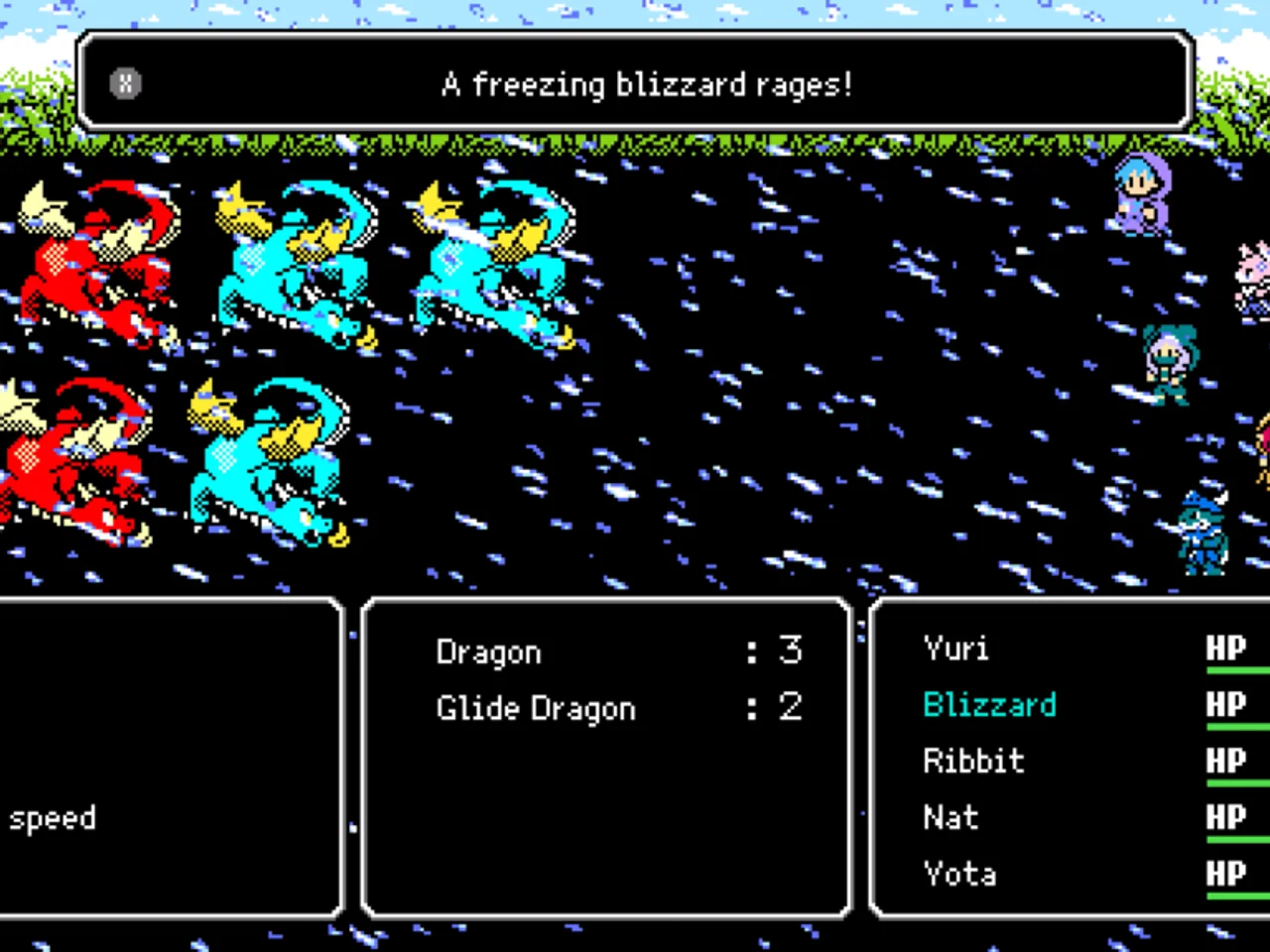
AMATA Games announced the Steam version of Crescent Tower: RISING on August 31. Indie developer Curry Croquette returns after creating the original Crescent Tower.
Neither a price nor a release date has been announced. The Steam page is live for wishlisting.
The actual design changes are already considerably more specific.
Nine classes have become fourteen
The original Crescent Tower offered nine classes. RISING expands that number to fourteen.
The revealed selection includes roles such as Thief, Priest, Wizard, Seeker, Merchant, Ninja, Shaman, Bard and Pirate, with characters able to change classes as they develop.
The more important addition arrives after a skill has been learned.
Class abilities can become Skill Blocks that are installed onto an individual character's skill board.
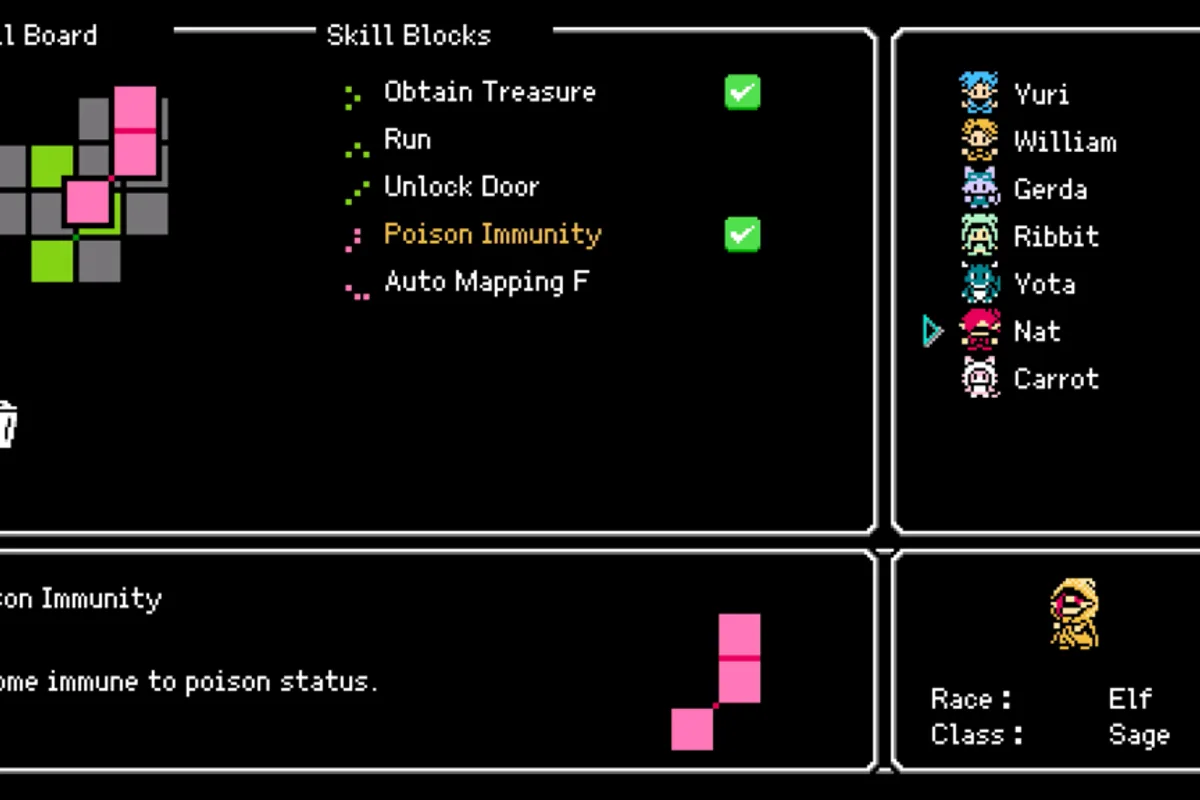
Skills consume physical space on the board
Skill Blocks come in different shapes, so customization is partly a spatial puzzle.
Players have to decide which abilities deserve limited board space and which combinations can physically fit together.
Not every block is designed for combat. AMATA specifically mentions treasure hunting, unlocking doors and mapping assistance among the utility skills.
That creates a useful tension between a character optimized for surviving battles and one prepared to make dungeon exploration easier.
Mapping is now an explicit system
RISING also introduces player-driven mapping across both overworld areas and dungeons.
AMATA describes filling in the map as essential to exploration and suggests that completing it may lead to additional discoveries.
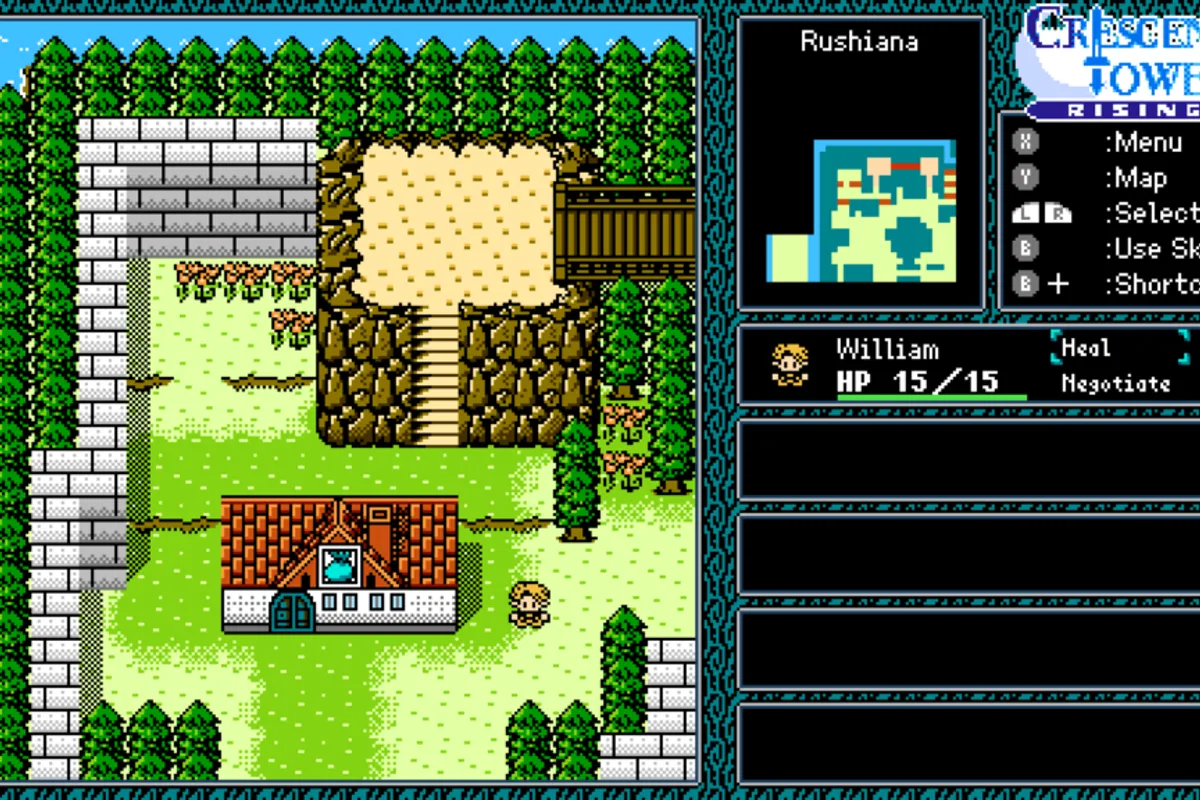
Official screenshots show the map occupying its own interface panel while rooms and paths are gradually documented.
It recalls an older dungeon-crawling tradition where understanding a space was as important as fighting inside it, except the graph paper now lives inside the game.
The sequel is structured across five chapters
The Tower of the Arc Moon remains the central mystery. It appears once every fifty years in the Imperial Capital Mayirdoam, supposedly hiding both a wish-granting jewel and a potion of immortality.
RISING expands beyond one straightforward ascent by telling its story over five chapters.
Different protagonists explore different dungeons before their stories intersect. AMATA emphasizes their different origins, races and classes before they eventually become companions attempting to conquer the Tower together.
A Logbook of Bravery left by the adventurer who came closest to reaching the summit provides the new generation with its starting point.
Combat remains intentionally traditional
Despite the larger progression system, battles still use classic turn-based commands.
Each character has unique actions intended to create tactical distinctions without abandoning the original game's straightforward interface.
That suggests Curry Croquette is moving much of the sequel's complexity into preparation: classes, Skill Blocks and party composition determine what the group can do before a command menu ever appears.
AMATA estimates a 15-to-25-hour adventure
The official press kit currently lists an estimated playtime of 15 to 25 hours.
RISING is strictly single-player and has no online mode.
Its hardware requirements remain deliberately modest: Windows 11, 8GB of RAM, a Ryzen 3 7320U or Core i3-1305U-class processor, Radeon 610M or Intel UHD-class graphics and 1GB of storage.
Seven interface languages are planned, including English, Japanese, French, German, Korean and both Simplified and Traditional Chinese.
The one part of the adventure nobody can map yet is its launch. Steam still lists the release date as to be announced.