
Review
Zelda: Ocarina of Time Switch 2 Review — A Masterpiece Finds Its Rhythm Again

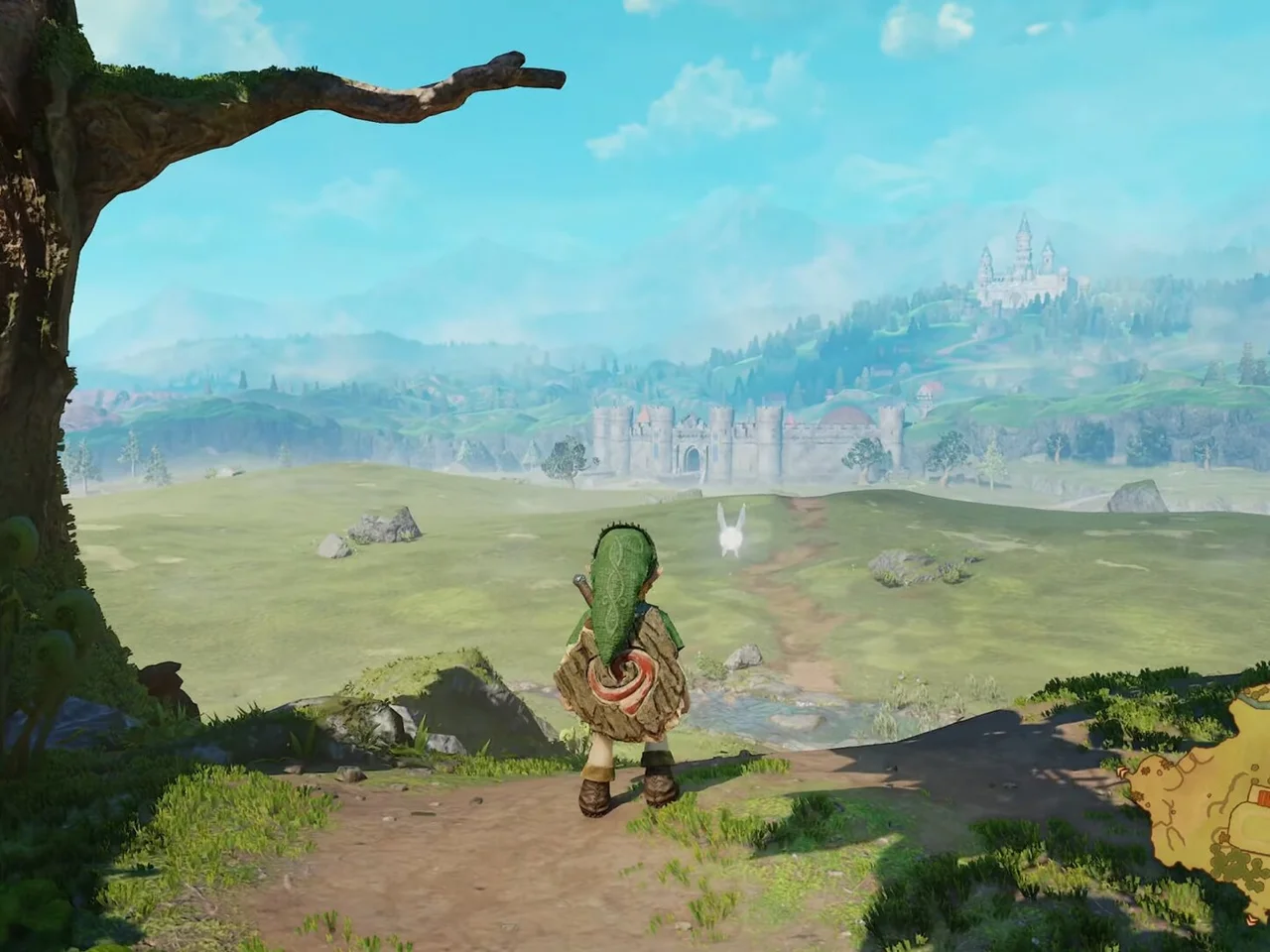
Nintendo rebuilds Ocarina of Time with modern camera controls, more responsive movement and extensively reworked presentation. Its dungeons remain wonderfully designed, even if some combat systems and puzzles reveal their age. A remake that improves the original adventure without sacrificing its identity.
Ocarina of Time remains a remarkable example of progression-driven game design. Its environments are built around the gradual acquisition of tools that change how earlier spaces can be explored. Nintendo's remake preserves that fundamental idea while making the actions required to navigate those spaces much more comfortable.
The new camera controls are particularly effective. Moving the viewpoint independently of Link removes a familiar source of frustration, while a dedicated jump button and more responsive movement make exploration feel considerably less restricted. Faster item management has similar benefits, especially in dungeons where switching equipment is part of the puzzle-solving process.
The brilliance of the dungeon structure
Ocarina of Time's dungeons still reward observation and spatial reasoning. Rooms that initially seem disconnected become parts of a larger mechanism, while new equipment provides solutions to obstacles encountered earlier. The game rarely needs to overwhelm players with systems because its spaces already contain enough complexity.
The Water Temple is an excellent example of how small interface changes can improve a large portion of the experience. Easier equipment switching removes repetitive friction, leaving the player to concentrate on understanding the relationships between rooms, water levels and available routes.
Nintendo has refreshed elements of the environments and encounters without abandoning the core progression structure. The result retains the deliberate rhythm of a traditional Zelda adventure, although players accustomed to the freedom of Breath of the Wild may find its sequence of objectives restrictive.
Comfortable combat, limited depth
Combat remains readable and approachable. Targeting, timing and selecting the appropriate tool are more important than complicated combinations of attacks. This works well for the game's overall structure, but ordinary encounters can feel simplistic beside more demanding modern action adventures.
The improved controls do not fundamentally change enemy behavior. Some fights remain predictable, while certain improvements make familiar challenges easier. Occasional uncertainty about the next objective also survives the reconstruction.
These limitations rarely undermine the larger experience because combat is only one part of Ocarina of Time's appeal. Exploration, environmental puzzles and the gradual understanding of Hyrule carry much more of the adventure.
A remake that understands what matters
The visual overhaul enriches Hyrule without replacing its recognizable geography. Forests are denser, architectural details are more convincing and lighting gives familiar areas a stronger atmosphere. The orchestral soundtrack and expanded cinematics reinforce the feeling of a carefully reconstructed world.
Some character designs are more divisive, and the mixture of detailed environments with stylized figures will not appeal equally to everyone. Yet the underlying presentation is consistently ambitious.
What ultimately makes this remake successful is its respect for the original design. Nintendo has reduced unnecessary friction while keeping the systems that made Ocarina of Time special. It is not a completely new adventure, nor does it need to be.
Strengths
- Excellent dungeon design and carefully structured progression.
- Modern camera controls and responsive movement.
- Rewarding exploration despite the linear framework.
- Smart improvements to item management.
- Beautifully reconstructed environments.
Weaknesses
- Combat can feel overly straightforward.
- Occasional uncertainty about objectives.
- Some changes reduce the original challenge.
- Less freedom than recent open-world Zelda games.
Ocarina of Time never needed to become Breath of the Wild to remain compelling. Nintendo preserves its dungeon structure, puzzles and progression while removing much of the friction associated with the Nintendo 64 original. Combat lacks the depth expected from some contemporary adventures, but the underlying level design remains exceptional. A thoughtful remake with a few compromises, and a wonderful way to experience this classic.