
Review
Dune: Awakening: Funcom fixed its endgame direction, but not Arrakis' repetition

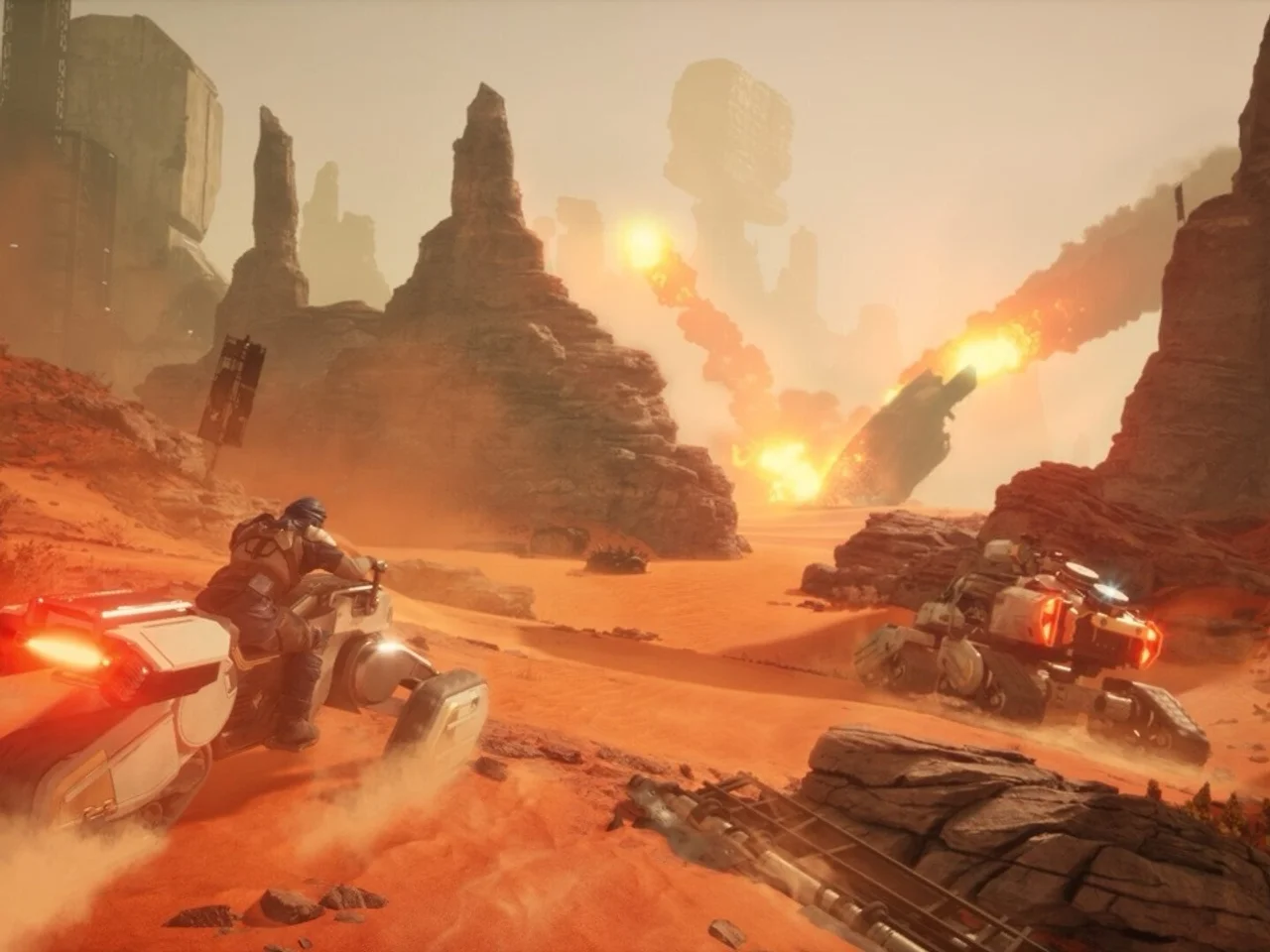
Dune: Awakening is meaningfully better today than the game reviewed at launch. Deep Desert PvP is now entirely optional, Chapter 3 added specialisations and more late-game activities, and progression has more reasons to continue. What has not disappeared is weak AI, interchangeable camps and far too much resource gathering between its great moments.
Dune: Awakening is at its best when progression changes the meaning of distance.
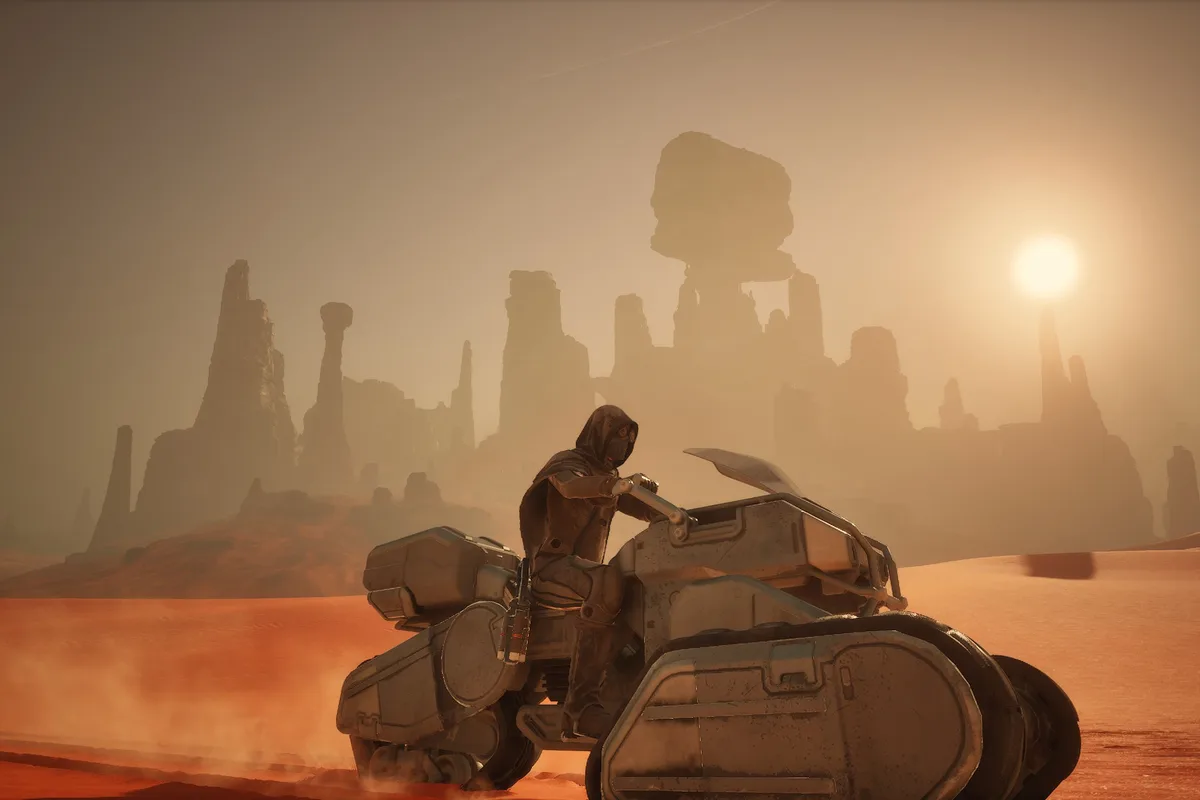
Early Arrakis is measured in patches of shade and litres of water. A sandbike makes previously dangerous crossings manageable. An ornithopter eventually turns cliffs, valleys and entire regions into a different kind of map.
Hydration gives survival a coherent centre
GameSpot and PC Gamer both praised the way Funcom concentrates much of the survival game around water.
Dew is precious in the opening hours. Blood can become an emergency supply. Later, water evolves into an industrial resource consumed by crafting and production.
The mechanic therefore changes purpose instead of simply disappearing once better equipment arrives.
Base building removes the wrong kinds of friction
Machines can access nearby storage, construction pieces connect cleanly and power management avoids needless cable work.
Blueprints also allow structures to be saved and rebuilt elsewhere once the required materials are available.
The grind remains in gathering resources rather than fighting the interface.
Vehicles are progression milestones rather than mounts
The sandbike and ornithopter alter exploration more dramatically than a conventional stat increase.
PC Gamer particularly praises the world's verticality. Climbing tools, suspensors and flight gradually convert intimidating geography into a set of routes the player has learned to exploit.
Sandworms preserve risk
Technology never entirely neutralises open desert because Shai-Hulud can impose losses far greater than an ordinary death.
That threat keeps Arrakis from becoming a frictionless resource map once high-tier transportation arrives.
Combat remains the weaker component
Holtzman shields, slow-blade attacks and class abilities give the system strong Dune flavour.
The underlying encounters are less impressive. GameSpot and TechRadar criticise fairly basic combat, while Gamekult also reports unreliable AI behaviour.
A small enemy roster makes those limitations more visible over dozens of hours.
Location repetition is harder to patch away
Enemy camps and Imperial Testing Stations quickly reveal familiar patterns. GameSpot identified this at launch, and the fundamental Hagga Basin loop still depends heavily on revisiting similar activities for materials and recipes.
The resource economy can turn satisfying routine into obligation when the same components are required in increasingly large quantities.
The original endgame criticism now needs an asterisk
At launch, the Deep Desert pushed almost every high-level player toward PvP regardless of how they had spent the previous sixty or more hours.
That structure no longer represents the live game.
Since April 2026, official worlds contain separate PvE and PvP Deep Desert instances. Players can now progress through the region without being forced into competitive encounters.
Chapter 3 added the missing post-tier-six progression
February's major update introduced Specialisations, Augmentations, a revised Landsraad and additional late-game content.
That directly addresses part of GameSpot's original complaint that acquiring the strongest equipment lacked a compelling PvE purpose.
The modern game has more goals. It has not eliminated the gathering required to reach them.
Arrakis remains strongest when power never becomes comfort
A new vehicle, a spice operation disrupted by a worm or a sandstorm that forces an improvised route can still make the enormous playtime feel worthwhile.
Repeated human camps and weak AI cannot sustain the same fascination.
Funcom has meaningfully improved Dune: Awakening since release, particularly by abandoning mandatory endgame PvP. Its central achievement was already present, though: making the journey from desert prey to technological power feel enormous without ever completely convincing the player that Arrakis has been conquered.
Strengths
- Excellent tool-and-vehicle progression
- Water management fits the setting exceptionally well
- Intuitive base building
- Arrakis maintains a genuine sense of danger
- Ornithopters and verticality transform exploration
- Deep Desert PvP is now entirely optional
- Chapter 3 substantially expanded the endgame
Weaknesses
- Weak enemy AI
- Very limited human enemy variety
- Repetitive camps and Imperial Testing Stations
- Functional rather than exceptional combat
- Heavy resource grind remains
- Several activities retain MMO-style busywork
Dune: Awakening deserves a different review today than it did at launch. Funcom responded to the rejection of its PvP-heavy endgame, separated the Deep Desert into PvE and PvP experiences and added meaningful progression beyond tier six. The game is more coherent without solving its fundamental weakness: Arrakis is enormous, while the enemies and activities filling it remain too limited. The hours spent earning an ornithopter, mastering water production or escaping Shai-Hulud are nevertheless among the strongest experiences modern survival games can produce.