
News News Official
GTA VI wants every neighborhood to be recognizable by the people who live there
An open world can distinguish neighborhoods by changing buildings, cars and vegetation. GTA VI is attempting something more difficult: when Jason or Lucia move across Leonida, Rockstar wants the population itself to tell them where they are. New production tools were created to vary bodies, clothing and appearance according to location and social context.
 By Kader GTA VI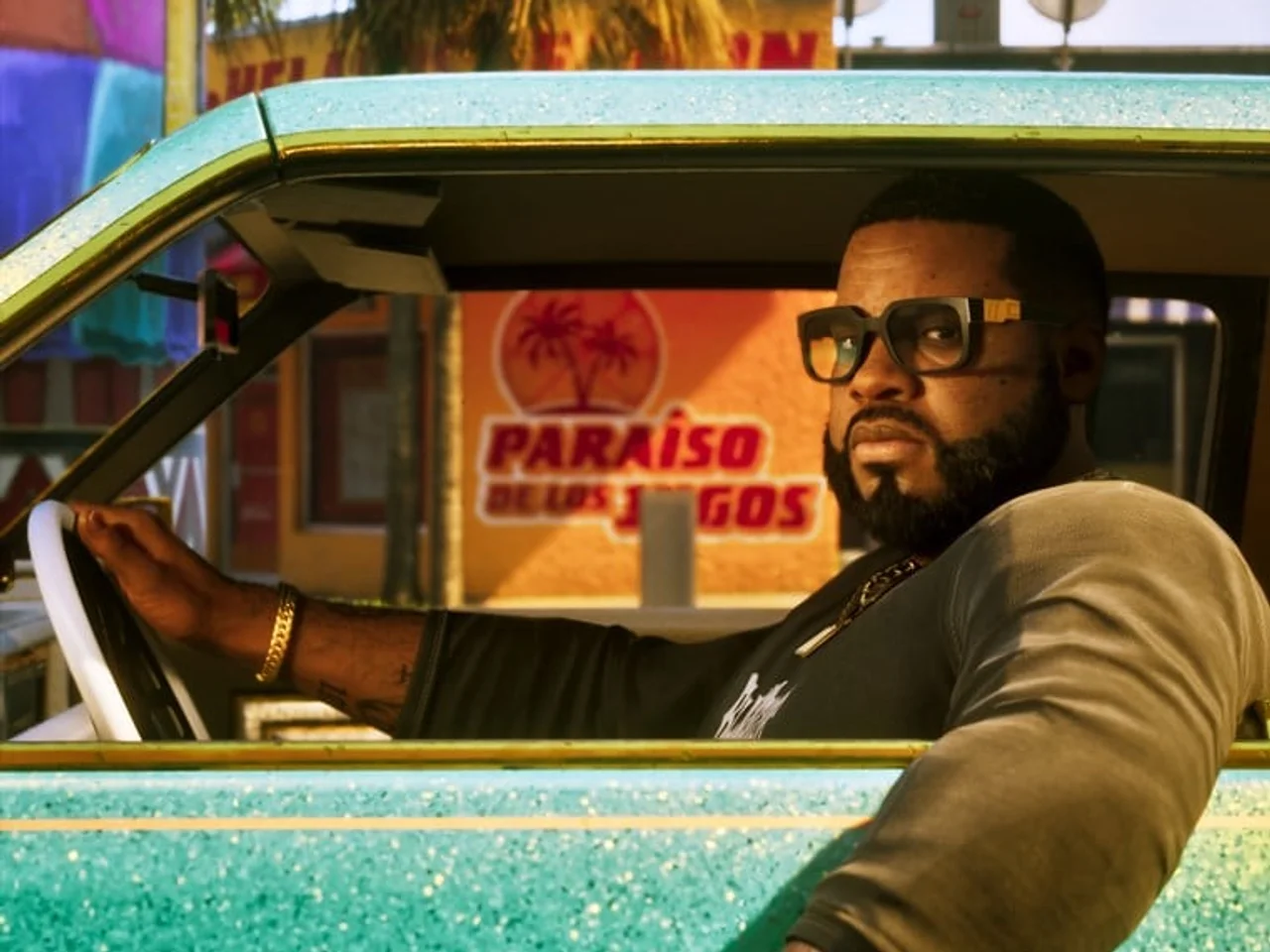
The ambition begins with a straightforward problem: Vice City is not supposed to be populated by one generic crowd.
Speaking to Dazed, Rockstar North development head and co-studio head Rob Nelson identifies the extraordinary cultural variety of Miami and Florida as part of the reason Grand Theft Auto returned to its fictional counterpart.
Rockstar is trying to make that variety part of the world design.
Little Cuba and Mount Kalaga should not merely have different scenery
Senior character art director Jamie-Lee Lloyd says Rockstar has created its most detailed and varied character population to date.
The examples include different ages, heights and body types alongside tattoos, piercings and cosmetic modification.
Clothing follows the same principle.
Throwback Hawaiian shirts, sharp suits, luxury fashion and mud-covered outdoor gear are not distributed uniformly across Leonida. Rockstar says character appearances are more closely tailored to their local environment, from Little Cuba to the wilderness of Mount Kalaga National Park.
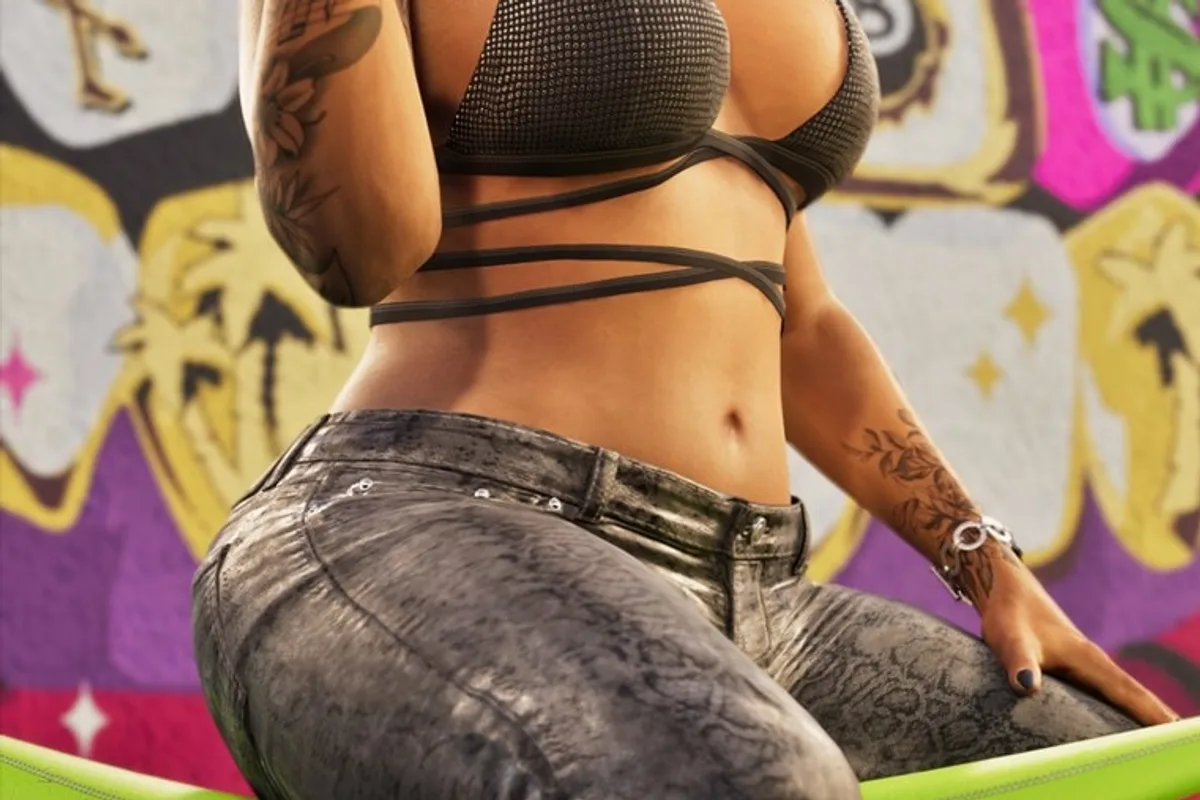
Rockstar calls it a fashion ecosystem
That differentiation is not solely the work of character modelers.
Miami-based stylist Jillian Carr has worked with Rockstar since 2023 on what she describes as an in-game fashion ecosystem.
The goal is to communicate taste, lifestyle, affluence and individuality through what people wear.
Clothing therefore becomes more than a texture selected from a library. It can act as social information.
Vice City is designed around vanity
Carr describes Vice City as a place where appearance carries unusual weight.
Social media, celebrity culture, tourism and rapidly changing trends all contribute to that identity.
It is an especially appropriate idea for a contemporary Miami satire. A character's clothing can suggest where they spend time, what wealth they want to project and which social scene they belong to.
Rockstar has not announced a dynamic fashion-trend simulation that evolves while the player progresses. The ecosystem discussed here primarily describes the coherent design of people, brands and locations.
Even fictional brands are meant to say something about their customers
Vice president of 2D and UI design Stu Petri says Rockstar wants its fictional businesses to exist as more than isolated jokes.
Fashion labels, car companies, stores and advertising campaigns should appear to belong to the same cultural ecosystem.
Rockstar says those brands reflect the aspirations, aesthetics and lifestyles of the people occupying different spaces.
Jason and Lucia participate in the same system. Haircuts and clothing choices become part of how the protagonists visually fit into Leonida.
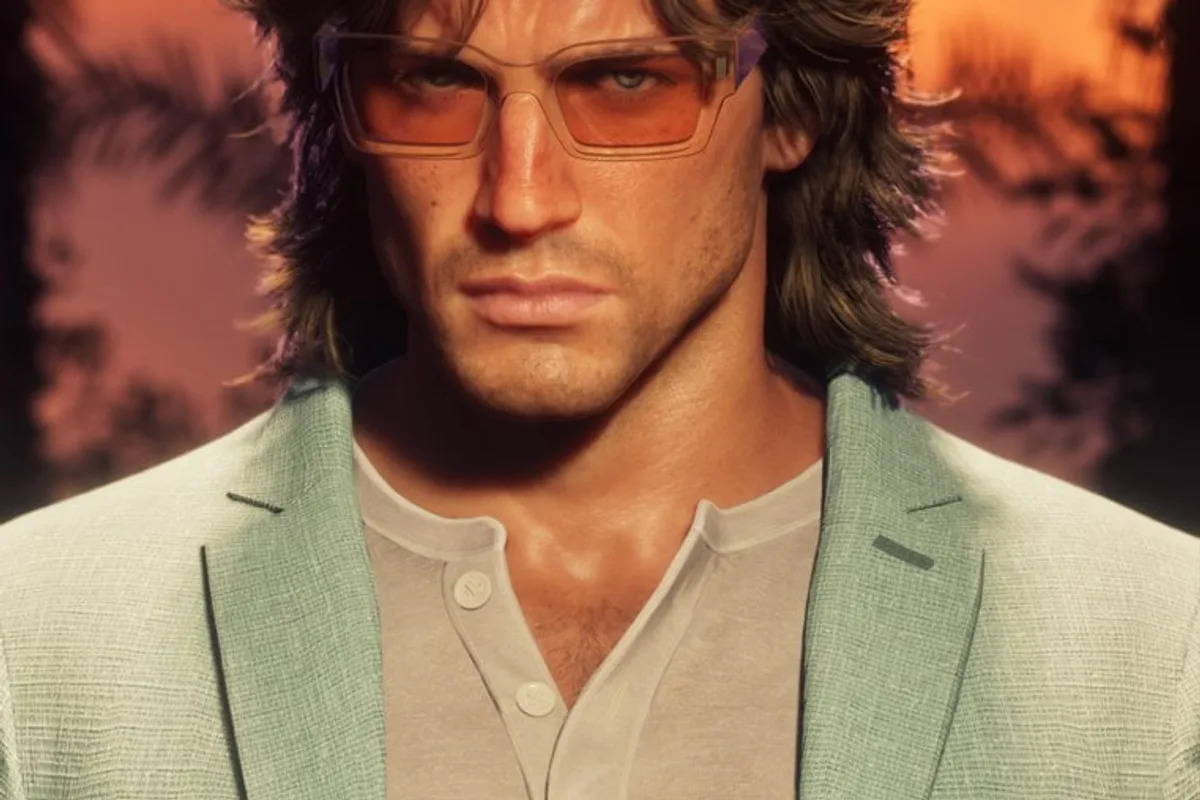
Model variety alone does not create a believable population
Rockstar explicitly makes that distinction.
Lloyd says authenticity comes from combining how a person looks with how they move, interact and express themselves.
That means character art, animation, motion capture, writing, performance and gameplay systems all have to converge.
The objective is not simply to prevent the same face from appearing twice on a beach.
It is to make a person standing in a location appear to belong there.
Rockstar built new tools to produce this variety at open-world scale
The number of required variations creates an industrial problem.
A lead character can be manually authored for months. An open metropolis needs thousands of inhabitants capable of surviving dozens of hours of observation.
Rockstar says it developed new tools and pipelines specifically to support this population.
The company has not described their technical operation, so it remains unknown how much of the body, clothing and accessory assembly is procedural or how many discrete variants exist.
The confirmed claim is narrower: Rockstar considers the result its most detailed and varied character population yet.
A Los Angeles branch works almost entirely on pedestrians
The human production scale behind the system is unusual too.
Rockstar says its overall team has more than doubled since Red Dead Redemption 2, while one Los Angeles branch is devoted almost exclusively to in-game pedestrians.
That gives some sense of how significant NPCs have become within the production budget.
In many open worlds, pedestrians primarily prevent a city from looking empty. Rockstar is explicitly treating them as one of the systems it wants to advance.
Field research is supposed to prevent Leonida becoming a catalogue of Florida clichés
Rockstar says multiple teams have visited Miami and its surroundings over roughly a decade, with a dedicated research group based in the city.
Developers spoke with residents, former criminals, law enforcement, club promoters, gun dealers and other local figures.
Writer Michael Wiafe says the team wanted to move beyond simply seeing something strange in Florida and copying it into the game.
The population therefore has to retain GTA's exaggeration while carrying enough local context to avoid becoming an endless parade of interchangeable “Florida Man” jokes.
Rockstar's footage already demonstrates part of the idea
The August 27 Extended Look provides a much larger sample than the previous trailers.
Beaches contain silhouettes, clothing and activities that differ sharply from those seen around clubs, residential neighborhoods and rural locations.
Rockstar confirms that the entire 26-minute presentation consists of in-game footage captured on PlayStation 5.
That still cannot tell us how convincing population variety will remain after fifty hours or in areas that were not selected for a showcase.
The final game will provide that test.
The real question is bigger than crowd density
Raw density looks impressive, particularly around Vice Beach, but density alone does not make a city believable.
Two hundred generic characters can create a crowd. Two hundred people whose appearance and culture fit the location can help create a neighborhood.
That second goal is what Rockstar is describing.
If the system survives at full open-world scale, moving between areas in GTA VI may become noticeable before the map displays a district name. Players may only need to look at who is walking down the street.
Grand Theft Auto VI launches November 19, 2026 on PlayStation 5 and Xbox Series X|S.
Also on our network
- Tyrell HeraldGTA VI : le ray-tracing complet confirmé sur consoles, un tournant pour l'industrie
- Tyrell HeraldGTA VI: full ray-tracing confirmed on consoles, a turning point for the industry
- Runtime ChronicleGTA VI : comment Rockstar a repoussé les limites du ray tracing sur consoles
- Runtime ChronicleGTA VI: How Rockstar Pushed the Limits of Ray Tracing on Consoles