
News News Official
CONTROL Resonant is surprisingly forgiving on PC — until you turn on path tracing
CONTROL Resonant looks like exactly the kind of Remedy game that could have arrived with frightening PC requirements. Instead, the entry point is almost conservative. The real hardware cliff appears only when its most expensive lighting features are switched on.
 By Maëlle CONTROL Resonant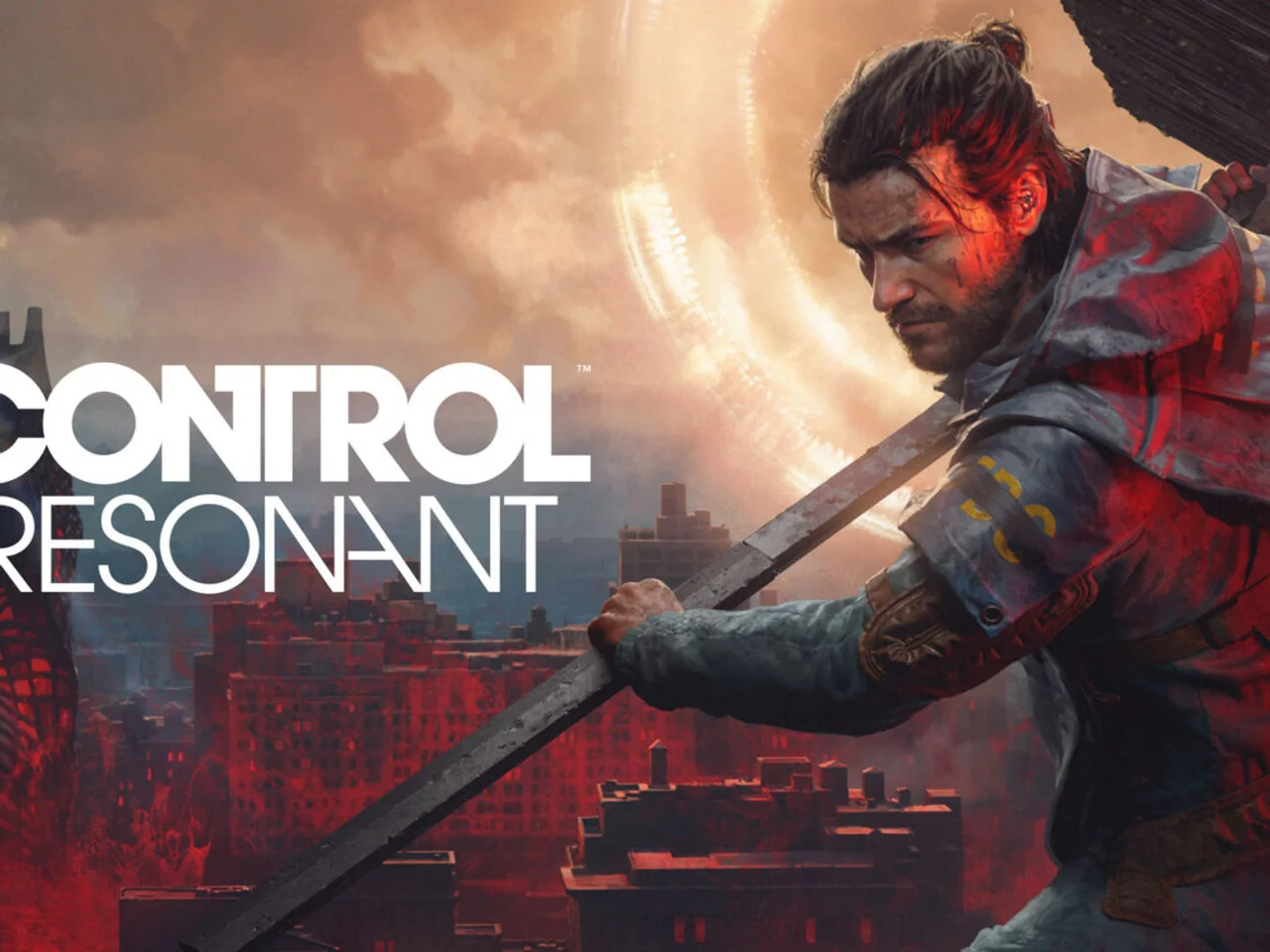
Remedy has published the final PC requirements for CONTROL Resonant ahead of its September 24 release.
The game launches on Steam and the Epic Games Store alongside PlayStation 5 and Xbox Series X|S. A Mac version follows later in 2026.
The PC chart is unusually detailed, splitting performance into six profiles rather than a simple minimum and recommended pair.
A GTX 1070 can still get through the door
Minimum targets 1080p at 30 fps using the Low preset, ray tracing disabled and a Quality-mode upscaler.
The listed CPU is an Intel Core i5-8500 or AMD Ryzen 5 3500.
GPU options are the GeForce GTX 1070, Radeon RX 5600 XT and Intel Arc A580, with 6GB of VRAM.
That is notable because the GTX 1070 launched a decade before CONTROL Resonant.
A low-end profile built around such old hardware suggests Remedy has preserved a meaningful amount of scalability beneath the game's much more expensive presentation modes.
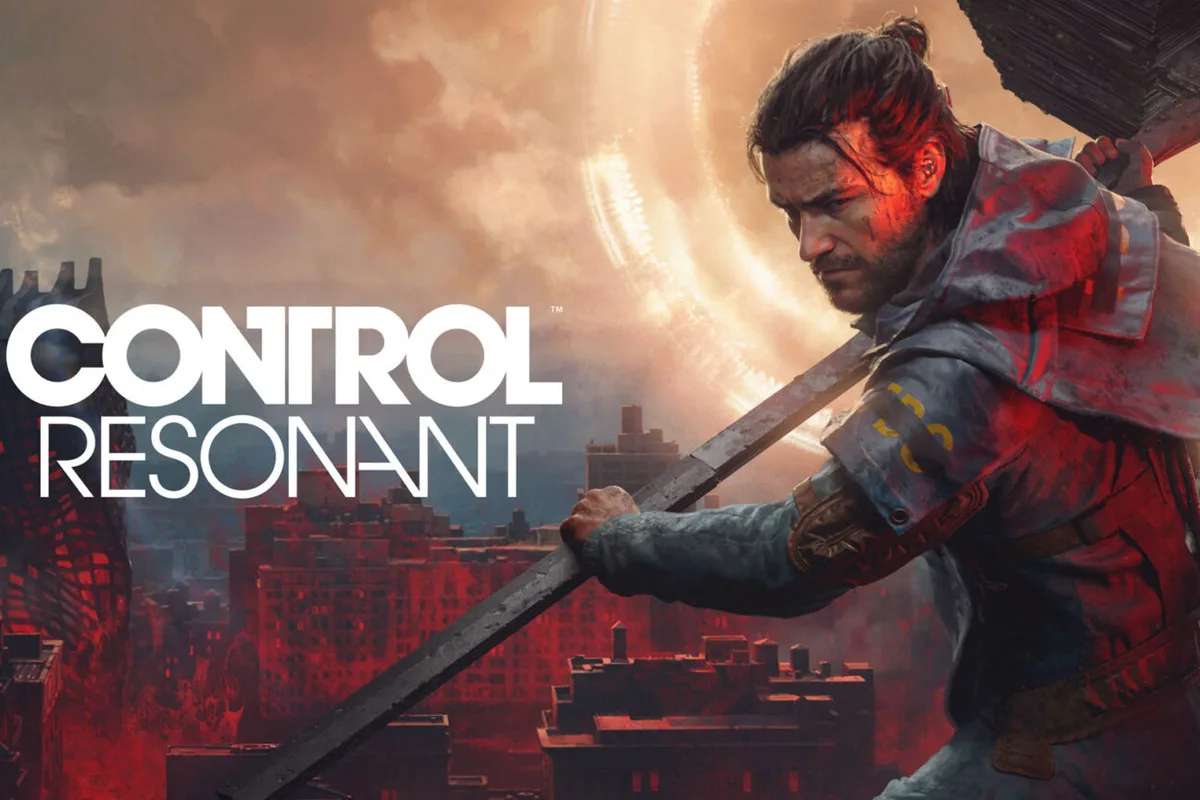
1440p60 lands around familiar mid-range hardware
The recommended tier targets 1440p at 60 fps on Medium settings with ray tracing off.
Remedy lists a Core i7-10700 or Ryzen 7 3700X alongside an RTX 3060 Ti, Radeon RX 6700 XT or Intel Arc B580.
VRAM rises to 8GB.
This profile uses Balanced upscaling, an important qualifier when comparing the published output resolution with native-rendering expectations.
Rasterized 4K60 wants RTX 3080-class hardware
The non-RT Enthusiast setting targets 2160p at 60 fps with the High preset.
That requires an RTX 3080 or Radeon RX 6800 XT and 10GB of VRAM.
The CPU requirement stays at the same Core i7-10700 or Ryzen 7 3700X level.
Performance-mode upscaling is used here too.
Ray tracing moves the goalposts quickly
The minimum ray-tracing profile drops the target back to 1080p30.
With RT set to Low, Remedy asks for an RTX 2060 Super, Radeon RX 6600 or Intel Arc A580 with 8GB of VRAM.
CPU requirements move to a Core i7-8700K or Ryzen 5 3600X.
At 1440p60 with Medium ray tracing, the GPU jump is much larger: RTX 4070 Ti or Radeon RX 9070, with 10GB of VRAM and Balanced upscaling.
That gap makes the cost of CONTROL Resonant's lighting pipeline unusually easy to see in the official chart.
The path-traced 4K60 profile belongs to the RTX 5080
The highest tier is currently NVIDIA-only.
Remedy specifies a GeForce RTX 5080 for 2160p at 60 fps with High graphics and High path tracing.
At least 12GB of VRAM is listed.
Even here, the performance target assumes DLSS in Performance mode rather than native 4K rendering.
The CPU remains a Core i7-10700 or Ryzen 7 3700X.
The RTX 5080 is therefore not excessive headroom in Remedy's own chart. It is the hardware required for the top official reconstructed-output profile.
Every tier needs 16GB of RAM and a 120GB SSD
System memory is refreshingly simple.
Every configuration lists 16GB of RAM.
Storage is less modest: CONTROL Resonant requires 120GB on an SSD across all six tiers.
There is no HDD profile.
Compared with the first Control, Resonant is operating at a much larger environmental scale, with expansive Manhattan zones rather than remaining primarily inside the Oldest House.
Upscaling is part of the design target, not an optional footnote
The PC version will ship with NVIDIA DLSS 4.5 and AMD FSR 4.1 for upscaling and frame generation.
DLSS 4.5 Ray Reconstruction is supported as well.
Remedy also confirms ray tracing, path tracing, HDR, ultrawide support and an uncapped frame rate.
The final requirements make the studio's approach clear.
CONTROL Resonant can scale down far enough to run on hardware from another PC generation, but its highest-end presentation has been built as a modern rendering showcase.
A GTX 1070 and RTX 5080 can both enter Manhattan on September 24.
They will not be seeing the same version of the light.