
Review
Trails in the Sky 2nd Chapter Turns an Excellent Foundation Into a Formidable Tactical JRPG
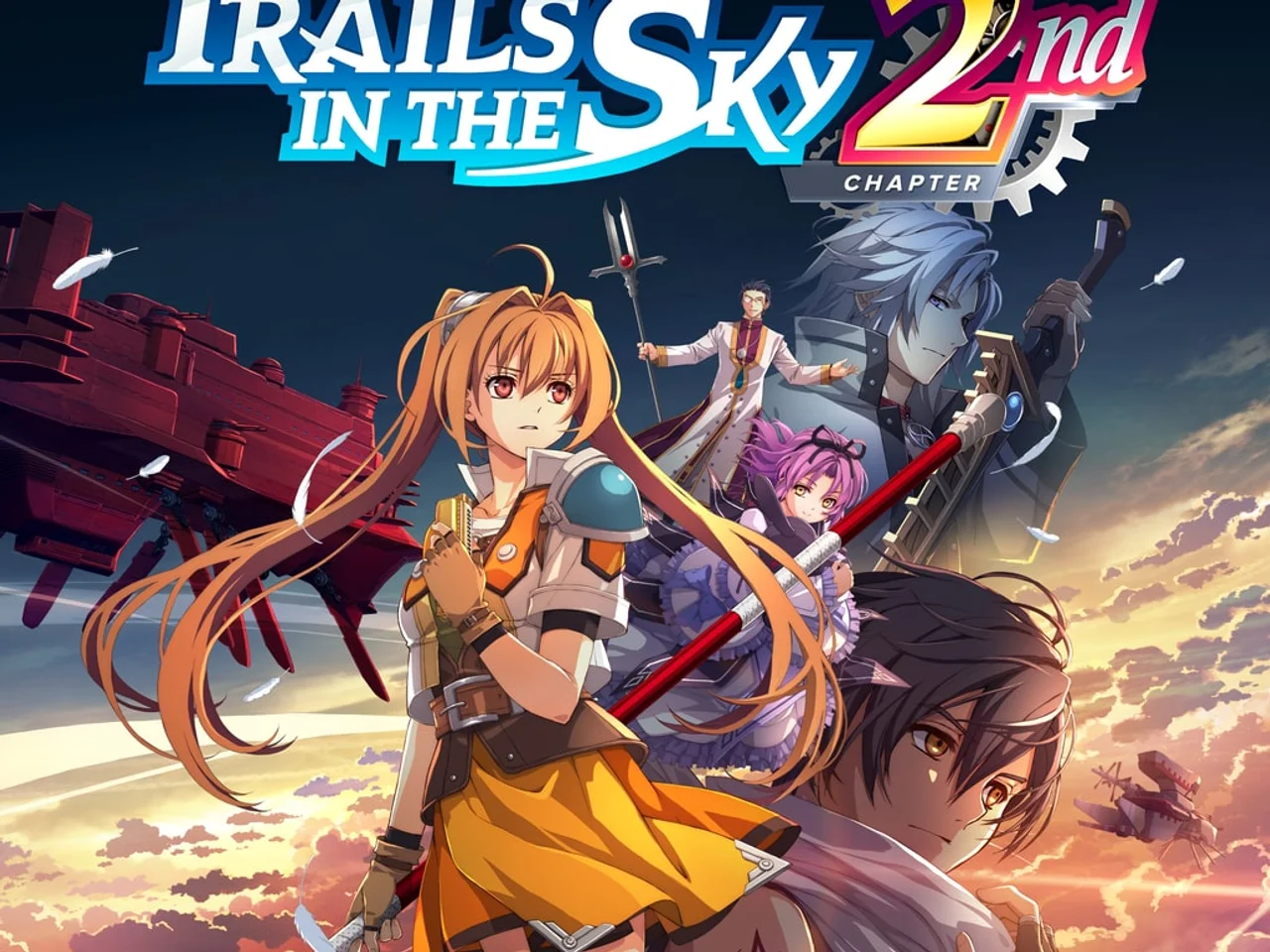
Falcom retains 1st Chapter's hybrid combat foundation but gives it more depth, more characters and more situations to solve. Between quick battles, command-based encounters and Orbment customization, this second chapter rarely has time to become routine even across a journey that can comfortably exceed sixty hours.
1st Chapter had already solved the hardest design problem
Falcom does not rebuild its combat system for the sequel. 2nd Chapter retains the hybrid structure of its predecessor: weaker enemies can be dealt with through direct field attacks, dodges and short combos, while a button press transitions into command combat whenever an encounter deserves finer control.
RPGFan and RPG Site both identify that continuity as a major strength. Routine encounters move quickly, while serious battles restore the importance of positioning, action order and resource management.
For a very long JRPG, that distinction matters. Repeating the same command against irrelevant enemies for dozens of hours is not tactical depth.
Orbments keep convenience from becoming simplicity
Beneath the faster field combat, Trails' Orbment system remains intact. Quartz affect statistics while also determining which Arts a character can access, turning each build into a choice between raw offense, magic, support and more specialized roles.
The larger cast makes that flexibility more useful. Different party compositions can approach the same fight in meaningfully different ways, while character-specific Crafts preserve individual identities.
Inven particularly praises the improved pacing and tactical customization. Falcom also includes setup assistance for players who would rather progress than optimize every Quartz slot manually. Those tools remain optional.
Early Liberl sometimes feels too familiar
The most consistent criticism concerns repetition. 2nd Chapter naturally returns to the same kingdom and spends several early arcs revisiting roads, cities and dungeons already used in 1st Chapter. RPG Site calls out repeated traversal, while RPGFan notes that some environments can feel comparatively sparse in their new 3D form.
High-Speed Mode helps enormously. It cannot make an old road into a new dungeon.
Nintendo World Report is notably less enthusiastic about this opening stretch, arguing that structural similarities and Joshua's long absence make the early game weaker than its predecessor. That contrasts with the near-unqualified enthusiasm of RPG Site and The Outerhaven, but the disagreement is mostly about pacing rather than the quality of the underlying combat.
The later campaign finally gives every system room to work
Later chapters introduce more dramatic environments and more demanding enemy configurations. At that point, the tools accumulated over dozens of hours stop feeling like small variations and become part of solving genuinely different encounters.
Nintendo World Report estimates a campaign that can easily run between sixty and one hundred hours. The impressive part is that Falcom does not need to replace its core combat halfway through to sustain it.
A strong foundation simply keeps finding new work to do.
Strengths
- Quick Battle and turn-based combat remain exceptionally fluid together
- Orbments, Arts, Crafts and party composition provide meaningful preparation depth
- A larger roster creates substantially more strategic variety
- High-Speed Mode makes revisiting familiar regions far less tedious
- Bosses and later chapters make excellent use of the complete combat toolkit
Weaknesses
- The opening revisits many locations already explored in 1st Chapter
- Some quests still demand repetitive backtracking
- Gameplay evolution is relatively conservative
- The game's length can magnify slower stretches
Trails in the Sky 2nd Chapter does not reinvent the system established a year earlier, and that is probably its smartest decision. Hybrid combat remains fast when ordinary enemies deserve no more attention, then recovers its full depth when positioning, Arts, Crafts and turn order matter. New tools and a broader party make preparation more interesting without turning every encounter into spreadsheet work. The opening revisits many familiar regions and can drag, but the escalation eventually gives this enormous campaign the variety it needs. Falcom has found an unusually strong balance between modern convenience and genuine JRPG systems.