
Review
Hogwarts Legacy: A Very Good Wizarding Game Trapped in Its Open World
Avalanche Software succeeds where Hogwarts Legacy mattered most: spells have weight, Hogwarts is rewarding to explore, and magic becomes an actual combat system. The spell weakens when the adventure leaves the castle behind and starts piling on familiar open-world chores.
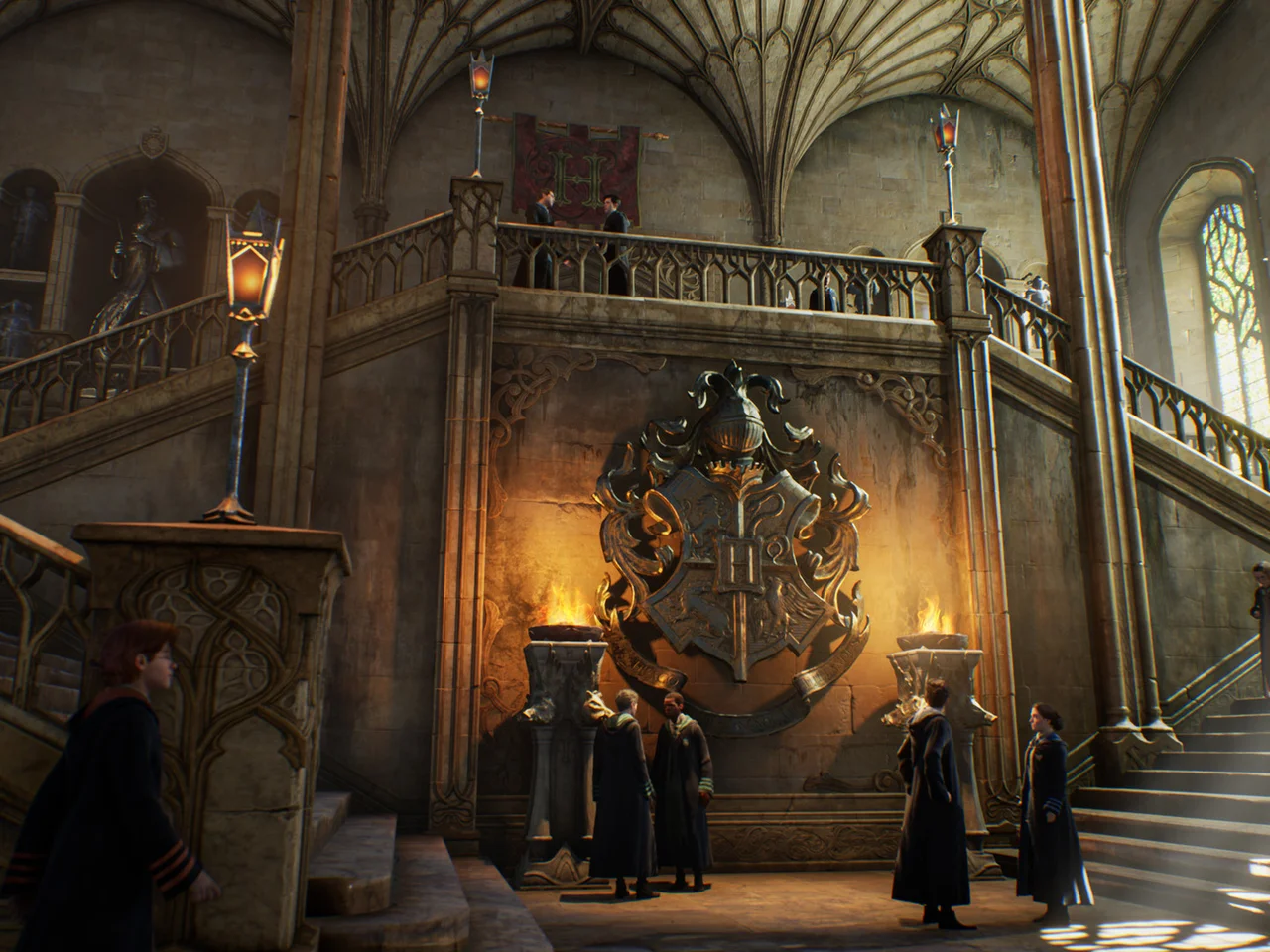
Hogwarts Legacy is at its best before the map starts demanding attention. A corridor bends into another staircase, a painting moves, a locked room hints at a puzzle, and the original objective can disappear from your mind for several minutes. Avalanche Software made Hogwarts itself worth navigating, which is a much stronger achievement than simply filling a large world.
Spell combat has an actual grammar
Magic could easily have become a reskinned third-person shooter. Instead, shields, counters, control spells, cooldowns and multiple spell sets create a small but satisfying combat language. Levioso creates space. Accio changes distance. Incendio rewards positioning. Protego and Stupefy turn defence into momentum.
That strength appears repeatedly across the review corpus. GamesRadar+ praises the combat directly, while PC Gamer describes a surprisingly broad collection of systems surrounding combat, exploration and progression. Hogwarts Legacy is not mechanically radical, but its spell combinations are expressive enough to carry dozens of encounters.
Broom flight serves a different purpose. It makes the Scottish landscape feel broad without making every journey laborious. Unfortunately, the expanded scale also gives the game room for far too many routine activities.
The open world keeps adding things
Gear scores, chests, camps, Merlin Trials, challenges and collectibles steadily crowd the experience. None is disastrous in isolation. Together they make an initially generous RPG feel increasingly administrative.
Loot is the clearest example. Clothing upgrades arrive constantly, yet few of them change how combat feels in a meaningful way. Inventory management becomes a tax attached to exploration. GamesRadar+ points to the messy economy and progression, while The Guardian argues that the broader game eventually starts resembling many familiar open-world releases.
Role-playing without much consequence
There is also a gap between the fiction and the systems. Hogwarts is presented as a school full of rules, traditions and dangerous forms of magic, but the game rarely reacts meaningfully to the player's behaviour. Unforgivable Curses are mechanically significant and morally explosive in the fiction, yet they do not produce a comparably substantial systemic response.
That makes the protagonist less of a role to inhabit and more of a flexible vehicle for whatever mechanics have been unlocked.
The castle is still the real reward
Hogwarts Legacy earns its score when it stops behaving like a checklist. Exploration inside the castle, stronger bespoke quests and chaotic spell battles reveal how good Avalanche's core design can be. The weaker material mostly exists around it rather than inside it.
At 16/20, this is an accomplished action RPG with an unusually strong setting and a combat system that does justice to its magic. A smaller map and a harsher edit would have made it considerably better.
Strengths
- An exceptional Hogwarts to explore
- Fast, readable spell combat built around combinations
- Progression steadily opens new possibilities
- Broom travel gives exploration a convincing sense of freedom
Weaknesses
- Too many generic activities and collectibles outside the main locations
- Loot and economy systems are unnecessarily cumbersome
- Choices and Dark Arts have little systemic consequence
- A number of side activities become repetitive
Hogwarts Legacy works because its foundation is excellent: exploring Hogwarts is rewarding, spell combat is lively, and its systems leave room for experimentation. The problem is everything layered around that core: an enormous open-world RPG whose loot, collectibles, and many side activities are far more conventional. It is generous to a fault, but its strongest mechanics finally give the Wizarding World a convincing game of its own.