
Review
Genshin Impact in 2026 — a superb party RPG still trapped inside its gacha economy
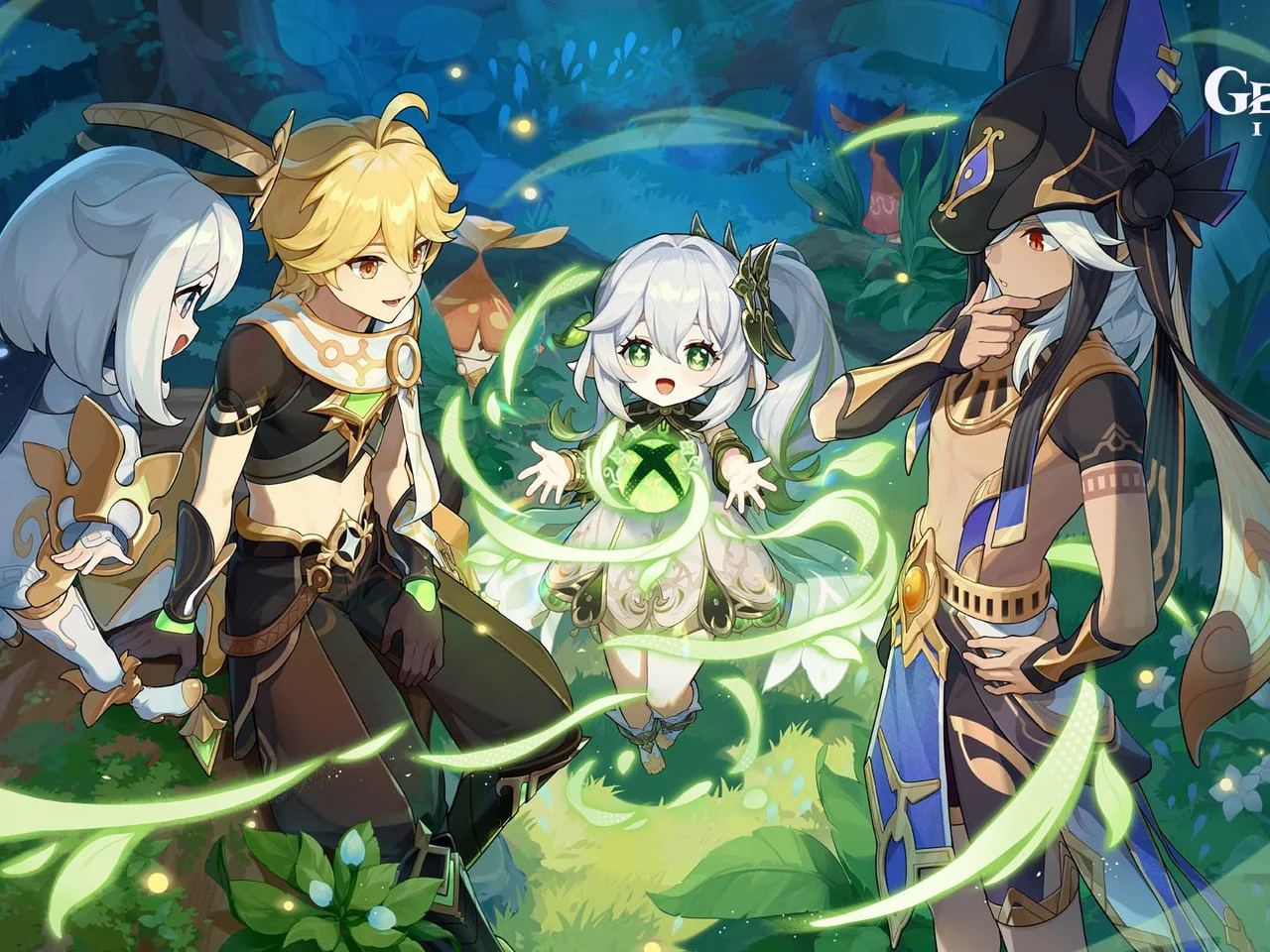
Six years after launch, Genshin Impact is no longer merely the free-to-play Breath of the Wild comparison that followed it in 2020. Its elemental combat, regions and exploration now have a clear identity of their own. The old problem never vanished, however: every exciting new character remains attached to an economy of scarcity, Resin and pulls that can turn team-building into resource scheduling.
The combat has long outgrown the Zelda comparison
Launch reviews in 2020 already identified Genshin Impact's strongest idea: four instantly swappable characters whose elements interact.
That system has grown enormously. Pyro, Hydro, Cryo, Electro, Dendro, Anemo and Geo are not simply damage colours; they define rotations, roles, team archetypes and reaction windows.
A character rarely exists in isolation. An average unit in one composition can become crucial in another because it applies the right element, generates enough energy or changes how frequently a reaction occurs.
The best teams behave like mechanisms rather than four heroes
Genshin naturally pushes toward rotations: skill, swap, Burst, reaction, another application, then back to the primary damage dealer.
At its best, the satisfaction comes less from one spectacular attack than from four kits suddenly behaving as one machine.
That interaction is also why many older characters remain relevant. New units can increase the value of an existing reaction or create a new job for a support released years earlier.
Teyvat eventually found the identity its launch areas lacked
GameSpot criticized version 1.0 for environments that could feel visually generic. That is much harder to apply to the current game.
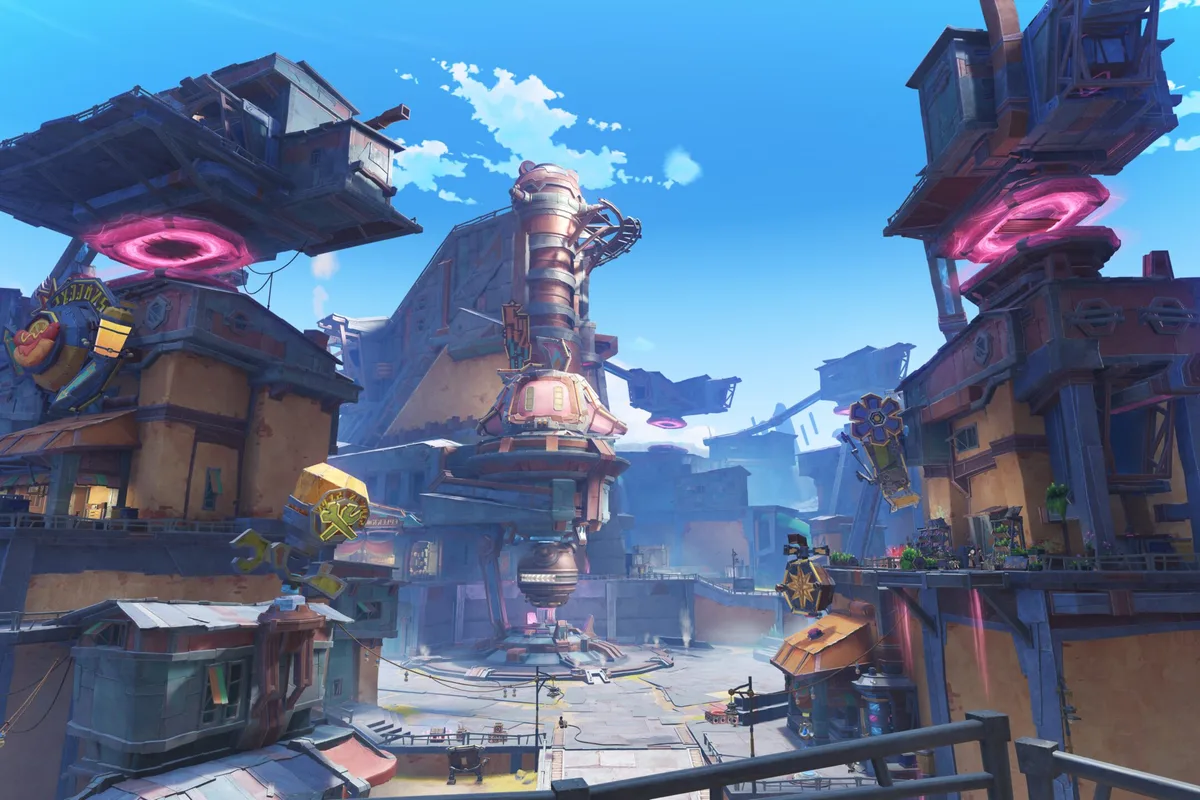
Later regions increasingly build their own movement, puzzle and traversal languages. Fontaine reorganized exploration around water, Natlan tied mobility more aggressively to local mechanics, and Nod-Krai introduced Kuuvahki interactions that alter how spaces are navigated.
HoYoverse is no longer merely building new scenery around climbing and gliding.
The world is still better before you finish it
A newly opened region is usually much more exciting than the same place months later.
Once chests, quests and puzzles are exhausted, many environments become material routes. The geography remains beautiful, but its interactive density rarely regenerates.
That gives each expansion a familiar lifecycle: several weeks of genuine adventure followed by a gradual return to service-game routine.
And those routines remain impossible to ignore
Resin, scheduled domains, boss materials and local resources still determine much of character progression.
The issue is not merely that building a unit takes time. Multiple layers deliberately limit how much useful progress can be made in a single day.
You therefore ask not only what you want to improve, but what the calendar currently allows you to improve.
Artifacts remain the hardest system to defend
A finished character often depends on equipment generated through several layers of randomness: correct set, correct slot, useful main stat, good substats, then favourable upgrade rolls.
Progress can therefore consume resources without meaningfully moving forward.
That friction extends the endgame and demonstrates why criticism of Genshin's economy cannot be reduced to the Wish screen alone.
The gacha is less mandatory than its reputation and more structural than its defenders suggest
Launch reviews correctly noted that free characters can clear the game. That remains broadly true. Genshin does not require payment in order to function as an adventure.
But much of its desire economy is built around new characters. Story quests, trailers, animation and unique mechanics make those characters appealing before limited currency and pity determine whether they join your account.
The system does not stop you playing. It strongly influences which toys you get to play with.
Six years later, the foundation is still remarkably strong
Genshin has accumulated currencies, modes and menus, yet its core has survived.
Entering an unfamiliar landscape, seeing a distant landmark, improvising a party and discovering a new elemental interaction remain enjoyable without needing a limited-time event to justify them.
That is why the game can survive its own retention machinery. Under the schedules, banners and resource gates, there is still an excellent action RPG.
Strengths
- Elemental reactions remain one of the genre's best party-combat systems
- Newer regions have increasingly distinct exploration identities
- An enormous amount of meaningful content remains playable without spending
- Character kits regularly renew team-building
- Horizontal progression keeps many older characters relevant
Weaknesses
- Gacha still controls access to the most desirable characters
- Artifact farming can become an exceptionally frustrating time sink
- Resin, scheduled materials and rotations still impose artificial calendars
- Limited high-end difficulty sometimes underserves the depth of team composition
- Peripheral systems increasingly clutter the experience
Genshin Impact deserves more than the old “good despite the gacha” label, but less than complete absolution simply because so much of it is free. By 2026, its reactions, mobility and team construction form a genuine design language refined over six years. Yet monetization is not an external blemish: it affects character access, equipment progression and the way players schedule their weeks. Genshin remains an excellent action RPG. It simply is not as free as its world feels.