
Review
Satisfactory: the perfect factory does not exist, and that's exactly why you keep building

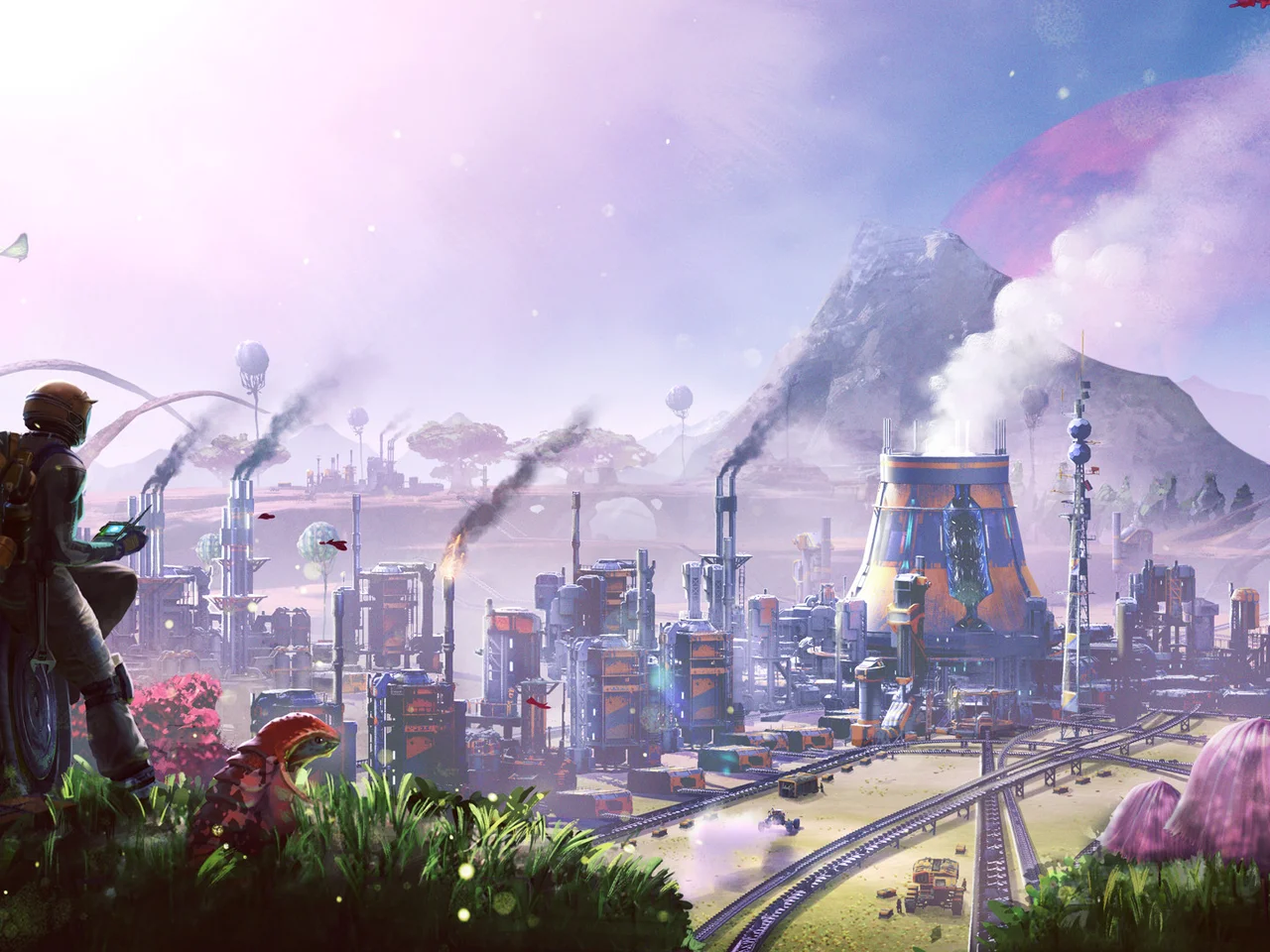
Satisfactory turns industrial problems into an almost endless chain of small victories. Every new technology solves one constraint before exposing three more, while three-dimensional construction gives optimisation a spatial dimension few automation games can match. Version 1.2 further refines an already exceptional package, even if exploration and combat remain far behind the factory-building.
Satisfactory understands that sixty iron plates per minute can be both an achievement and a future bottleneck.
A production line solves one requirement, which unlocks another machine, which exposes a power shortage, which creates a transport problem, which eventually gives you a perfectly reasonable excuse to rebuild half the factory.
Progression repeatedly redefines what finished means
PC Gamer identifies this escalation as one of the game's strongest systems. New resources and faster machines do not merely increase numbers. They change the assumptions behind existing infrastructure.
A belt becomes saturated. A generator network reaches capacity. A component once produced locally now needs to cross the map.
Satisfactory keeps old construction relevant by constantly creating reasons to reinterpret it.
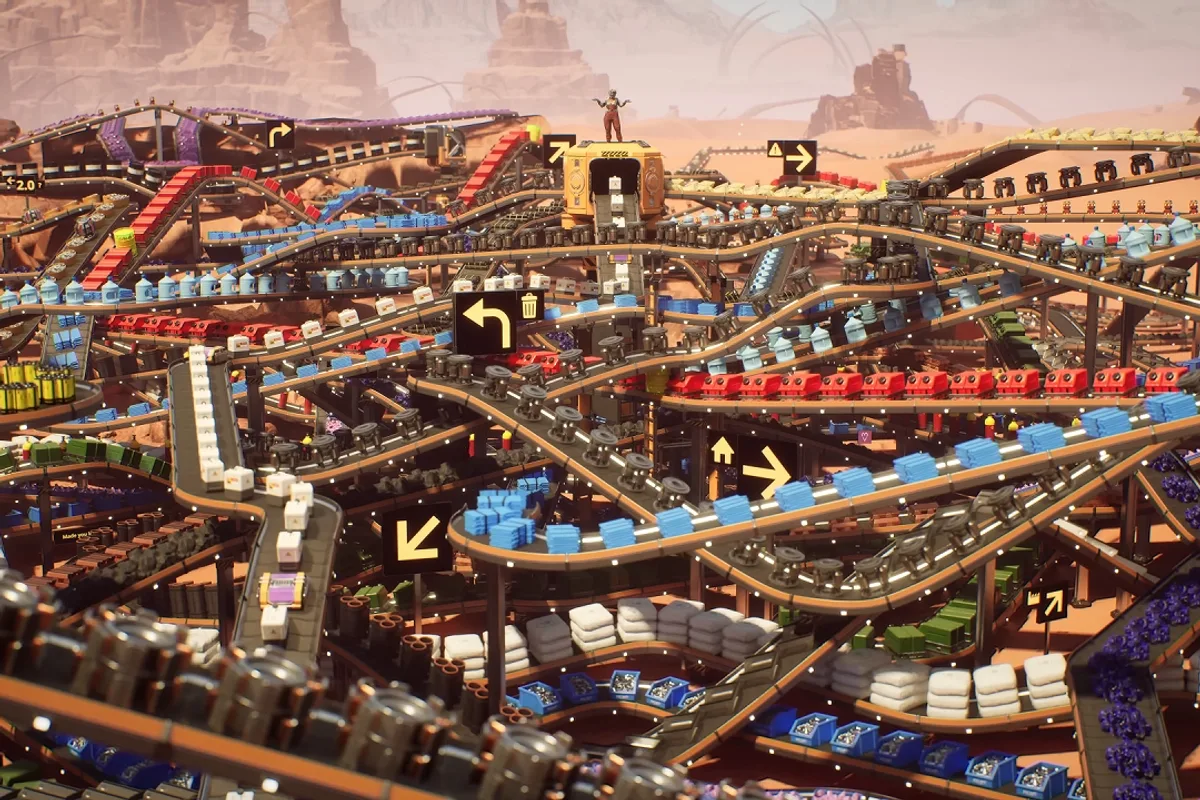
Three-dimensional space is part of the optimisation puzzle
Factories can rise vertically, belts can cross above other logistics and entire production floors can be placed over water or difficult terrain.
PC Gamer particularly praises how geography changes design decisions. The same recipe can produce completely different factories depending on where and how a player chooses to build.
The first-person perspective therefore contributes more than scale. It turns space itself into one of the variables.
Coffee Stain removes friction without removing complexity
Blueprints, zooping and years of construction quality-of-life work make enormous projects practical without automating the interesting decisions away.
Update 1.1 expanded controller support, logistics, rail tools and construction features. Update 1.2 became available across supported platforms on June 2, 2026, continuing that long refinement cycle.
Transportation eventually turns one factory into an industrial network
Early conveyor belts encourage concentration. Trains and drones make regional specialisation practical.
Oil processing can remain close to oil fields. Aluminium production can sit near the appropriate resources. Rail then connects those facilities into a broader supply network.
The game gradually changes the scale at which players think.
Exploration works best when it feeds construction
IGN praises the handcrafted alien world as an effective break from factory work. Searching for hard drives, power slugs and new resources gives movement a concrete industrial purpose.
The combat encountered along the way is much less developed.
Wildlife is functional rather than deep
IGN identifies combat as one of the weaker parts of the package. Weapons and mobility tools make encounters manageable, but enemy variety and behaviour cannot compete with the sophistication of factory systems.
Satisfactory is fortunate enough to know what its main attraction is.
The 1.0 story provides an endpoint rather than a new identity
Project Assembly and the alien artifacts give the technological climb a clearer destination.
GameStar considers the narrative fairly shallow, which is accurate. It contextualises the work without trying to replace player-made stories with a heavily authored campaign.
Enormous factories create their own problems
Large saves naturally become more demanding as machines, vehicles and logistics accumulate.
The larger challenge can be conceptual. Returning to an old factory after a long break can feel like investigating somebody else's industrial system.
That complexity is not entirely a defect. It is evidence that the structures have become meaningful enough to require understanding.
The final factory should probably never exist
Satisfactory constantly provides a reason to improve something that was previously good enough.
That could feel like endless busywork. Instead, visible physical transformation makes optimisation unusually rewarding.
You do not merely increase efficiency by twelve percent. You stand on a tower and look across several kilometres of machinery that now makes more sense than it did yesterday.
Strengths
- Exceptional automation loop
- Progression constantly creates new problems to solve
- Three-dimensional construction meaningfully affects design
- Excellent logistics and quality-of-life tools
- Trains and drones radically expand industrial scale
- Beautiful handcrafted open world
- Outstanding continued support through Version 1.2
Weaknesses
- Combat remains secondary
- Wildlife becomes repetitive
- 1.0 narrative is shallow
- Extremely large factories can become technically demanding
- Returning to an old save can be intimidating
Satisfactory is one of the few automation games where improving a factory never feels like merely replacing one number with another. Every decision has shape, height, distance and a visible consequence in the world. Combat, wildlife and story never match the depth of construction, but they do not need to. Updates 1.1 and 1.2 have continued polishing an already remarkable system. Coffee Stain did not build the perfect factory; it built a game where attempting to create one can consume hundreds of hours.