
Review
Anno 117: Pax Romana Simplifies the Formula Just Enough to Let Its Cities Breathe

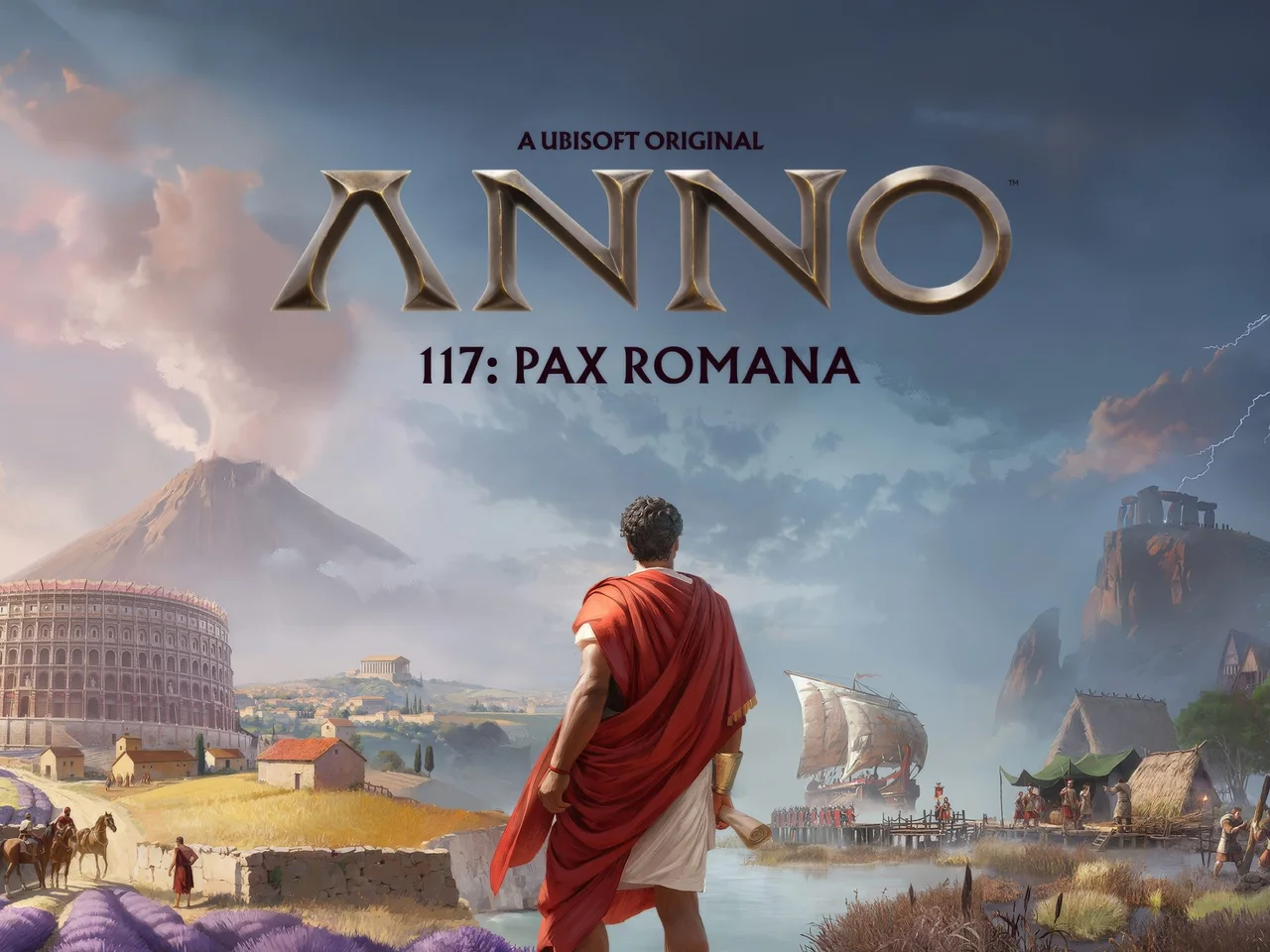
Ubisoft Mainz takes Anno into antiquity without breaking what makes the series addictive: needs, production chains, trade and expansion still form a delayed-action machine where one bakery can eventually dictate the layout of an entire island. Pax Romana is more approachable than Anno 1800, occasionally at the expense of depth, but Latium, Albion, area effects, religion and returning land combat keep that simplification from becoming mere reduction.
Anno can still turn a sardine into an urban-planning problem
The fundamental structure remains almost untouched. A population requests a good, that good requires a production chain, the chain consumes space and labor, and its efficiency eventually changes the layout of an entire district.
PC Gamer and IGN both identify this economic loop as the intact core of Pax Romana. It is readable enough for a newcomer to understand why a city is starving, yet interconnected enough for trade networks to eventually span multiple islands.
That remains more compelling than nearly everything surrounding it.
Needs are less binary than before
Pax Romana loosens one of the series' traditional restrictions. Satisfying residents does not always mean checking exactly the same sequence of mandatory goods.
Needs can be fulfilled through different choices, while attributes and area effects reward careful placement rather than simply confirming that a service building exists somewhere nearby.
The result is simultaneously more approachable and more flexible as a city-planning game. TechRadar welcomes that accessibility while warning that long-time Anno 1800 players may miss some of the older game's economic density.
Latium and Albion are not merely different visual themes
Latium delivers the recognizable Roman provincial fantasy: Mediterranean agriculture, monumental construction and highly structured social progression.
Albion works differently. Marshes, rain, unique resources and Celtic traditions force different layouts. Wetland-dependent production and cultural choices between Romanization and local customs create constraints Latium never uses.
Several reviews nevertheless find the second province less developed. TechRadar makes that imbalance one of its clearest reservations.
Diagonal roads matter beyond prettier screenshots
Diagonal construction initially sounds cosmetic. In practice it helps cities escape the strict grids associated with earlier Anno games.
Area effects reinforce that flexibility. Religious, administrative and service buildings are not valuable only because they exist; their position can improve surrounding districts and alter the value of nearby land.
PC Games highlights the combination of needs, attributes and area effects as one of the more meaningful changes to the established formula.
War returns without taking over the city builder
Land combat returns with units occupying different battlefield roles. GamesRadar describes a straightforward counter system between troop types, while naval power remains important for both trade and warfare.
Combat is still comparatively basic and expensive. It works mostly because building the economy required to support an army is more interesting than directing the army itself.
A prosperous campaign can therefore still lean heavily on trade and diplomacy. For Anno, that freedom matters.
The campaign teaches more effectively than it invites replay
Marcus Naukratius and Marcia Tertia provide two protagonists for a campaign where narrative progress and mechanical onboarding advance together. New systems are introduced gradually instead of arriving as one overwhelming sandbox menu.
Critical opinion diverges on the story itself. GameSpew enjoys its political drama and twists, while GamesRadar considers it largely functional and primarily valuable as an extended tutorial.
The disagreement matters less over dozens of hours. The real time sink begins once scripted objectives stop dictating what should happen next.
The 2026 build is already more mature than the launch version
Ubisoft Mainz has spent the post-launch year adjusting AI, economy behavior and quality-of-life systems. Update 1.5 introduced workforce priorities intended to prevent negative economic spirals, while 1.5.2 reduced early rival aggression and improved military AI behavior.
The process has not been spotless. Ubisoft publicly acknowledged that update 1.5 did not meet its own quality expectations, and several follow-up patches were required.
By September 2026, version 2.1 therefore rests on almost a year of iteration. The base design remains the same, but a meaningful amount of launch friction has already been removed.
Strengths
- Production chains remain deeply satisfying to optimize
- Diagonal roads and area effects make city planning less rigid
- Latium and Albion impose different resources and constraints
- The needs system offers more choice than a fixed mandatory checklist
- Religion, research and specialists add several additional optimization layers
- Returning land combat diversifies expansion without making warfare mandatory
Weaknesses
- Less complex than Anno 1800 in several economic areas
- Albion can feel less developed than Latium
- Some menus unnecessarily hide important production-chain information
- Land combat remains fairly basic
- The campaign functions more as a narrative tutorial than a major replay incentive
- New players can still suffer sudden financial collapses before understanding expansion pacing
Anno 117: Pax Romana is at its best when a small colony gradually becomes an economic machine that can no longer be rearranged without consequences. Diagonal roads, area effects, more flexible population needs and two distinct provinces create greater freedom in city layout without abandoning the logic of production chains. The compromise is most visible for Anno 1800 veterans: Albion is less dense than Latium, some supply chains are shorter, and land combat remains far less interesting than the economy required to support it. The campaign works well as onboarding rather than as the game's main attraction. Sandbox play is where the design becomes dangerous to free time: once production, trade, belief and expansion begin interlocking, hours disappear very quickly.