
News News Official
Dark Souls II: A Gigantic Cut Coliseum and Forgotten Areas Resurface Twelve Years After Release
Dark Souls II still has secrets to reveal. More than twelve years after its release, dataminer Doneda has showcased the remains of a monumental map abandoned during development. The exploration reveals an enormous coliseum, mining areas, an underground structure and crypt fragments. Widely covered on October 18, 2026, the discovery offers a rare look at FromSoftware's experiments and the game that might have existed.
 By Maëlle Dark Souls II
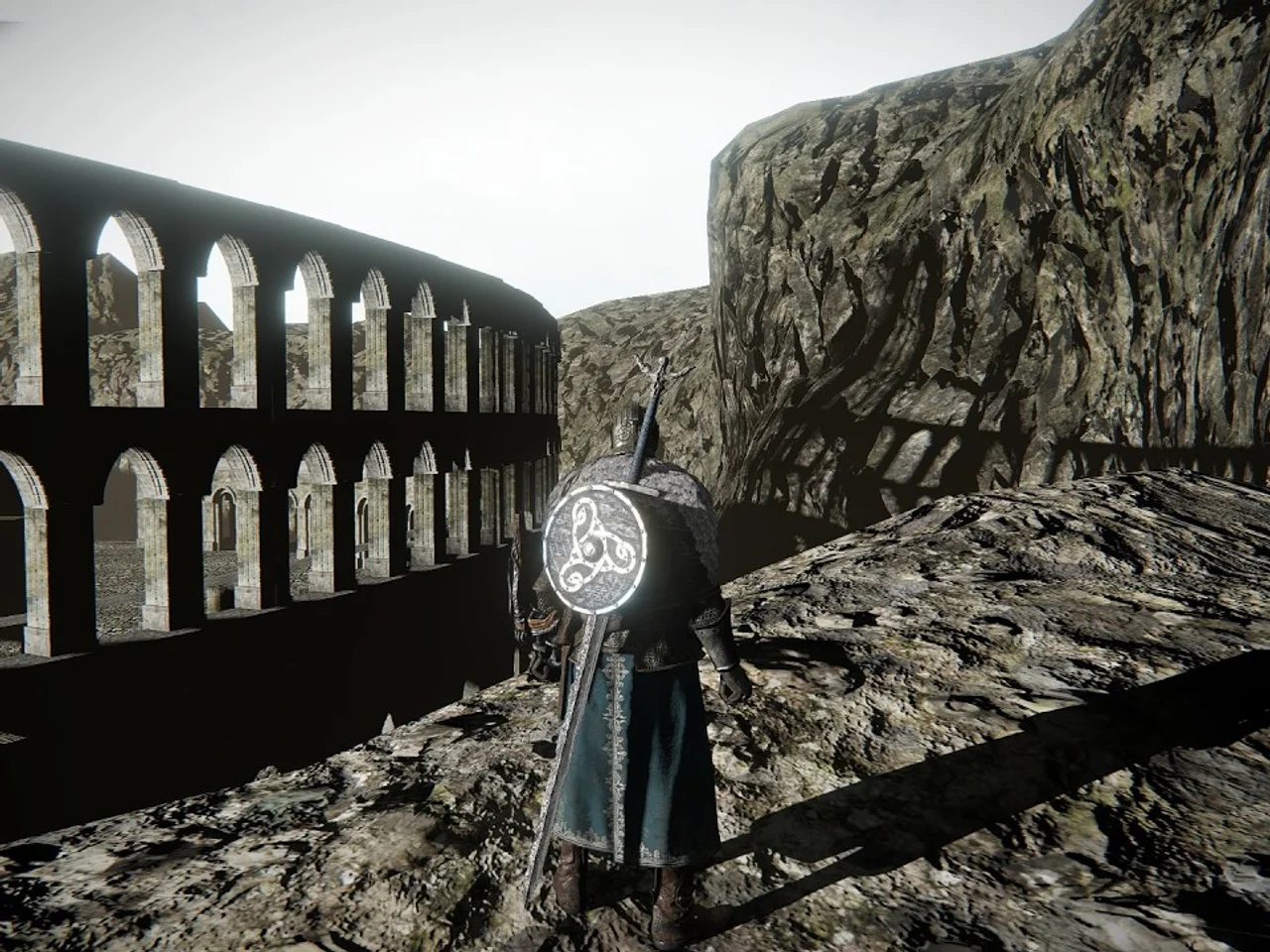
A Lost Part of Dark Souls II
Some videogame discoveries do not reveal a hidden boss or secret quest. Instead, they expose an entire part of a game that never reached players.
That is what makes the latest Dark Souls II discovery compelling.
Content creator Doneda, known for examining FromSoftware's abandoned resources, has demonstrated several unused environments from the game's development.
The material attracted wider coverage on October 18, including an article in PC Gamer. It had already circulated among some Dark Souls II enthusiasts earlier in the month.
This is therefore not a new announcement from FromSoftware.
A Coliseum of Extraordinary Scale
The centerpiece of the exploration is an immense coliseum.
Its proportions appear considerably larger than the arenas normally associated with Dark Souls II.
The comparison with Elden Ring's coliseums is understandable, although no official measurements establish a precise size difference.
The most interesting aspect is the architectural ambition. The structure suggests a complex far larger than an ordinary boss chamber.
However, the intended gameplay purpose remains unknown.
Mines, an Underground Tower and a Crypt
The coliseum is only one part of the material shown.
Other fragments include mining areas, a large underground tower and a crypt section.
Some areas appear connected, while others may represent different iterations of similar ideas.
That uncertainty matters because surviving prototype files do not necessarily represent a single complete level.
Early development assets can preserve experiments, discarded layouts and structures that were never meant to coexist in a finished version.
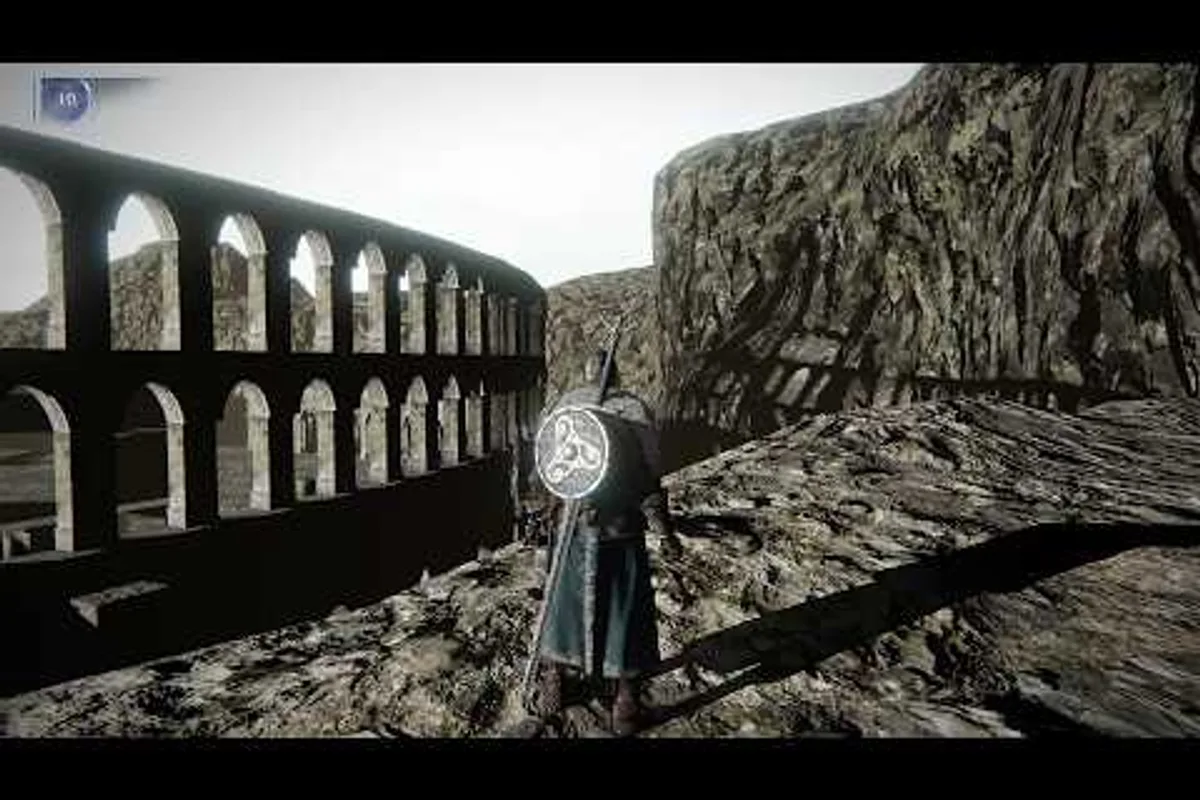
The exploration footage comes from Doneda's reconstruction work, not an official Dark Souls II update.
Elden Ring Nightreign Provides the Exploration Environment
Doneda uses Elden Ring Nightreign to load and examine elements originating from Dark Souls II.
This is a community technical project rather than an officially released Nightreign feature.
The approach makes it possible to inspect surviving geometry that is normally inaccessible in the original commercial game.
However, the characters, movement systems and rendering environment used in the footage should not be mistaken for proof of how the prototype operated during its original development.
Viewers are seeing old assets through a newer visualization method, not an authenticated playable build from 2014.
Was the Underground Tower Intended for Boss Battles?
The unusual underground tower is among the most intriguing structures.
Its apparent scale has inspired speculation that it might have contained a sequence of combat arenas.
Some observers draw comparisons with later FromSoftware concepts.
However, there is no publicly verified design document establishing that the tower was intended for multiple boss encounters.
Its purpose may have changed during development or never been fully defined.
A Possible Connection to the Undead Crypt
Another theory concerns the Undead Crypt, an important location in the final version of Dark Souls II.
The surviving crypt area suggests a thematic connection that has attracted attention from fans and commentators.
It is possible that earlier ideas contributed to the finished location.
However, a direct developmental relationship remains unconfirmed.
Similar architecture or themes do not establish that one prototype necessarily evolved into another.
Why Was So Much Content Discarded?
Dark Souls II experienced significant changes during development.
Earlier previews and subsequent discoveries document different approaches to level structure, visual presentation and other design elements.
The final game retains signs of an extensive process of experimentation.
However, FromSoftware has not provided a detailed public explanation for the removal of this particular complex.
Possible factors include technical difficulties, narrative changes or revisions to overall progression, but none can be presented as the confirmed reason.
Doneda Previously Explored The Gutter's Early Design
The new work follows other investigations by Doneda.
One explored an early version of The Gutter, a location recognizable for its vertical spaces, precarious platforms and hostile atmosphere.
The abandoned material revealed arrangements different from those used in the final game.
Doneda has also experimented with adapting Eleum Loyce to an environment compatible with Elden Ring Nightreign.
Together, these projects help document how spaces changed during development rather than treating the released game as the only form its world could have taken.
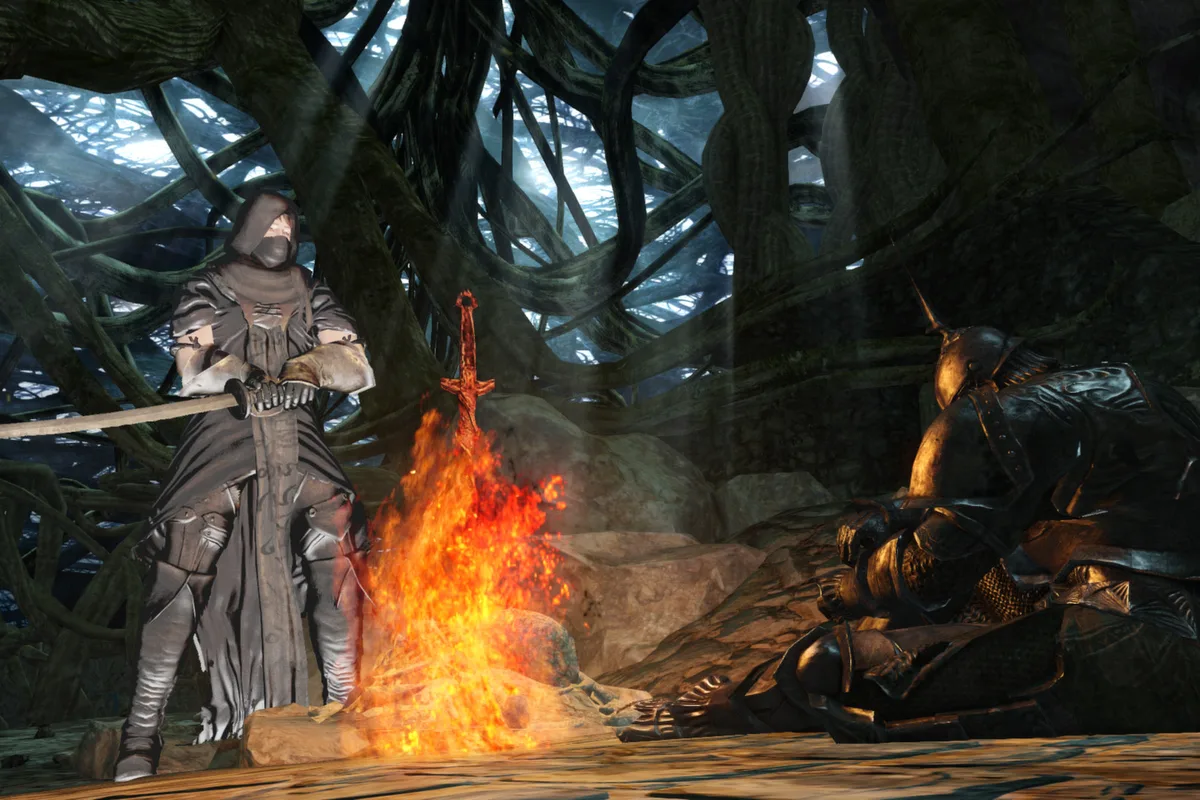
This image shows the commercially released Dark Souls II and is included only as contextual illustration.
A Discovery, Not a Remake Announcement
The footage will inevitably encourage calls for restoration.
Some players would like to explore the complex as a complete level with enemies, shortcuts and boss encounters.
However, FromSoftware has not announced an official restoration, remake, update or DLC based on this material.
Doneda's work belongs to the fields of datamining and community reconstruction.
Even a future playable fan recreation would need to be distinguished from content fully designed and released by the original developers.
The Dark Souls II That Might Have Been
That is ultimately what makes this discovery so fascinating.
More than a decade after release, Dark Souls II continues to reveal discarded architecture and alternative design directions.
The coliseum does not prove that the game would have been better, larger or more cohesive if the area had survived.
It does demonstrate that FromSoftware experimented with remarkably ambitious environments before settling on the final journey through Drangleic.
The mines, underground tower and crypt fragments preserve traces of a world that might have taken a very different shape.
Further research or testimony from the original development team would be needed to establish the intended structure.
For now, Doneda's footage offers a rare view of something most Dark Souls II players never encountered: not a hidden secret inside the finished game, but part of the game that development left behind.