
Review
Graveyard Keeper 2 Digs Deeper, but It Still Loves Making You Work for Everything

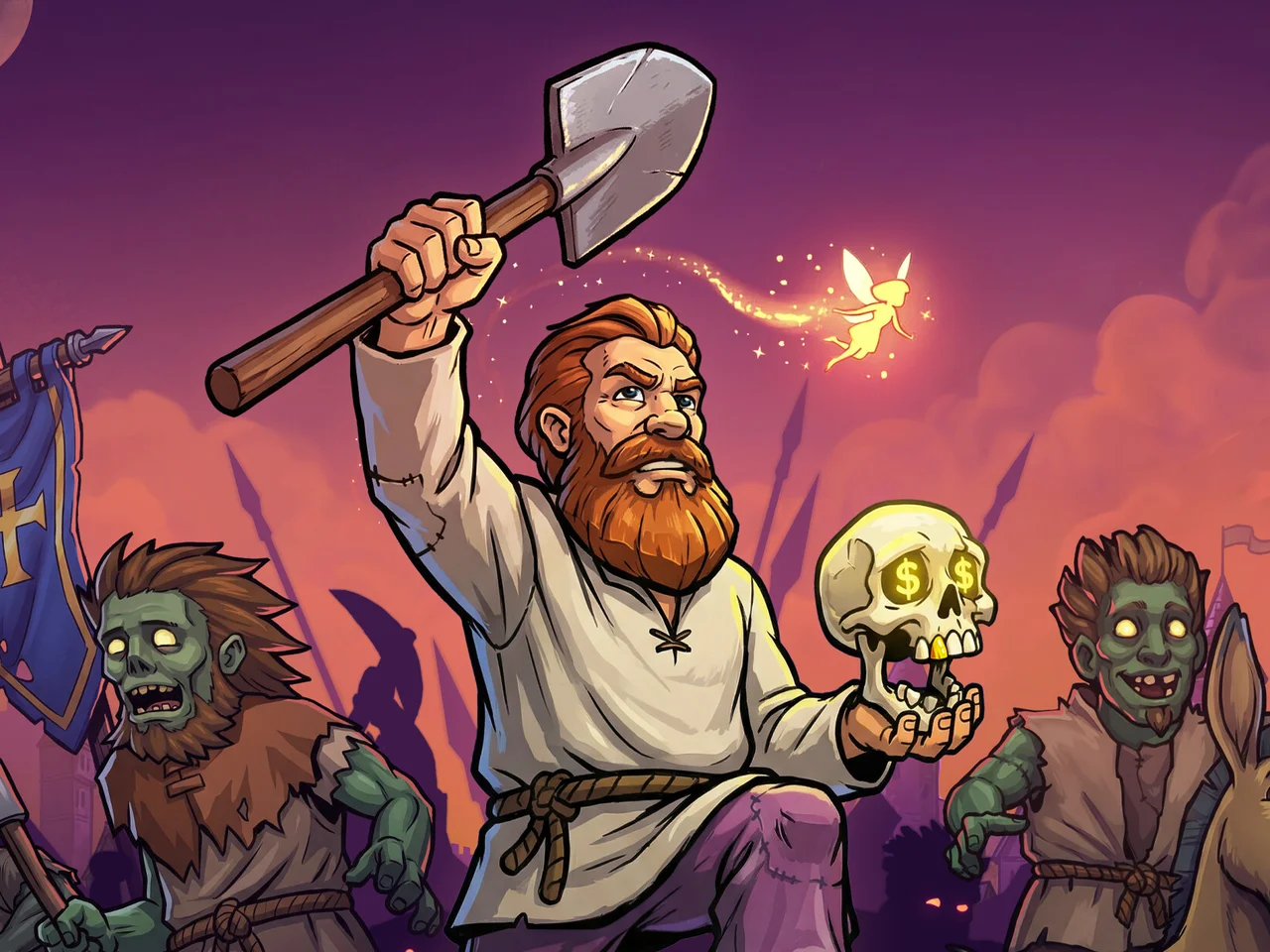
Lazy Bear Games expands almost every part of its macabre management sim with automated production, a town to rebuild, zombie battles, larger progression trees and an avalanche of additional recipes. The result is richer and frequently more rewarding than the original, but its appeal still depends on a simple question: how many intermediate steps are you willing to complete just to make a plank?
A plank is rarely just a plank
Graveyard Keeper 2 retains the idea that divided players in the original: very little happens immediately. Making an item often requires a material, which requires a tool, a technology, a workstation and sometimes another processed resource somewhere else. Shacknews takes this criticism furthest, arguing that prerequisite complexity can feel more like administrative labor than an interesting problem to solve.
GameSpew looks at almost the same architecture and finds one of the game's main strengths. Once the pieces begin connecting properly, preparing resources, unlocking technology and finally completing a production chain creates a specific kind of satisfaction.
That disagreement is the game in miniature.
Progression gives more, faster
AIPT identifies a meaningful improvement over the first Graveyard Keeper: technology resources are easier to acquire. Progress is therefore less likely to stop because the player simply lacks enough abstract research currency.
The friction moves elsewhere. There are so many recipes and paths that having enough points does not necessarily make the decision obvious.
Thumb Culture was still encountering new tutorials after more than twenty hours. The depth is genuine. Its presentation does not always keep pace.
Zombies finally give the grind somewhere to go
Automation is Lazy Bear's strongest answer to criticism of the first game. Repetitive labor can gradually be transferred to zombie workers and conveyor-driven production.
That changes the player's role from personally carrying every resource to designing an operation that can increasingly function without constant supervision. GameSpew highlights how rewarding the crafting structure becomes when those systems finally align.
The important phrase is finally align.
The Town gives all those resources another destination
Restoring The Town creates a second major loop beyond improving the graveyard and workshops. Districts need to be reclaimed from hostile undead before reconstruction can advance.
Crafted equipment feeds fortifications, troops and local needs. Zombie battles introduce compact strategy sequences built around barricades, units and preparation. AIPT describes them as miniature wargames embedded within the Keeper's daily routine.
They are not as deep as the production game. They do something equally useful by giving production a purpose beyond producing more production.
The sequel knows players will forget what they were doing
The original could leave players trying to remember a conversation from several hours earlier. Graveyard Keeper 2 introduces more structured quest tracking. AIPT particularly praises the flowchart-like presentation that connects individual tasks to their broader narrative chains.
It still does not eliminate every progression trap. Thumb Culture describes spending unnecessary time before realizing that a completed quest simply needed to be turned in to unlock further systems.
This is clearer than before, not effortless.
The critical disagreement defines the audience
Try Hard Guides praises how frequently chores provide tangible advancement. Shacknews sees the same multiplication of chores as something resembling a second job. Steam Deck HQ lands between them, finding an enjoyable underlying loop but arguing that grinding and progression roadblocks have only been reduced rather than solved.
Trying to completely reconcile those positions would miss the point. Graveyard Keeper 2 is designed for the kind of player who sees a fifteen-step production chain and immediately wonders how to optimize it.
Everyone else may decide the cemetery already has enough work.
Strengths
- Extremely interconnected management and crafting systems
- Zombie automation gives long production chains a meaningful payoff
- Restoring The Town substantially expands the game's objectives
- Battles and fortifications give crafted resources a new purpose
- Quest tracking and some progression systems are clearer than in the original
Weaknesses
- Many recipes still require several preparatory steps before producing the item actually needed
- The opening can overwhelm with systems, menus and tutorials
- Grinding remains substantial despite improvements
- Progress can stall because of an easily missed quest step or prerequisite
- Social interactions remain secondary to production optimization
Graveyard Keeper 2 is a genuine sequel for players who already enjoyed turning a trivial task into a twelve-step production chain. Its new systems interlock intelligently: gathering, crafting, technology progression, zombie workers, town restoration and battles eventually feed the same economy. Several reviewers praise that depth and the constant sense that something can be optimized; others see the exact same structure as grind becoming almost bureaucratic. Both readings are fair. Quest tracking and some friction from the original have improved, but the game remains deliberately slow, dense and obsessed with micro-goals. For players who enjoy organizing chaos, there is still very little else quite like it.