News News Official
Romancing SaGa 2 passes one million units as Square Enix celebrates a 29-year franchise milestone
Nearly three decades have passed since a SaGa game last reached this milestone. On October 23, 2026, Square Enix announced that Romancing SaGa 2: Revenge of the Seven had surpassed one million units worldwide, combining physical shipments and digital sales. No entry in the series had achieved that result since SaGa Frontier in 1997. The announcement comes almost two years after the remake's original release and several months before the planned arrival of Romancing SaGa 3: Destinies United.
 By Maëlle Romancing SaGa 2: Revenge of the Seven
One million may seem like a modest number in an industry where major publishers regularly celebrate launches involving many millions of copies.
For the SaGa franchise, however, it represents a historic achievement.
On October 23, 2026, Square Enix confirmed that Romancing SaGa 2: Revenge of the Seven had surpassed the milestone worldwide.
The last entry in the series to reach that level was SaGa Frontier, released in 1997 for the original PlayStation.
Twenty-nine years separate the two milestones.
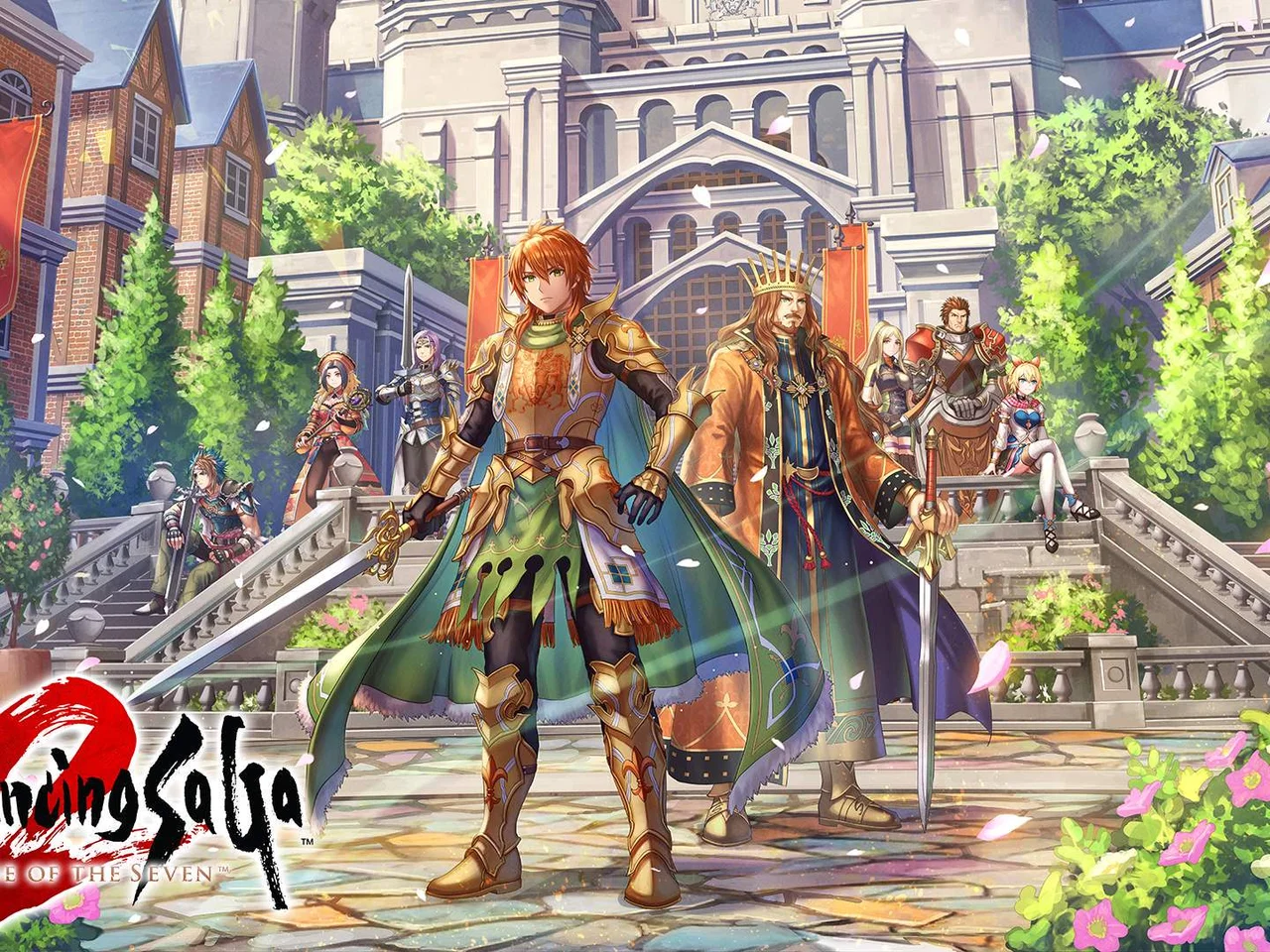
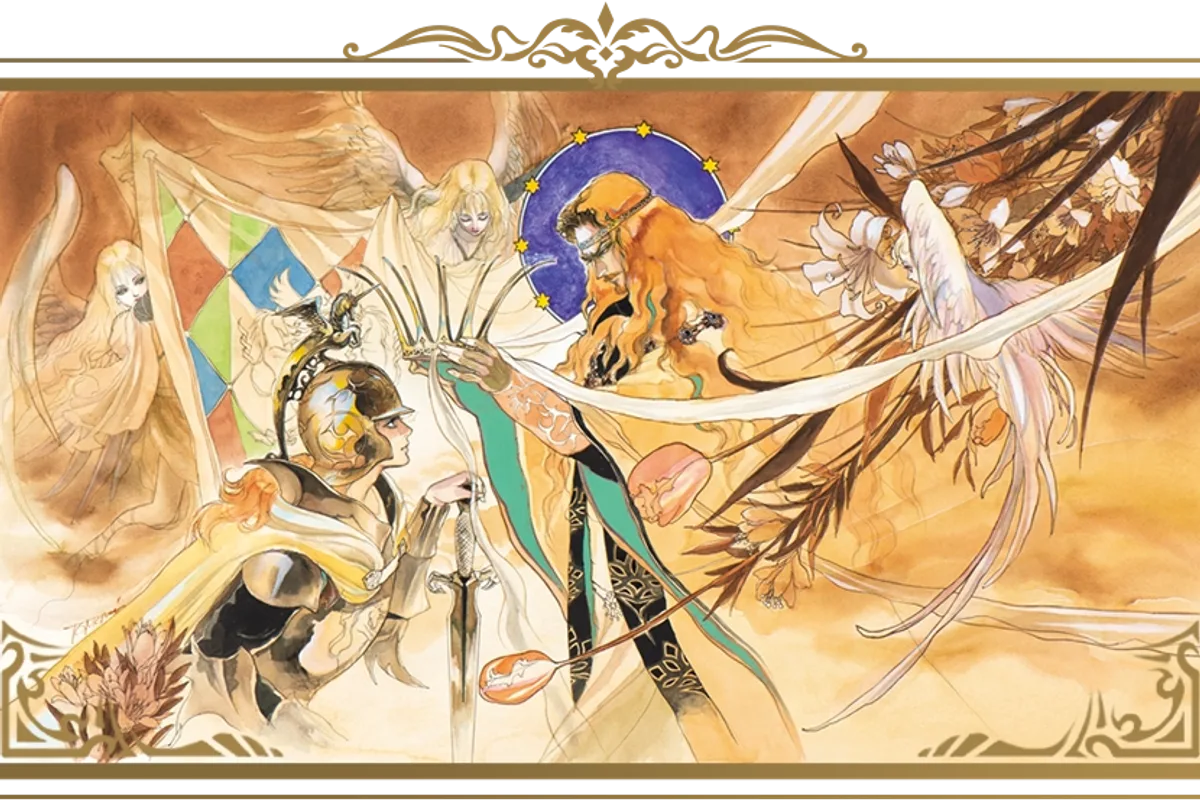
To celebrate, Square Enix released new artwork by Yoshiro Ambe and a thank-you video for the game's supporters.
The timing is also symbolic: October 24, 2026, marks the second anniversary of the remake's original release.
However, the figure requires an important qualification before it can be interpreted accurately.
One million units does not necessarily mean one million consumer purchases
Square Enix's wording is specific.
The total includes physical copies shipped to retailers and digital copies sold.
These categories represent different commercial events.
When a physical game is shipped into the retail distribution network, it has not necessarily been purchased by an individual customer.
A digital sale, by contrast, represents a transaction through a digital storefront.
Combining both figures provides a measure of the game's commercial distribution.
It does not automatically establish that one million copies have already been purchased by end users.
Square Enix has not disclosed the breakdown between physical and digital units.
It also has not provided detailed figures by platform or geographic market.
The milestone remains significant for the franchise, but it should be described using the publisher's actual accounting method.
Why the milestone is rare for SaGa
SaGa is one of Square Enix's long-running role-playing franchises, but it has never occupied the same commercial position as Final Fantasy or Dragon Quest.
The series has a distinctive identity built around unconventional progression systems and unusually flexible storytelling.
SaGa games often encourage experimentation rather than directing players along a strictly defined path.
Player decisions can influence available events, while combat systems place considerable emphasis on discovering new possibilities.
This philosophy has helped develop a dedicated audience.
It can also make the series less immediately approachable for players accustomed to more linear Japanese RPGs.
Revenge of the Seven reaching one million units is therefore particularly noteworthy.
It suggests that an unconventional RPG can attract a substantial audience when its presentation is modernized and its systems become easier to understand.
However, it does not establish that every future SaGa game will achieve similar results.
A remake originally released in October 2024
Romancing SaGa 2: Revenge of the Seven first launched on October 24, 2024, for PlayStation 5, PlayStation 4, Nintendo Switch and PC.
The project revisits Romancing SaGa 2, originally released for Super Famicom in Japan in 1993.
Instead of merely increasing the resolution of the original graphics, Square Enix and developer Xeen rebuilt the adventure in three dimensions.
Environments, characters and narrative scenes received a new visual presentation.
Important story events also gained voice acting.
Combat was reworked while retaining several mechanics closely associated with the series.
The goal was to preserve the original RPG's unusual identity while making its operation easier to understand.
That substantial reconstruction, rather than a simple visual update, is why the project is described as a full remake.
The story of an empire across generations
One of Romancing SaGa 2's most unusual features is its narrative structure.
Players do not control a single protagonist who completes the entire adventure from beginning to end.
Instead, they guide successive rulers of the Varennes Empire.
As the game progresses, years pass, leaders change and the consequences of some decisions continue into later generations.
The imperial succession system allows abilities to be passed on while the adventure continues with a new character.
The central conflict involves the Seven Heroes, legendary figures whose return threatens the world.
However, players have considerable freedom in deciding which problems to address first.
Different events can be approached in varying orders.
This nonlinear progression separates Romancing SaGa 2 from many RPGs built around a fixed sequence of story chapters.
The remake retains that structure as one of its defining characteristics.
Imperial succession remains central to the experience
In a more conventional RPG, the disappearance of the main protagonist might signal the end of the adventure or an exceptional story event.
Romancing SaGa 2 treats succession as a normal part of progression.
Each new emperor continues a history that began before their reign.
Players must work with inherited abilities, character specializations and the consequences of earlier decisions.
The result is an adventure whose structure can vary according to the player's choices.
The system also creates a distinctive relationship with time.
Progression is not simply the personal journey of one character but the history of an empire.
The narrative can therefore develop without relying on a single permanent hero.
The remake preserves this approach while improving the interfaces through which players manage its systems.
It is one of the reasons Romancing SaGa 2 remains difficult to compare directly with other Japanese RPGs.
Modernized battles without abandoning the original ideas
Combat is another central component of Revenge of the Seven.
The game retains the ability to discover new techniques during battle, a mechanic commonly known as Glimmering.
Characters can learn new moves during encounters rather than relying exclusively on traditional skill trees.
Party formations also play an important role.
The positions of combatants can affect defensive and offensive properties.
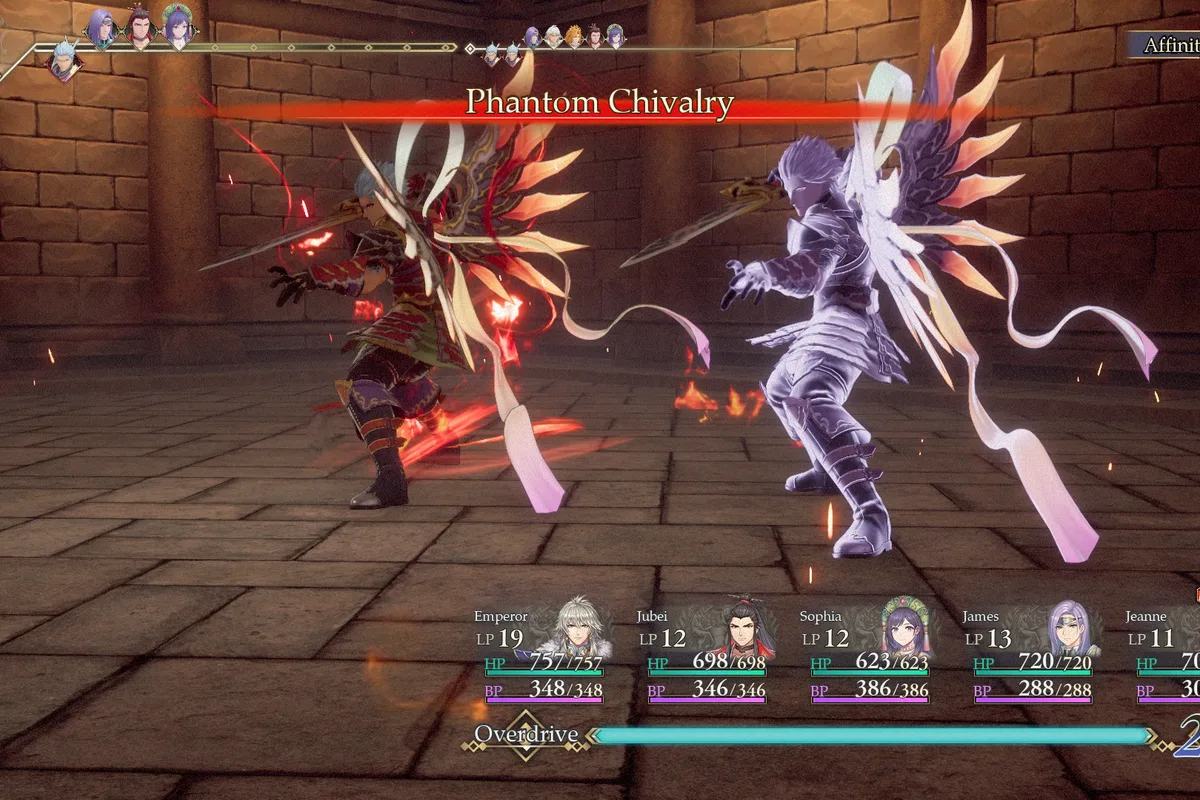
The remake introduces a visible combat timeline that makes the order of actions easier to understand.
United Attacks also allow party members to coordinate certain powerful moves.
These additions modernize the combat presentation without erasing the distinctive ideas of the 1993 original.
The experience retains strategic depth built around party composition, technique selection and anticipation.
A reconstruction designed to welcome new players
The move to three-dimensional graphics was not the remake's only modernization effort.
Square Enix also introduced multiple difficulty settings.
These allow players to select an experience more closely aligned with their familiarity with RPGs.
Interfaces were redesigned to make important information easier to follow.
The combat display helps players anticipate upcoming actions.
Learning and progression systems remain complex, but their presentation is more explicit.
This may make the franchise more approachable for newcomers unfamiliar with its unconventional mechanics.
That does not mean the game has abandoned all strategic demands.
The remake's appeal depends partly on balancing its original systems with improved accessibility.
Switch 2 and Xbox versions followed in 2025
Revenge of the Seven's commercial availability did not stop with its initial release.
Square Enix expanded distribution to additional platforms in 2025.
A dedicated Nintendo Switch 2 edition arrived on July 31.
Xbox Series X|S and Windows versions followed on September 25.
The game is therefore available across several console ecosystems as well as PC.
This strategy increases the number of players who can potentially access the title.
The additional versions may have contributed to the worldwide total.
However, Square Enix has not provided platform-specific sales figures that would allow their contribution to be measured.
It would be inaccurate to attribute the million-unit milestone primarily to Switch 2, Xbox or any other individual platform.
Expanded availability is confirmed; its precise commercial impact is not.
Square Enix celebrates with Yoshiro Ambe artwork
The October 23 announcement includes a special tribute to players.
Square Enix revealed new commemorative artwork by Yoshiro Ambe.
The artist is closely associated with the remake's visual identity and character designs.
The artwork celebrates the community that has supported the game since launch.
The publisher also released a thank-you video through the official SaGa channel.
These materials give a commercial achievement a more visible public celebration.
In the case of Revenge of the Seven, the historical importance of the milestone explains the attention given to it.
The celebration arrives as the game reaches two years of commercial availability.
It is not an announcement of new playable content or an additional expansion.
Positive reception among parts of the player community
Commercial results are not the only available information about the remake's performance.
Steam user reviews also provide an indication of how some players have received it.
According to AUTOMATON, approximately 93% of around 4,000 Steam reviews were positive as of October 23.
The Japanese outlet also reported a user rating of approximately 4.73 out of five stars on PlayStation Store.
These figures indicate favorable feedback among users who chose to submit ratings.
They are not representative surveys of everyone who purchased the game.
Nor can they establish the game's sales volume or financial profitability.
However, they provide useful context for Square Enix's announcement.
The remake developed positive reception among players on multiple platforms alongside its commercial distribution.
One million units is not a measure of profit
Commercial success can be evaluated in several different ways.
The number of physical shipments and digital sales provides an indicator of market distribution.
It does not directly reveal how much revenue the publisher ultimately retains.
Prices vary across platforms, countries and promotional periods.
Physical copies also move through different commercial channels from digital purchases.
Determining profitability would require development costs, marketing expenses and net revenue information.
Square Enix did not disclose those figures in its October 23 announcement.
It would therefore be unjustified to call Revenge of the Seven one of the publisher's most profitable games based solely on the announced million-unit total.
The result remains a notable commercial achievement, but it does not establish a complete financial assessment.
The timing is favorable for the next remake
Square Enix is already preparing another major return for the franchise.
Romancing SaGa 3: Destinies United is scheduled for February 16, 2027.
The project is a remake of the third Romancing SaGa game.
Its planned platforms include PlayStation 5, Xbox Series X|S, Nintendo Switch 2, Nintendo Switch and PC.
The million-unit announcement for Revenge of the Seven therefore arrives just months before its successor's planned launch.
It may help draw attention to a franchise that has historically occupied a distinctive place within Square Enix's catalog.
However, the next remake is a separate product.
Its commercial performance cannot be automatically inferred from that of Revenge of the Seven.
No verified preorder figures accompany this comparison.
The announced schedule confirms continued investment in SaGa, not a guarantee of an identical commercial outcome.
Does the remake strategy work for SaGa?
The milestone naturally invites discussion of Square Enix's approach to remaking older games.
Revenge of the Seven demonstrates that an old and relatively specialized RPG can find a substantial audience through a complete reconstruction.
The work involved goes beyond replacing pixel art with three-dimensional characters.
It also affects combat, interfaces, cinematics and difficulty options.
In this case, Square Enix retained an unusual narrative structure while changing how it is presented.
That separates the project from a remake designed to turn its original game into something entirely conventional.
The commercial result provides evidence that this particular approach can attract players.
However, it does not establish that the same method will succeed with every historical title in the publisher's catalog.
Commercial potential also depends on the original game's recognition, production costs and audience reception.
The franchise gains renewed visibility
For years, SaGa has been closely associated with players who enjoy experimental Japanese RPGs.
The series does not rely on a single identical gameplay system repeated across every installment.
It frequently emphasizes freedom of progression, combat mechanics and the consequences of player choices.
That diversity is central to its identity, although it can also make the franchise difficult to introduce to a wider audience.
Revenge of the Seven found a way to make several of those unusual qualities more approachable.
The game retains its generations of emperors and nonlinear story but places them within a modern presentation.
Surpassing one million units suggests there is a meaningful audience for that combination.
Nevertheless, this remains a result associated with one particular installment.
The franchise's future commercial performance will still depend on the quality and reception of individual projects.
A symbolic anniversary for Square Enix
The calendar adds another layer of significance to the announcement.
The remake originally released on October 24, 2024.
Its million-unit milestone was announced on October 23, 2026, immediately before the second anniversary.
The figure therefore reflects almost two years of commercial availability rather than launch-day sales.
That distinction matters.
A game can continue attracting customers through additional platforms and gradual discovery by new audiences.
However, Square Enix has not provided a detailed sales history that would show how the total developed month by month.
It is therefore impossible to identify exactly when sales growth was strongest.
The announcement establishes that a threshold has been reached, not a complete commercial performance curve.
A historic milestone with another remake already on the horizon
Romancing SaGa 2: Revenge of the Seven has now officially surpassed one million worldwide physical shipments and digital sales.
For a franchise that last achieved this milestone with SaGa Frontier in 1997, it is an important event.
The three-dimensional reconstruction of a 1993 RPG has preserved its unusual systems while making them more accessible to contemporary players.
The figure does not demonstrate one million verified final consumer purchases or establish a particular level of profitability.
It does confirm that the remake has reached a commercial threshold rarely seen in SaGa's history.
The next major milestone will be the planned release of Romancing SaGa 3: Destinies United in February 2027.
Square Enix now has a concrete result to celebrate as the franchise continues its revival.
Whether this new generation of remakes can sustain that momentum remains to be seen.