
News News Official
Monster Hunter Stories 3 explained: Capcom's spin-off is now a huge JRPG where you rebuild ecosystems
Monster Hunter Stories 3 no longer feels interested in being Monster Hunter's cute little side project. Twisted Reflection takes the creatures, weapons and preparation logic of the main series and rebuilds them as a turn-based RPG where finding a great egg is only the beginning. If you want the strangest and strongest Monsties, you may have to reshape entire ecosystems first.
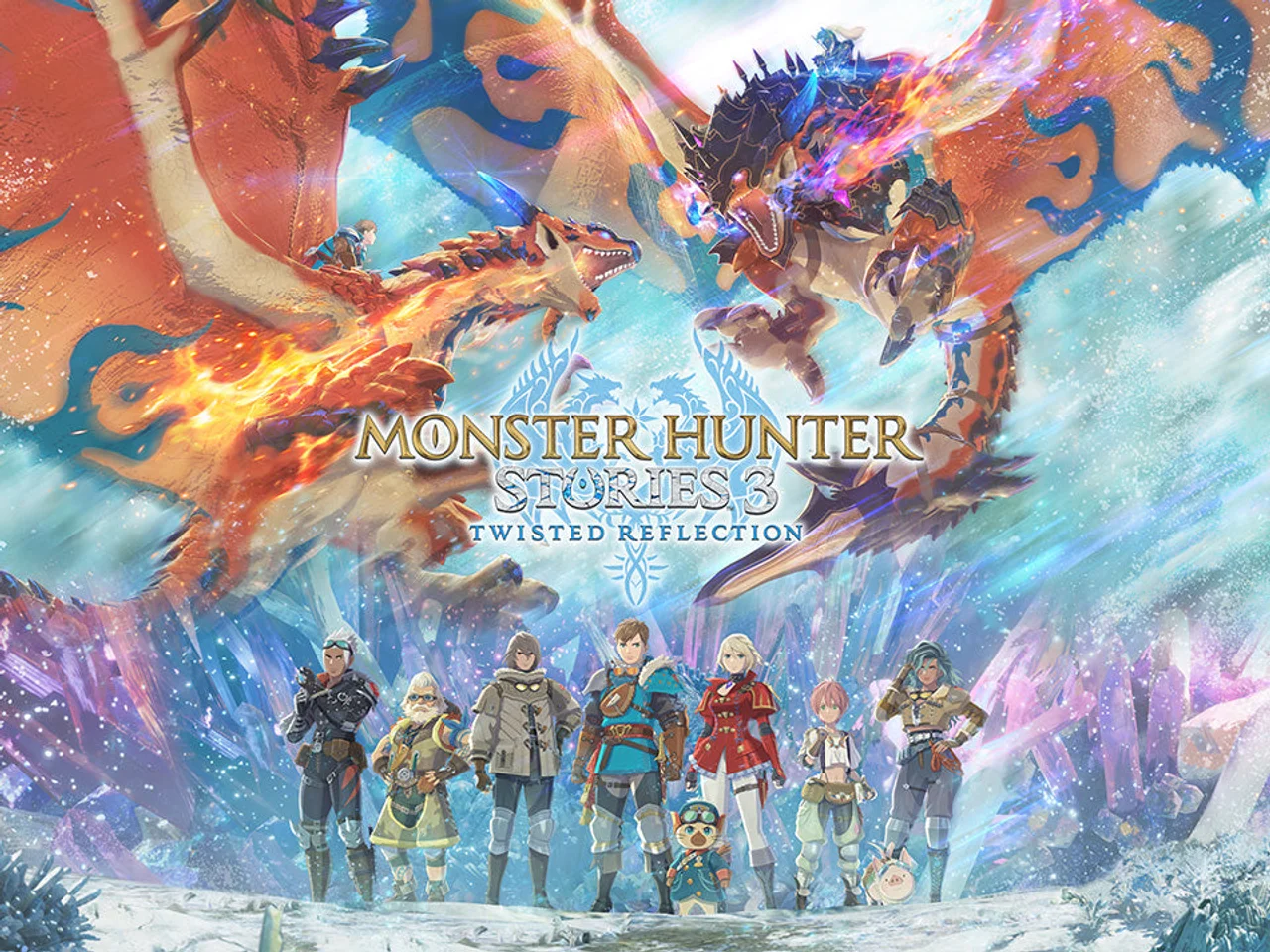
Monster Hunter Stories has always been built around a funny inversion of its parent series.
In regular Monster Hunter, a Rathalos is usually something to hunt so its body parts can become equipment. In Stories, you find its egg, hatch the creature, name it and eventually ride into battle on its back.
Twisted Reflection keeps that premise while expanding what collecting a monster actually means. Habitats, endangered species and environmental change now feed directly into character progression.
Two Rathalos are enough to threaten another war
The story centers on Azuria and Vermeil, neighboring kingdoms already close to open conflict.
The protagonist is the prince or princess of Azuria as well as a Ranger responsible for investigating ecological disturbances.
Then an egg appears containing a species believed to be extinct.
It does not hatch one Rathalos.
It hatches twins.
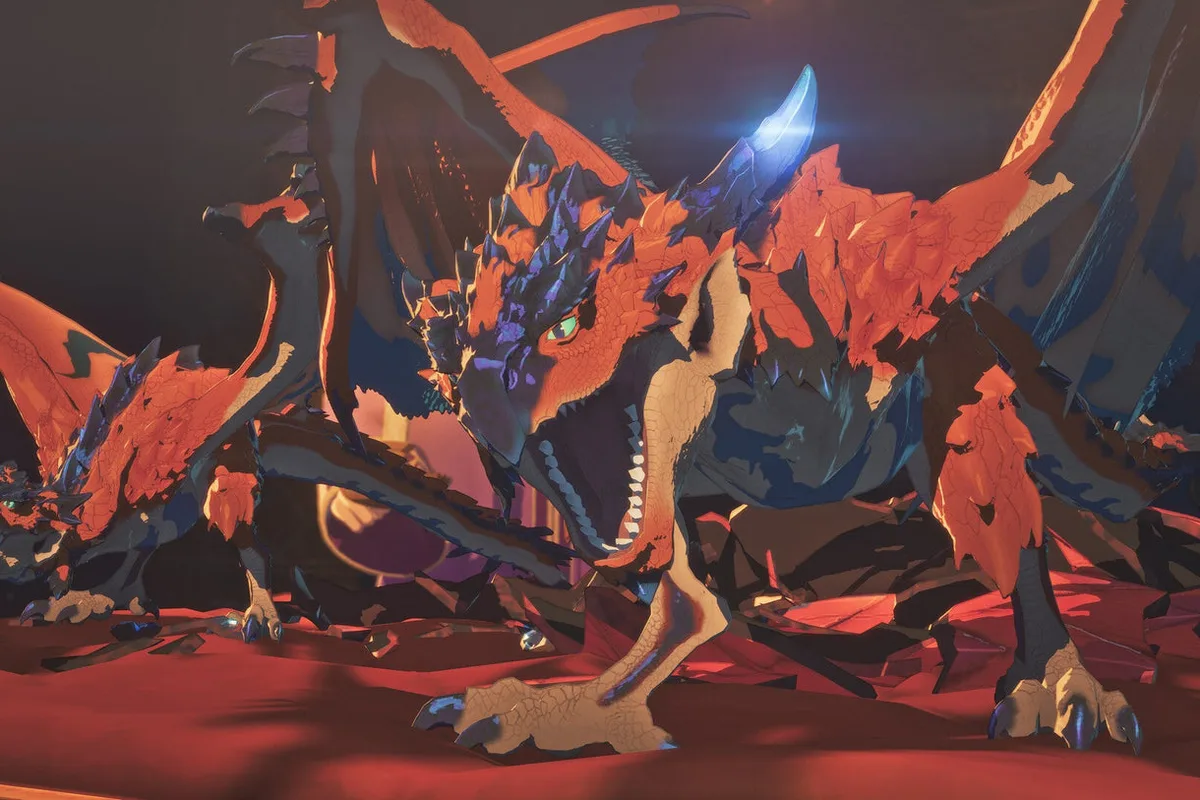
Both carry the mysterious Skyscale marking associated with a disastrous civil war 200 years earlier. The two kingdoms become connected to the two Rathalos, and an old omen suddenly becomes politically useful to people already looking for reasons to fight.
At the same time, ecosystems are collapsing. Monsters are disappearing, others become dangerously aggressive, and the Encroachment is gradually crystallizing parts of the natural world.
Rock-paper-scissors is only the first combat layer
Battles still use the familiar Power, Speed and Technical triangle. Speed defeats Power, Power beats Technical and Technical wins against Speed.
When a monster directly targets a character, correctly predicting its attack type wins a Head-to-Head.
That simple rule quickly becomes surrounded by Monster Hunter systems. Individual body parts can be broken, different weapons have different damage properties, elemental weaknesses matter and monsters change patterns as fights progress.
Kinship Skills remain the huge cinematic payoff for filling the relationship gauge between Rider and Monstie.
Feral Monsters demand more deliberate adaptation. Some body parts automatically retaliate when struck, potentially destroying a party member in one response. A favorite weapon or comfortable team composition may simply be wrong for the encounter.
Six Monsties in the party, nine gene slots in each
The Rite of Channeling remains the heart of team building.
Every Monstie has nine gene slots that can contain attacks, passive effects, resistances and elemental properties. Genes can be transferred between monsters, allowing two members of the same species to develop into very different builds.
Matching genes by type and element creates additional bonuses.
The egg hunt is therefore only acquisition. The deeper RPG layer begins when players start tearing apart their collection to construct specialized Monsties.
It is one of Stories 3's strongest systems, although the interface becomes increasingly cumbersome once hundreds of monsters and genes accumulate.
The smartest new feature rewards letting monsters go
Creature-collecting games normally reward accumulation. Monster Hunter Stories 3 makes releasing creatures mechanically useful.
Habitat Restoration lets players return Monsties to different regions.
Restoring native populations raises that area's Ecosystem Rank. Better restoration improves future eggs, opening access to stronger specimens, rarer genes and unusual variants.
Players can also introduce non-native species. Those creatures begin appearing in the region and can develop properties influenced by the local environment.
Higher ecosystem ranks eventually produce mutations and dual-element Monsties. A creature normally associated with one element can inherit abilities shaped by another habitat.
The ideal party is no longer something players merely discover in a nest.
They can engineer the conditions that make it possible.
Endangered species turn collecting into restoration
Some of the more unusual encounters revolve around endangered monsters.
Invasive Monsters threaten particular regions, and dealing with them often works more like a combat puzzle than a standard boss fight. The solution may involve breaking a specific body part, applying a particular status or using an exact type of attack to force the invader away.
Once the threat is removed, players can recover eggs from endangered species and return those monsters to the ecosystem.
It is almost the reverse of traditional Monster Hunter logic.
The monster roster is no longer simply a list of targets or party members. It becomes part of a small ecological simulation.
Stories 3 finally carries itself like a major Capcom RPG
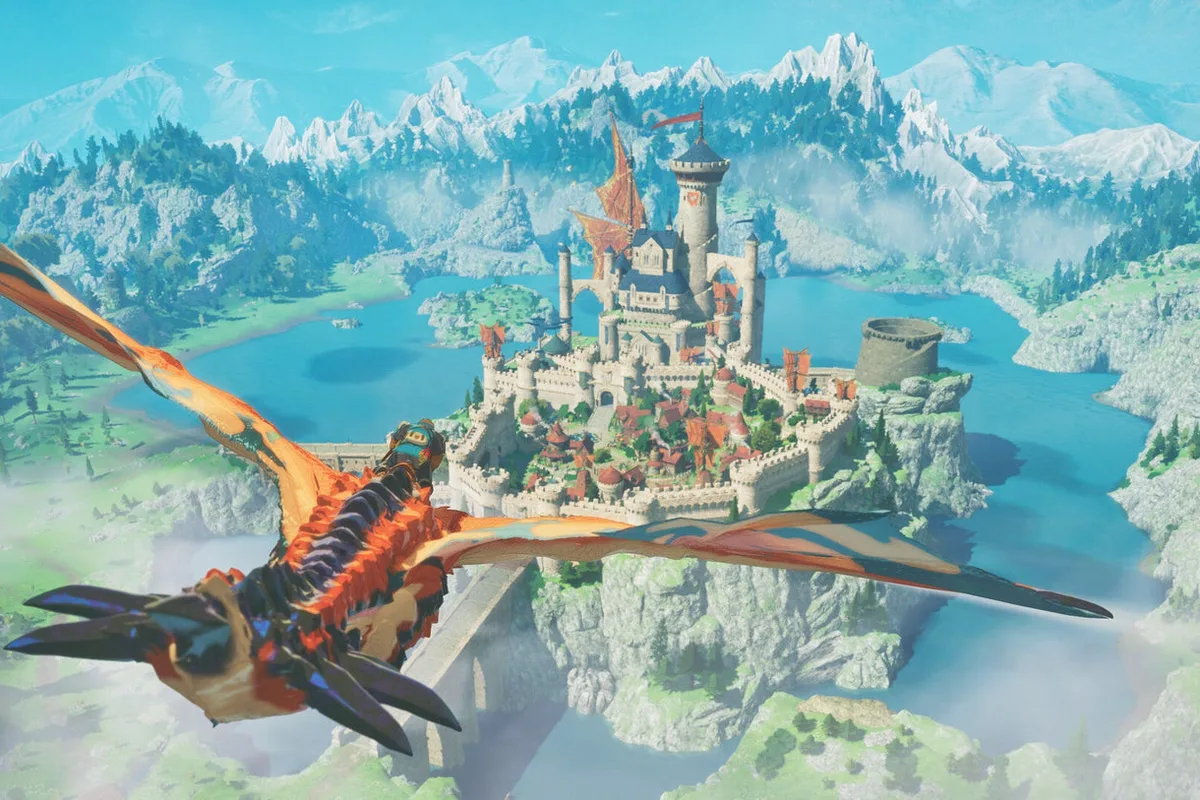
The larger ambition is visible everywhere.
Regions are broader, traversal still uses individual Monstie abilities, and combat presentation is substantially more elaborate than in earlier entries. Kinship Skills regularly become ridiculous miniature action scenes, which is exactly how a dragon attacking alongside its best friend should probably look.
The narrative also reaches for larger stakes with two nations, an environmental catastrophe and a protagonist who begins with political responsibility rather than as an anonymous newcomer.
Critical response has been warmer toward the systems than every part of that story. Combat, exploration and Monstie customization have been widely praised, while some companion development and narrative pacing have proved more divisive.
The final stretch can expose the grind
For much of the game, exploration hides progression requirements effectively. Looking for eggs, improving habitats and fighting new creatures naturally produces levels, materials and better team options.
Late-game battles are less subtle about it.
The final stretch can demand much stronger builds and send players back to improve levels, genes or neglected Monsties before continuing.
Onboarding is another weak point. Double Attacks, efficient Kinship generation, gene interactions, dual elements and ecological systems arrive quickly enough that revisiting old tutorials can become part of learning the game.
Stories 3 is significantly deeper than its predecessors.
That also makes “Pokémon with Monster Hunter creatures” a much worse description than it used to be.
Capcom kept adding content after launch
The March 13 release was not the end of development.
A free June 25 update added Royal Monsters as high-level endgame challenges.
The same day brought the paid Additional Side Story: Rudy DLC. It focuses on Azuria's royal Palico and brings back Navirou, the Felyne companion associated with the earlier Monster Hunter Stories games.
Nergigante appears as a major opponent in the story, although the Elder Dragon cannot be obtained as a Monstie.
The Rudy chapter is sold separately and is also included in Deluxe editions.
Where can you play it?
Monster Hunter Stories 3: Twisted Reflection is available on Nintendo Switch 2, PlayStation 5, Xbox Series X|S and PC through Steam.
The game is single-player. On PC, Capcom's recommended specification includes 16GB of RAM, a GeForce RTX 2060 Super or Radeon RX 5700 XT and 50GB of storage for a stated target of 1080p at 60fps on High settings.
The Nintendo Switch 2 release is approximately 27.7GB and supports amiibo.
Monster Hunter Stories has become its own thing
The first game could easily be described as the strange Monster Hunter spin-off where players collected the creatures instead of carving them up. Stories 2 made that idea much bigger.
The third entry starts to move beyond the comparison entirely.
Combat borrows enough Monster Hunter behavior to make knowledge of the creatures useful. Genes let players rewrite what those creatures can do. Habitat Restoration gives duplicate monsters a purpose beyond sitting permanently in storage.
Sometimes the game even asks you to restore a species that mainline Monster Hunter would happily tell you to hunt repeatedly for a pair of boots.
That is probably the cleanest explanation of Monster Hunter Stories 3.
It is still Monster Hunter. It simply has a radically different idea of what loving the monsters should involve.