Review
MARVEL Tōkon: Fighting Souls — four heroes, one life bar and a lot of chaos to master
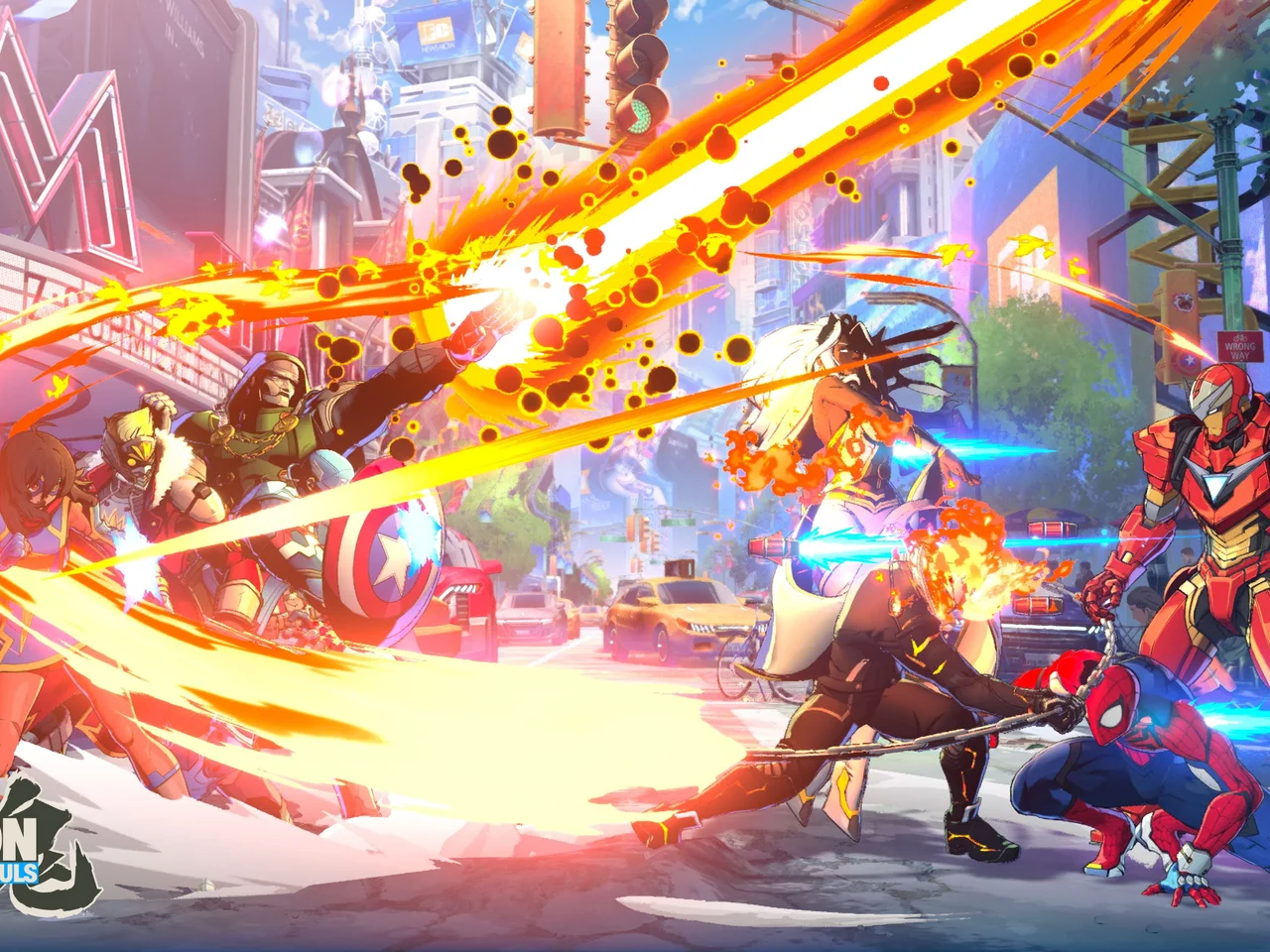
Arc System Works builds an unusual tag fighter around four-character teams, a shared health bar and a match structure that gradually expands the player's options. Tōkon is welcoming at first contact and considerably deeper underneath, although constant assists and heavy visual effects can occasionally push the action into overload.
Four fighters actually change the shape of a match
Tōkon's 4v4 label could easily have been marketing shorthand for more characters and bigger effects. Instead, Arc System Works makes team size part of the match structure. Only two members are initially available, with the remaining fighters joining through stage transitions, specific wall interactions or after losing a round. The toolset expands while the fight is already underway.
That progression gives the shared health bar more meaning. Damage belongs to the team rather than functioning as four separate elimination gauges, so a risky point character can remain useful without immediately turning one mistake into the permanent loss of a quarter of the roster. Team construction becomes a question of roles, assists and routes rather than simply stacking four individually strong characters.
Easy inputs do not erase difficult decisions
Quick inputs and chain combos make Tōkon unusually approachable for something this visually busy. A newcomer can create recognisable Marvel spectacle almost immediately, while traditional controls remain available for players who want them. The low execution floor is one of the most consistent positives across the review corpus.
The important part is what happens after that first hour. Assist placement, tag timing, spacing, combo extensions and the order in which a team comes online create a much higher ceiling. Twenty launch characters are also mechanically distinct enough that changing one member can alter how an entire composition approaches neutral or converts a hit.
Accessibility therefore removes some friction without removing the game underneath it. Tōkon is generous about letting players perform something useful before they fully understand why it worked.
Assist pressure is both the hook and the problem
At peak intensity, readability suffers. Multiple characters, projectiles and screen-filling effects can make an already fast match difficult to parse. That is not merely visual noise in a competitive fighter; it can obscure the information needed to defend or recognise whose turn it actually is.
Arc System Works has acknowledged a related systemic issue. In a September director update, Kazuto Sekine said assists and character switches were being used more frequently than the team had expected, and that longer cooldowns for some actions were under consideration to create more neutral situations and reduce extended sequences in which the defending player has little opportunity to act.
Input handling is also still being refined, including cases where attacks following aerial dash or Free Flight movement could fail to register. At the same time, the studio reported most character win rates clustering within roughly 48 to 52 percent outside mirror matches and described the metagame as too young for sweeping character rebalancing.
Chaos worth understanding
The impressive part is how often Tōkon's excess remains structural rather than random. Stage progression unlocks options, shared health changes risk, assists change space and team composition changes what a successful hit can become. When those systems align, the spectacle communicates a ruleset instead of hiding one.
Its most urgent post-launch work is consequently about preserving that clarity: cleaner input response, more breathing room between assist sequences and less visual ambiguity. The core 4v4 idea already gives Arc System Works something much harder to patch in later — a fighting game with a recognisable mechanical identity.
Strengths
- The 4v4 format meaningfully changes match structure
- Shared health and gradually unlocked teammates create unusual decisions
- Accessible controls without sacrificing strategic depth
- Twenty launch characters with distinct playstyles
- Team construction, assists and tags provide substantial room for mastery
Weaknesses
- Some situations become visually difficult to read
- Assists and switches can overwhelm neutral play
- Some input-registration behaviour is still being adjusted
- Heavy effects can make defensive information harder to parse
MARVEL Tōkon: Fighting Souls clears the hardest hurdle: its 4v4 format is not decorative. Shared health, gradually unlocked partners and assists give each match a structure of its own. Visual overload and excessive tag pressure still need refinement, but beneath the fireworks is already an excellent fighting game.