
News News Official
Ocarina of Time returns November 5, and Nintendo is finally changing how Link actually moves
Ocarina of Time did not need a lesson in historical importance. The harder problem was deciding how much of a 1998 control scheme should survive untouched. Nintendo's answer is now clear: the remake preserves the adventure, but it is willing to change the hands controlling it.
 By Hugat The Legend of Zelda: Ocarina of Time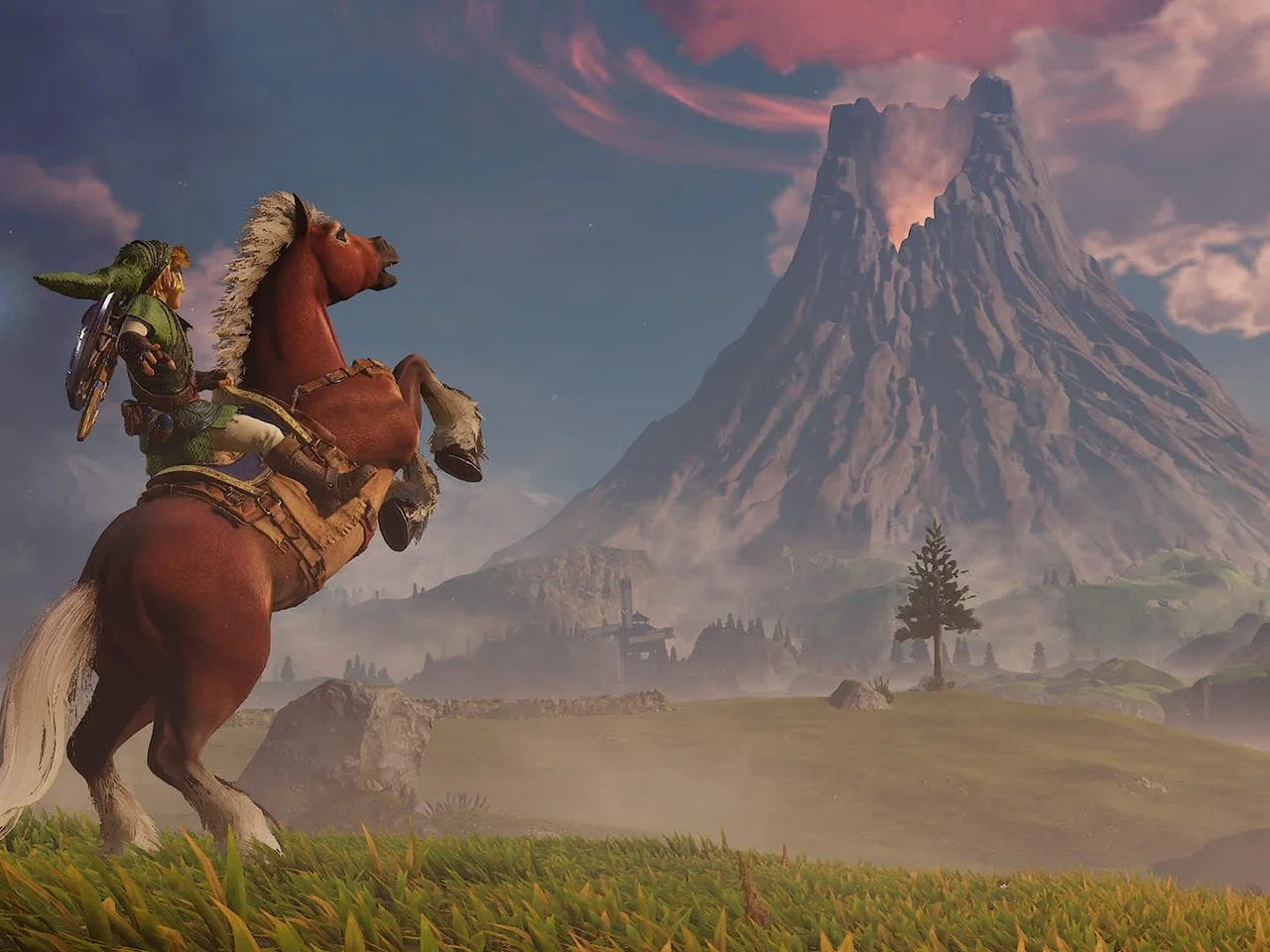
The Legend of Zelda: Ocarina of Time launches exclusively for Nintendo Switch 2 on November 5, 2026. Nintendo used its Zelda 40th Anniversary presentation to show an extended gameplay demonstration and explain what has actually changed since the Nintendo 64 version.
The visuals have been completely rebuilt, from environments and character models to individual material textures. Cutscenes are fully voiced, character dialogue has been expanded and the soundtrack now includes symphonic orchestral arrangements.
Link can jump now
The most meaningful changes are mechanical. Running and jumping have dedicated button commands, while the right stick provides direct camera control.
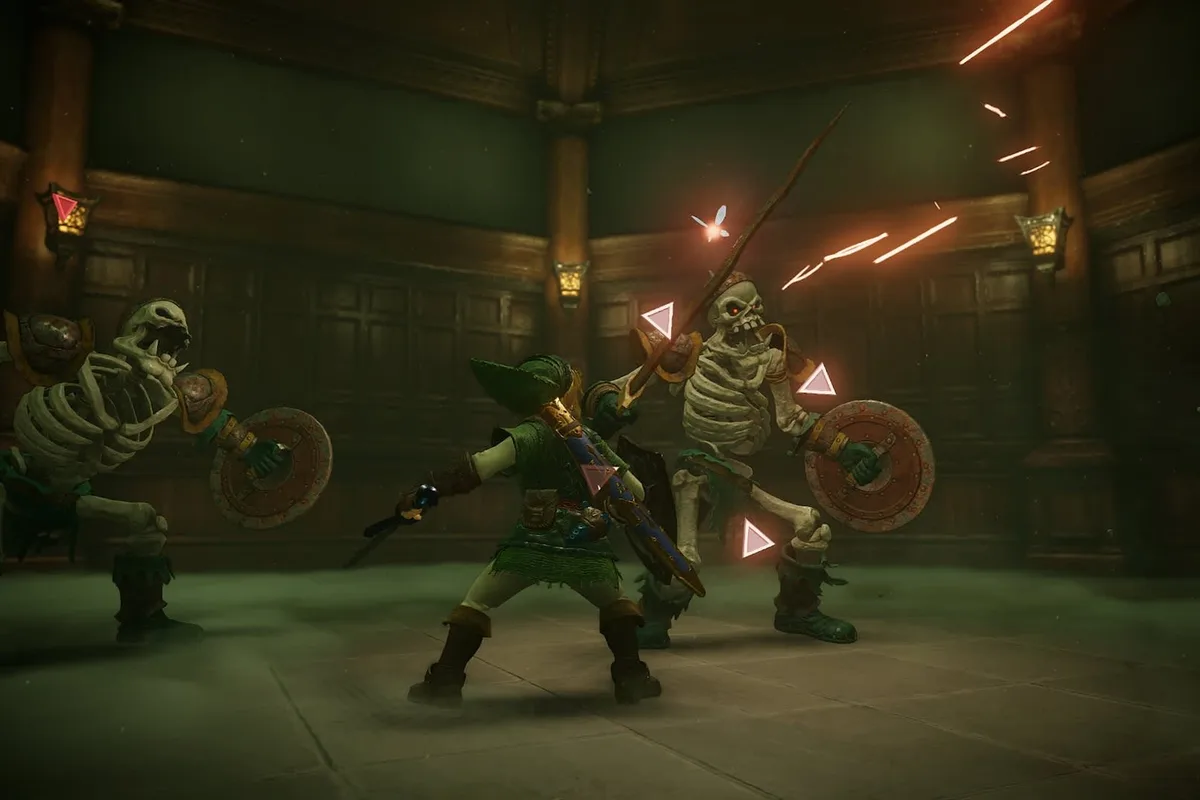
That sounds ordinary in a modern action adventure. In Ocarina of Time, it is not. The original treated jumping as an automatic contextual action, making the edge of a platform part of the game's control language rather than a prompt for the player.
Nintendo is therefore changing a rule that has defined the game for nearly three decades while keeping its dungeon structure, time travel and overall adventure recognizable.
Hyrule keeps moving after Link enters town
The day-night cycle is being expanded so that time continues to pass in locations including towns. The original game frequently imposed fixed time states on individual areas.
Locations have also been fully remodeled and can now be inspected with the free camera. Nintendo describes actions as snappier, loading as faster and overall presentation as smoother, though it has not turned the remake into a new open-world interpretation of Hyrule.
Threads of Time remembers where the adventure was going
A new feature called Threads of Time tracks story progress and displays the player's next objective at any point.
It addresses a very specific problem that appears when a late-1990s adventure game meets modern playing habits. Someone returning after several days no longer has to reconstruct an unfinished quest entirely from memory and Navi's latest hint.
Nintendo has not said that the original dungeon puzzles are being rewritten around this system. It functions as navigation support rather than an announced replacement for exploration.
The microphone has found its obvious Zelda job
Nintendo Switch 2's built-in microphone can recognize Ocarina melodies. Players can play or simply hum learned songs near the system and have Link perform them in-game.
Traditional inputs remain available, so the microphone feature is an alternative rather than a mandatory replacement for playing the instrument with buttons.
Amiibo support is also confirmed. Young Link and Young Zelda figures arriving in 2027 will unlock special masks that evoke a retro visual style.
The remake is currently estimated at 27GB
Nintendo's store listing gives the digital version an estimated file size of 27GB. The game remains a single-player adventure and will be sold physically and digitally.
Ocarina of Time launches November 5, one week after Nintendo releases its Zelda 40th Anniversary Edition Switch 2 hardware on October 29.