
News News Official
Marvel Rivals Season 10 finally slows the hero conveyor belt to rebuild Scarlet Witch and unleash Gorr
Marvel Rivals had settled into a rhythm where new Marvel characters seemed to grow directly behind the NetEase offices: two heroes, another season, repeat. Season 10 does something stranger. It adds only Gorr the God Butcher and spends considerably more energy on the characters already occupying the battlefield.
 By Hugat Marvel Rivals
Marvel Rivals launched Season 10: Butcher's Blasphemy on September 11, 2026 across PC, PlayStation and Xbox.
Gorr the God Butcher is the season's sole new playable character. NetEase says that reduced count is an exception rather than a permanent schedule, with two heroes already planned for Season 11.
For Season 10, the studio is redirecting some of that development attention toward balance, maps, modes and existing systems.
One new hero is enough this time
Gorr joins Marvel Rivals as a Duelist.
That sounds unusually restrained for a game that has spent much of its life expanding at remarkable speed, but the reason becomes clearer as the roster grows.
Every additional hero adds another collection of ability interactions, Team-Ups, map matchups and balance problems.
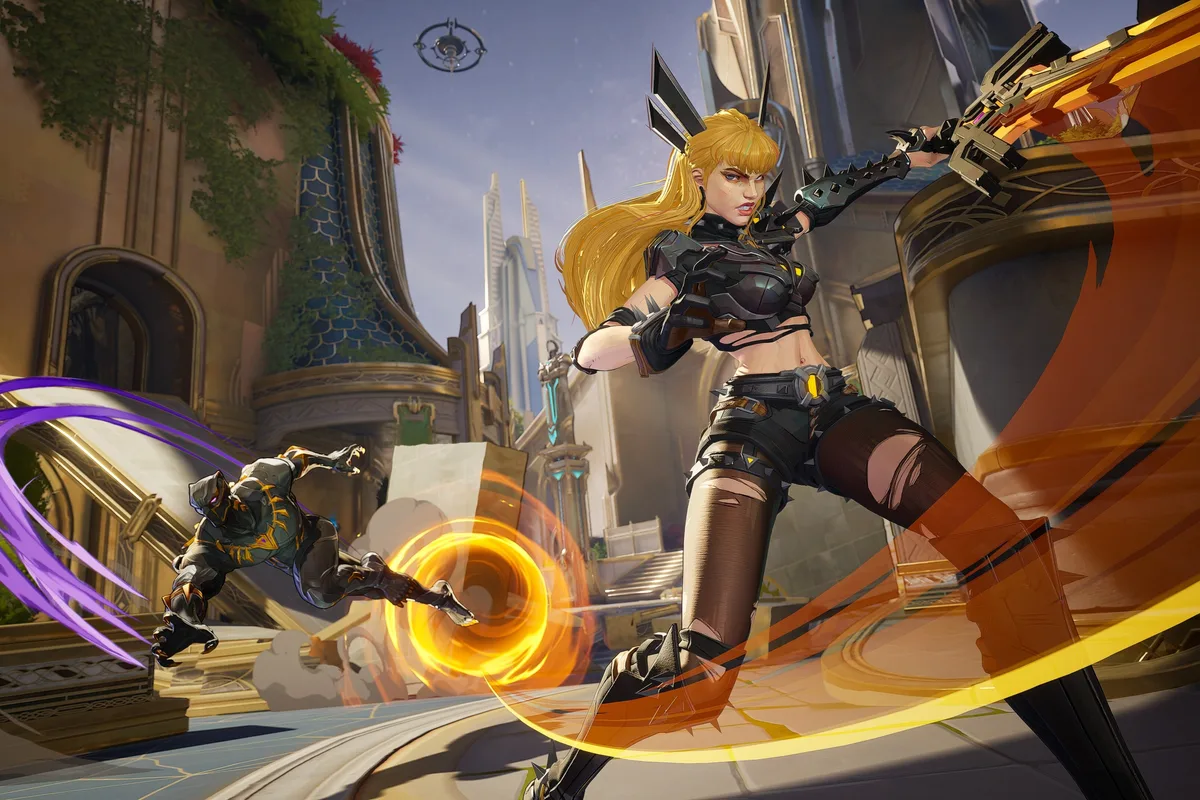
Season 10 therefore avoids defining its entire first half around another pair of releases.
Gorr arrives first, followed by a new map. The second half shifts toward phases three and four of Path to Doomsday, including two new game modes whose detailed rules are being saved for later.
Scarlet Witch effectively gets a new combat loop
The most substantial existing-hero change belongs to Scarlet Witch.
She gains Scarlet Hex, a new ability that releases a chaos shockwave across a rectangular area measuring 20 meters long and eight meters wide.
Enemies caught inside take 40 damage and receive Chaos Mark.
Her other abilities then gain a much clearer relationship with marked targets.
When Wanda damages an enemy carrying Chaos Mark, 25 percent of that damage becomes Bonus Health for herself, up to a maximum of 50.
Chaos Control can also damage all marked enemies inside its forward cone instead of functioning exactly as it did before.
She loses some passive control and gains more deliberate pressure
Chaos Control drops from 85 to 75 damage per second.
Chthonian Burst becomes substantially faster, with its cast interval reduced from 0.5 seconds to 0.4. NetEase lists its resulting enemy DPS as increasing from 160 to 200.
Dark Seal is changing too.
Instead of periodically stunning targets inside its area, it now delivers one 0.3-second stun when the detonation first happens.
The overall direction is clear: mark targets, commit damage into them and convert part of that pressure into personal survivability.
Strategists will generate Ultimates more slowly
Season 10 also applies a global rule to the entire Strategist category.
Healing-to-Ultimate-energy conversion falls from 70 percent to 65 percent, while damage-to-energy conversion moves from 55 percent to 50 percent.
No single healing ability is being deleted by that change. The cadence of matches is.
Slightly slower support Ultimates can create longer windows between the most powerful defensive resets available to coordinated teams.
Captain America gains another 50 Health
The rest of the balance pass reaches far beyond Wanda.
Captain America moves from 300 to 350 base Health and loses the bounce damage falloff on Vibranium Energy Saw.
Doctor Strange's Daggers of Denak travel at 80 meters per second instead of 60 and can be cast more frequently.
Emma Frost climbs from 650 to 675 Health, gains Telepathic Pulse range and receives a longer Carbon Crush dash.
Groot gains more Bonus Health when awakening Ironwood Wall.
Magneto is pushed in the opposite direction with lower Health, weaker Bulwarks and a longer cooldown on his Scarlet Witch Team-Up.
The Hood and The Thing take several reductions too
The Hood falls from 600 to 550 Health. Mantle of Oblivion takes longer to return and Abyssal Veil provides less projectile damage reduction.
The Thing loses some raw durability as well. His Health drops from 750 to 725, Stone Haymaker deals less maximum-Health-based damage and Yancy Street Charge becomes less available.
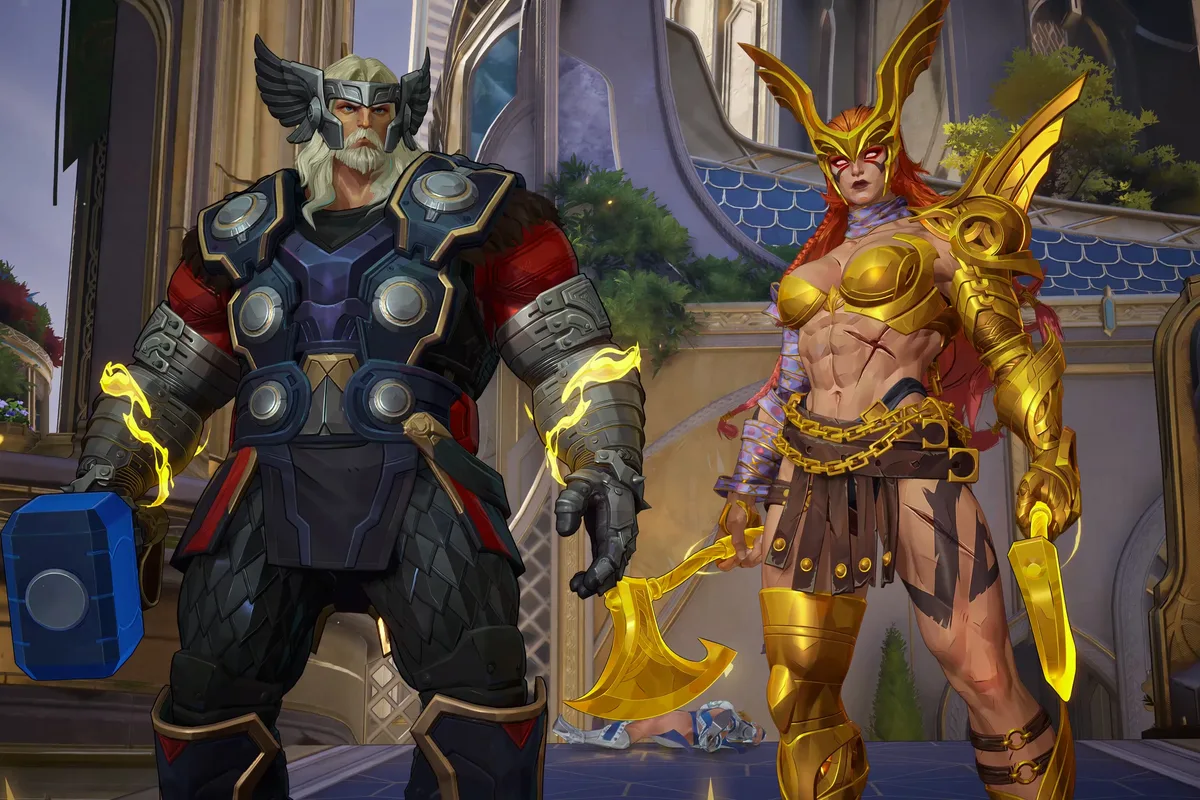
Thor moves the other way, gaining additional Health and more damage against enemies crossing Lightning Realm's boundary.
This is not a patch where NetEase lightly moves one number on every hero. Several characters are being adjusted through multiple systems at once.
Competitive bans are becoming much more important
Season 10 is also changing the competitive drafting process.
NetEase plans an alternating ban structure between both teams that results in six heroes being removed from each match.
That becomes increasingly meaningful as the roster expands.
Removing six characters can dismantle several prepared compositions before the doors open and makes narrow one-hero specialization more dangerous in organized play.
God Quarry is coming after the season launch
Not every Season 10 feature arrives on September 11.
The new Domination map God Quarry is scheduled to launch after the September 24 update.
Two additional modes connected to Path to Doomsday are planned for the second half of the season.
NetEase has not yet published their complete rules.
The Godbomb Battle Pass launches with the season
Season 10's Battle Pass is called The Godbomb and contains ten new costume sets.
Highlighted rewards include White Fox - Cosmic Kumiho, Captain America - Astral Aegis and Loki - The Chronicler.
A new seasonal story event called The Tetrameron also begins, sending players through tasks connected to Loki.
Season 4's Fruit of Immortality Battle Pass returns temporarily through the Reality Link Point interface from September 11 through September 24.
The update adds another frame-generation option too
Season 10 adds support for Intel XeSS 3 Frame Generation on compatible Intel graphics hardware.
It can insert as many as three generated frames between two conventionally rendered frames.
NetEase pairs that option with Intel Xe Low Latency in an attempt to limit the additional input delay associated with frame generation.
That qualification matters in a hero shooter. An enormous displayed frame rate is much less useful when aiming feels disconnected from what is happening underneath it.
Season 10's most interesting change may be that Marvel Rivals is finally willing to slow down
Gorr is naturally the face of Butcher's Blasphemy.
The more revealing decision is the missing second hero.
After rapidly expanding the roster for more than a year, NetEase is using one season to rebuild Scarlet Witch, adjust a large share of existing heroes, change Ultimate generation and give competitive drafting more weight.
One new character suddenly looks restrained.
For a roster this crowded, restraint may be exactly the feature Marvel Rivals needed.