
Review
Diablo IV in 2026: Three Years of Surgery Finally Unleashed Its Excellent ARPG

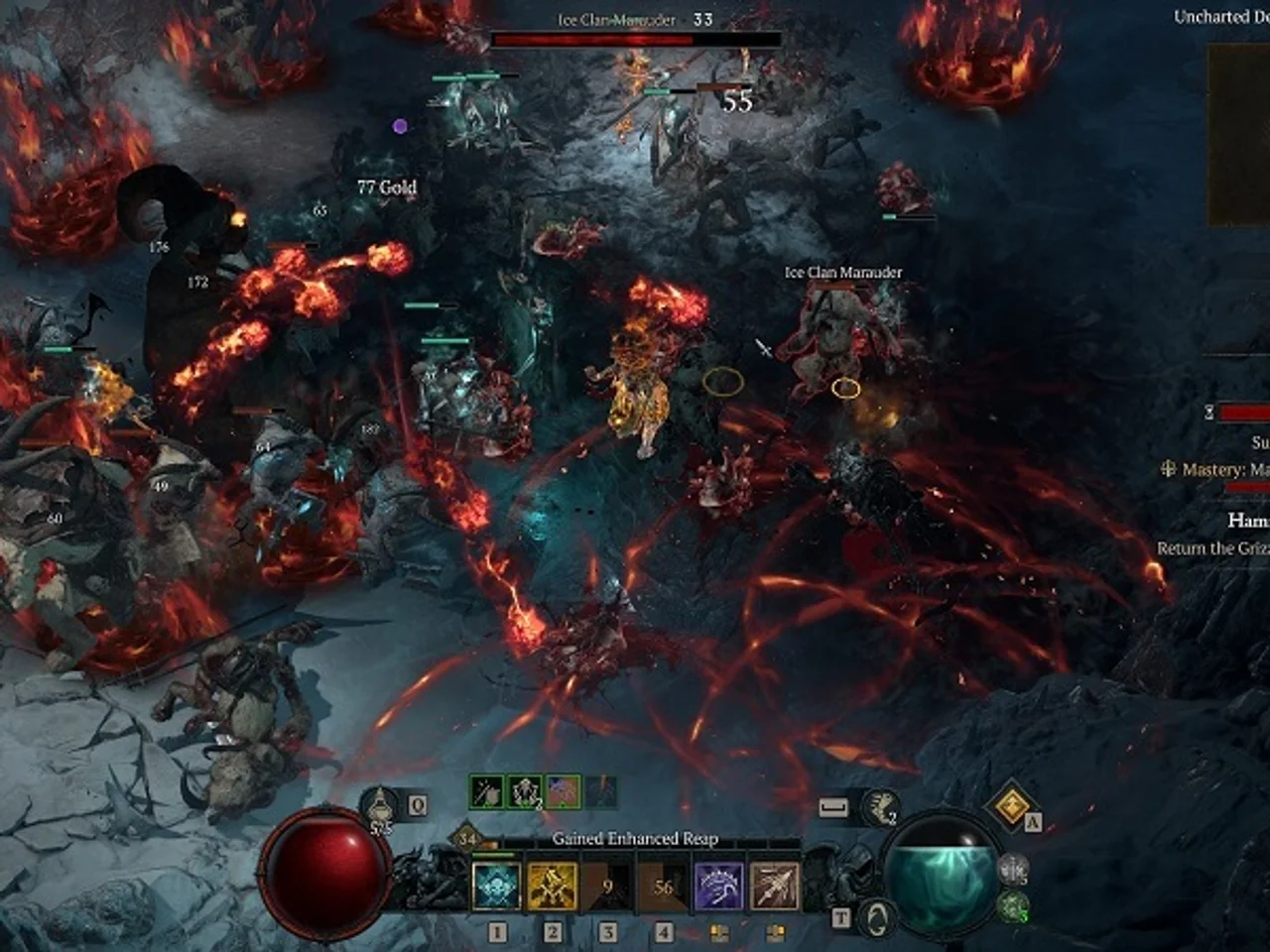
The Diablo IV of 2026 is barely the same systems game that launched three years earlier. Loot, endgame, progression and buildcraft have all been repeatedly rebuilt, sometimes radically, until a much more generous and expressive action RPG emerged. Its open world still carries dead weight and Path of Exile remains far deeper, but turning a build into a screen-clearing demonic catastrophe has never felt better here.
The part Blizzard never needed to fix
Even in 2023, Diablo IV understood impact. GameSpot and PC Gamer both identified combat as one of the launch game's clearest strengths: skills hit with weight, classes established distinctive rhythms quickly, and dense fights remained remarkably readable despite the amount of blood and particle effects involved.
That foundation is still excellent. The difference in 2026 is that the systems surrounding it finally encourage the same sense of excess as the combat itself.
Three years of rebuilding the machine
Launch Diablo IV often felt like several design philosophies competing for control. It wanted flexible builds but placed friction around experimentation. It offered a huge open world but an endgame that could collapse into repeated Nightmare Dungeons. It wanted long-term progression while frequently changing the rules governing that progression.
Blizzard responded with unusually aggressive surgery. Itemisation, Helltides, Whispers, bosses, crafting, Paragon systems and endgame activities were repeatedly altered rather than merely expanded.
Vessel of Hatred already represented a major turning point. By Lord of Hatred in 2026, reviewers were describing skill systems that allow powerful build identities to emerge much earlier instead of reserving experimentation for players willing to fight the progression model.
Power is fun when the player helps invent it
The best loot is not simply an item with a larger number. It changes a relationship between skills, creates a new priority or turns something previously minor into the centre of an entire character.
Current Diablo IV creates those moments more often. Its crafting and progression systems are easier to read without becoming trivial, while the class designs remain broad enough to support dramatically different play patterns.
It still does not compete with Path of Exile on raw systemic density. That comparison misses part of the point. Diablo IV increasingly excels at making complicated power understandable while it is happening.
The endgame finally has somewhere to go
The launch structure could run out of convincing answers after the campaign. The modern game has multiple useful routes through its endgame rather than one dominant treadmill. Bosses, Helltides, Whispers, The Pit and revised dungeon systems let a character keep moving forward while the activity itself changes.
The underlying loop remains wonderfully primitive: kill monsters, improve character, kill tougher monsters faster. Diablo has never needed to apologise for that.
Variety simply hides the machinery better now.
The open world still creates dead air
Sanctuary's geography is valuable during a first campaign. Towns feel connected, regions possess distinct identities and Strongholds can turn exploration into compact combat scenarios.
Repeated seasonal characters reveal the other side. Distance is still distance. A structure designed to make Sanctuary feel like a physical place occasionally works against an ARPG whose combat is far more entertaining than commuting between activities.
Diablo IV has finally chosen a direction
A 2026 PC Gamer assessment argued that the game finally felt finished after almost three years of upheaval. That wording is harsh but useful. Blizzard's achievement is not simply adding more content; it is making the old content and the progression around it feel like parts of the same game.
Diablo IV is now confident enough to occupy the space between Diablo II's severity, Diablo III's speed and the intimidating complexity of its modern competitors.
It should not have taken this much reconstruction. The result is very difficult to argue with.
Strengths
- Exceptionally readable, weighty and satisfying combat
- Far more permissive and expressive build systems than at launch
- A substantially broader endgame than the original release
- Loot, crafting and progression now move with much better rhythm
- Classes feel distinct enough to justify multiple characters
Weaknesses
- It took several major overhauls to reach this level of coherence
- Open-world travel and filler can still dilute the action
- Endgame depth remains below the most demanding ARPG competitors
- Seasonal resets still require a relationship with repetition that will not suit everyone
Diablo IV took far too long to decide what kind of game it wanted to be, but its current form finally justifies the reconstruction. Blizzard's combat still has exceptional weight, while rebuilt loot, skills and endgame systems now give progression enough freedom to stop feeling like a sequence of restrictions. It is not the genre's deepest mathematical laboratory, but it may be one of its best current compromises between readability, power and meaningful build experimentation.