
Review
Arena Breakout — losing your backpack has never been this portable
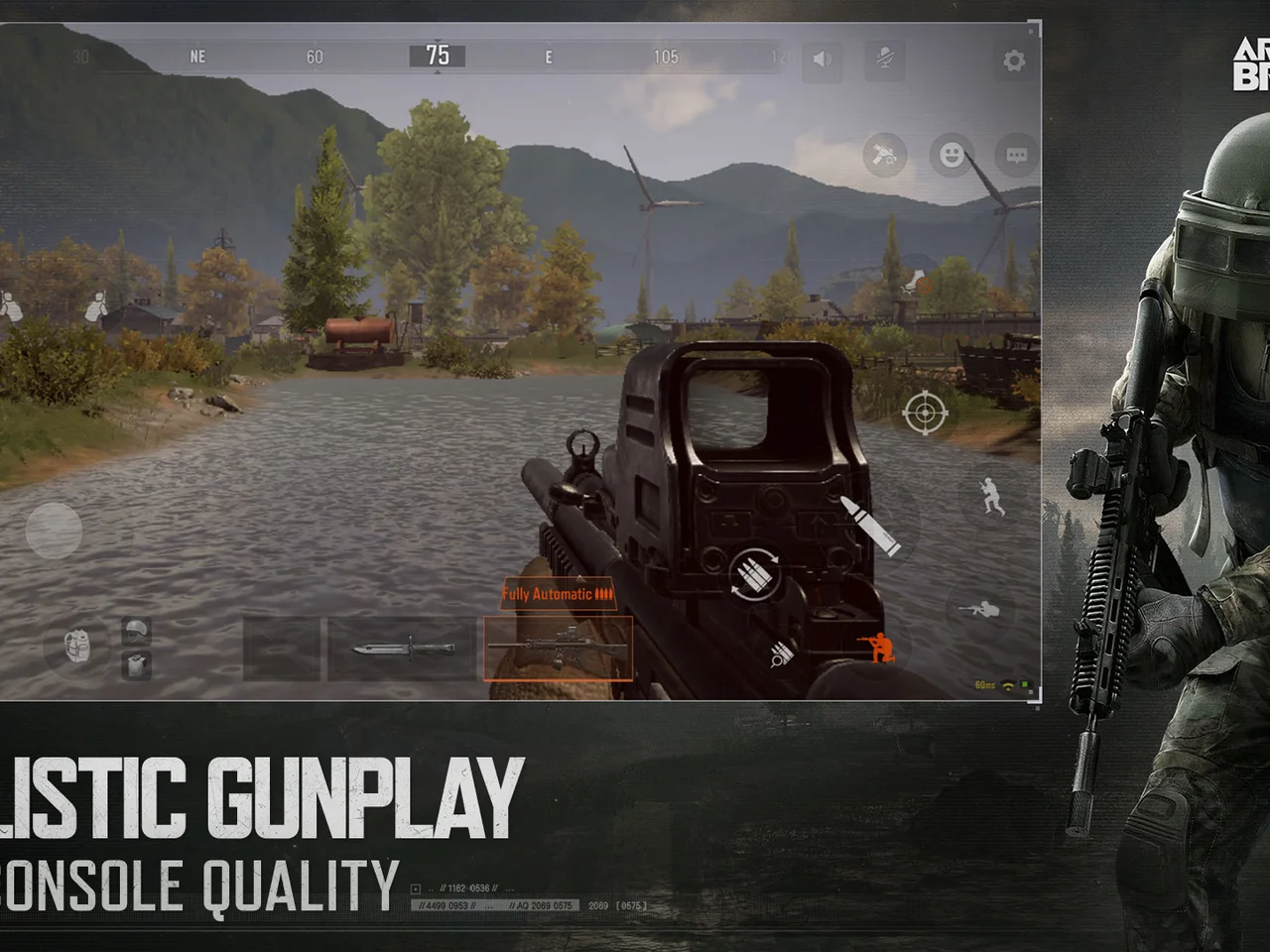
Arena Breakout translates the extraction-shooter formula to mobile with surprising completeness: ammunition, injuries, inventory, economy and weapon construction make every deployment matter. Covert Ops prevents a bad run of raids from completely wrecking progression, while Season 13 pushes the rules further through Hardcore, Team Trial and more experimental activities. The touch interface and economy, however, can be nearly as demanding as the battlefield itself.
Inventory slots become tactical decisions
Arena Breakout understands the essential tension of an extraction shooter: loot only feels valuable because it can disappear. Better equipment improves the odds of surviving a raid, but it also makes every suspicious footstep financially significant. Death can remove armour, ammunition, medical supplies and the weapon prepared before deployment.
Equipment has enough physical structure to make that risk tangible. Armour, helmet, backpack, tactical rig, pockets, multiple weapons and ammunition types all compete for space. Where a magazine or medical item is stored can matter when it has to be reached under pressure.
Looting therefore creates small tactical problems instead of functioning as automatic reward collection. A valuable object may require throwing something else away. Searching leaves the player exposed. Continuing after a successful firefight potentially increases profit while making the eventual loss increasingly painful.
Covert Ops keeps punishment from becoming paralysis
That economy could easily become exhausting. Covert Ops is the elegant pressure valve: it provides temporary equipment and allows a run without directly risking the player's regular loadout. Extract successfully and the recovered items can enter permanent storage; fail and the economic damage is far smaller.
It works both as a recovery mechanic and an experimental space. Players can rebuild after bad raids or learn routes without gambling expensive equipment, yet the defining rule remains intact: anything worth keeping still has to reach an extraction point.
A player-driven market gives those objects a second life. Loot is not simply a rarity colour. Its value depends on utility, demand and what the player wants to finance next, making even ordinary scavenging part of a persistent economy.
The gunsmith proudly refuses simplicity
MoreFun advertises more than 700 gun parts and over ten potential modification slots. Optics, stocks, grips, barrels and other components turn weapon construction into a substantial system rather than a cosmetic accessory menu.
The learning burden rises accordingly. New players are rapidly introduced to ammunition properties, armour levels, injuries, medication, item values and attachment compatibility. Tutorials prevent complete confusion, but understanding what should be purchased, sold or carried takes significantly longer.
On mobile, that complexity is compressed into a dense touch interface. HUD customisation becomes almost mandatory for serious play. Visualised directional sound cues are a clever adaptation to mobile audio conditions, but they also add another stream of information to an already crowded screen.
Season 13 stretches the extraction formula
The 2026 version is substantially broader than the launch build. Season 13 preserves conventional extraction while supporting sharply different rule sets. Hardcore Farm removes features such as visual soundprints and the crosshair while requiring more manual interaction, pushing Arena Breakout toward its most unforgiving form.
Team Trial moves in the opposite direction with 8v8 elimination-focused combat, while Mystic Fog Valley and Liminal activities lean into fog, cooperation and horror-flavoured experimentation. That range is healthy for a three-year live service, although it can also blur the original identity.
Arena Breakout is most distinctive when reaching an extraction point makes every remaining metre uncomfortable. The more conventional modes work best as alternatives rather than as replacements for that tension.
The economy remains the uncomfortable half of the design
Gear loss is fundamental to the experience, but it exists inside a free-to-play economy containing passes and in-app purchases. The game remains playable without payment, yet monetisation becomes more noticeable when equipment has persistent economic value and every defeat can force another purchasing decision.
Solo play also remains substantially harsher than coordinated squad play. New players have to learn maps, extraction rules, item value and weapon behaviour while facing opponents who may already communicate effectively as a team.
That friction is part of why Arena Breakout remains impressive. MoreFun did not merely shrink an extraction shooter until it fitted a phone. It preserved much of the discomfort that makes the genre work: losing, learning, rebuilding a loadout and wondering whether an expensive weapon is really worth risking. The screen is small; the consequences are not.
Strengths
- Extraction risk-reward loop survives remarkably well on mobile
- Inventory, ammunition, injuries and healing have meaningful tactical consequences
- Covert Ops is an excellent economic recovery mechanism
- Extremely deep gunsmith with more than 700 advertised parts
- Season 13 introduces meaningfully different rule variants
Weaknesses
- Extremely dense touch interface
- Severe learning curve for newcomers
- Solo play is substantially harsher against organised squads
- Economy and monetisation can magnify frustration after repeated losses
- Some seasonal modes dilute the original extraction identity
Arena Breakout remains one of the most convincing mobile translations of a genre that resists simplification. Inventory, gunsmithing, economy and especially the fear of losing valuable equipment give every raid unusual weight. Its interface, learning curve and free-to-play friction constantly remind you of the platform underneath, but the core game thankfully refuses to become another disposable respawn shooter.