
News News Official
Samsung's 1100Hz Odyssey G6 gives a gaming PC less than one millisecond per refresh
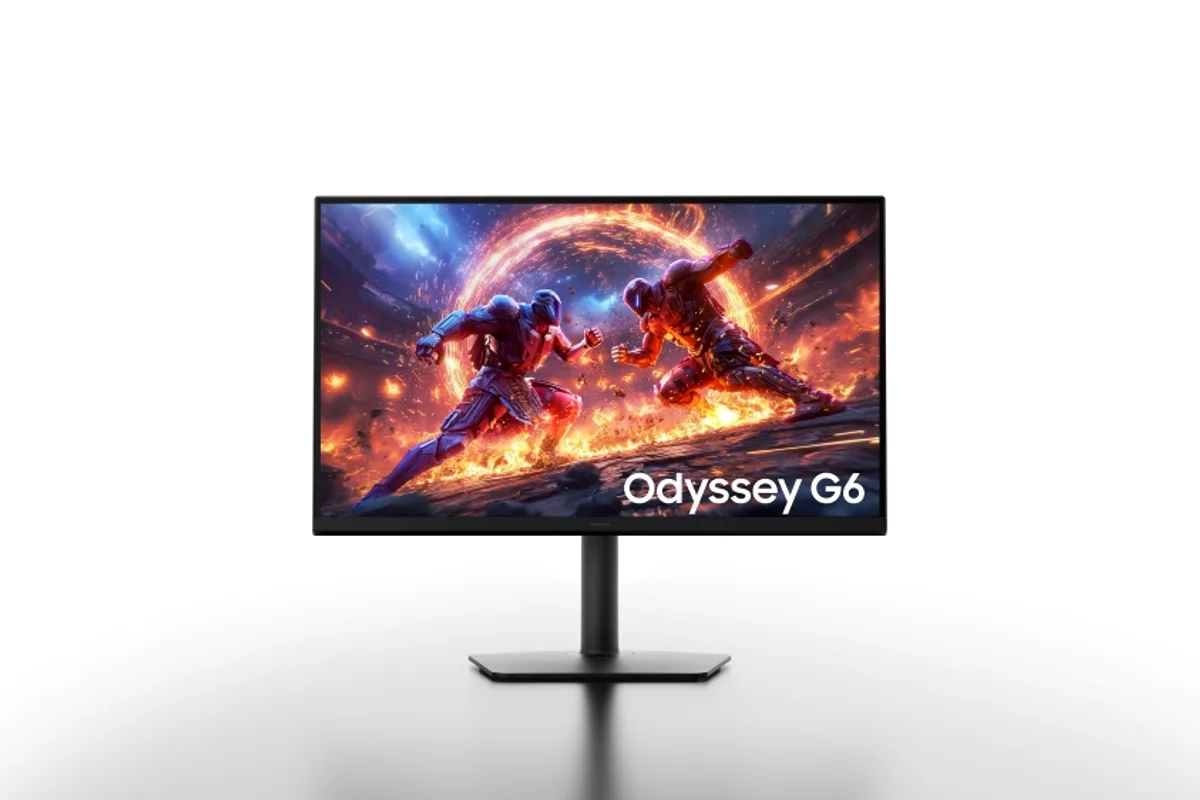
Samsung added another 60Hz to a monitor that was already operating beyond one kilohertz. Odyssey G6 G60H has moved from the 1040Hz specification shown at CES to a finalized 1100Hz mode. The difficult part is no longer refreshing the LCD that quickly. It is giving the display a genuinely new game frame every 0.91 milliseconds.
 By Nolind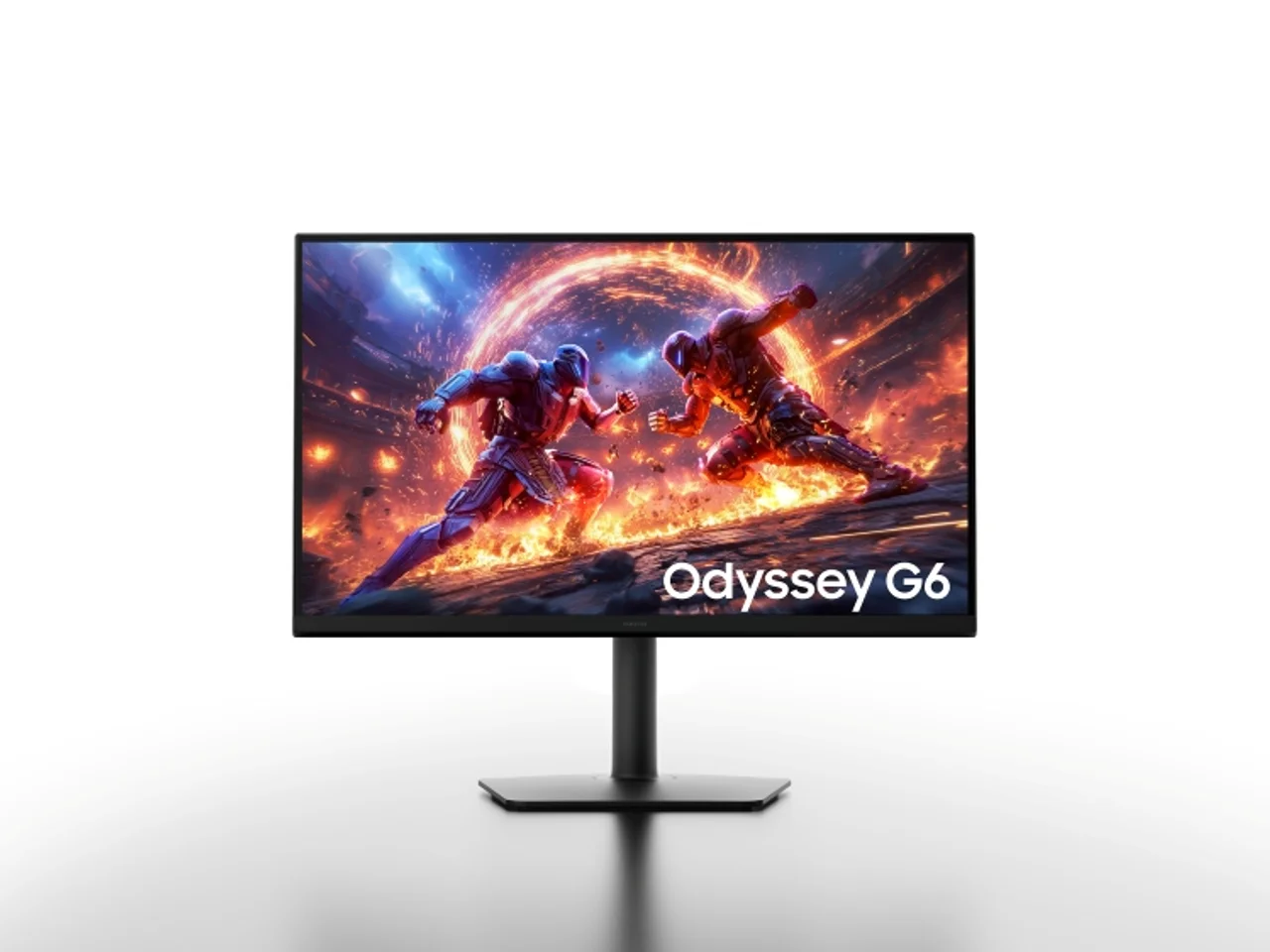
The monitor has two very different operating points
G60H uses a 27-inch Fast IPS panel with a native 2560 × 1440 resolution.
At QHD it reaches 600Hz. Samsung's Dual Mode switches the panel to HD for the maximum 1100Hz setting.
The monitor originally appeared at CES 2026 with a 1040Hz maximum. Samsung increased the final launch specification to 1100Hz before Gamescom and is now showcasing that version around IFA.
One refresh now lasts about 0.91ms
A 600Hz cycle takes roughly 1.67ms. At 1100Hz the interval falls to around 0.91ms.
That is the display's refresh interval, not total input latency. Game simulation, CPU work, GPU rendering, frame queues, input devices and pixel transitions still exist around it.
A genuine 1100fps workload also means the rendering pipeline must repeatedly finish frames on approximately the same sub-millisecond timescale.
That immediately narrows the useful game list
Competitive shooters are the obvious target. Games such as Counter-Strike 2 and Valorant can reach unusually high frame rates when paired with fast CPUs, powerful GPUs and deliberately reduced graphics settings.
A demanding modern single-player game is unlikely to live anywhere near 1100fps. Ray tracing, complex shaders and heavier simulation can consume several milliseconds before a frame is ready.
The monitor still works below its maximum refresh rate, of course. It simply stops receiving a unique frame for every possible refresh.
The resolution trade is significant
Samsung's record mode does not preserve native QHD. The monitor drops into HD to reach 1100Hz.
At 600Hz, users keep the full 2560 × 1440 image. On a 27-inch desktop monitor, that mode provides substantially more useful pixel density while still refreshing once every 1.67ms.
That may turn out to be the more balanced operating point for anyone using the G60H for more than a narrowly optimized esports setup.
Fast IPS still has to move its pixels quickly enough
Samsung rates the panel for a 1ms response time.
Pixel response and refresh rate are separate measurements. At 1100Hz, the display begins another refresh roughly every 0.91ms, so slow transitions or aggressive overdrive could still affect actual motion clarity.
Independent measurements of transition times, overshoot and persistence will therefore matter more than the refresh-rate number alone.
Variable refresh is still useful far below 1100fps
The G60H supports AMD FreeSync Premium Pro and NVIDIA G-SYNC Compatible, alongside HDR10+ Gaming.
Variable refresh allows the panel to follow the delivery cadence of the GPU rather than requiring games to sit at the maximum refresh rate continuously.
Samsung has listed HDMI 2.1 and DisplayPort 2.1 connectivity for the model since its CES introduction.
Samsung finalized the frequency before the price
The Odyssey G6 is scheduled for global availability during the second half of 2026, with exact timing varying by region.
Samsung has not announced final pricing.
IFA therefore has a finished 1100Hz specification to show, but still no number for what buyers will have to pay for it.