
Review
Ace Combat 8: Thirty Missions Proving Arcade Dogfighting Never Needed Reinventing

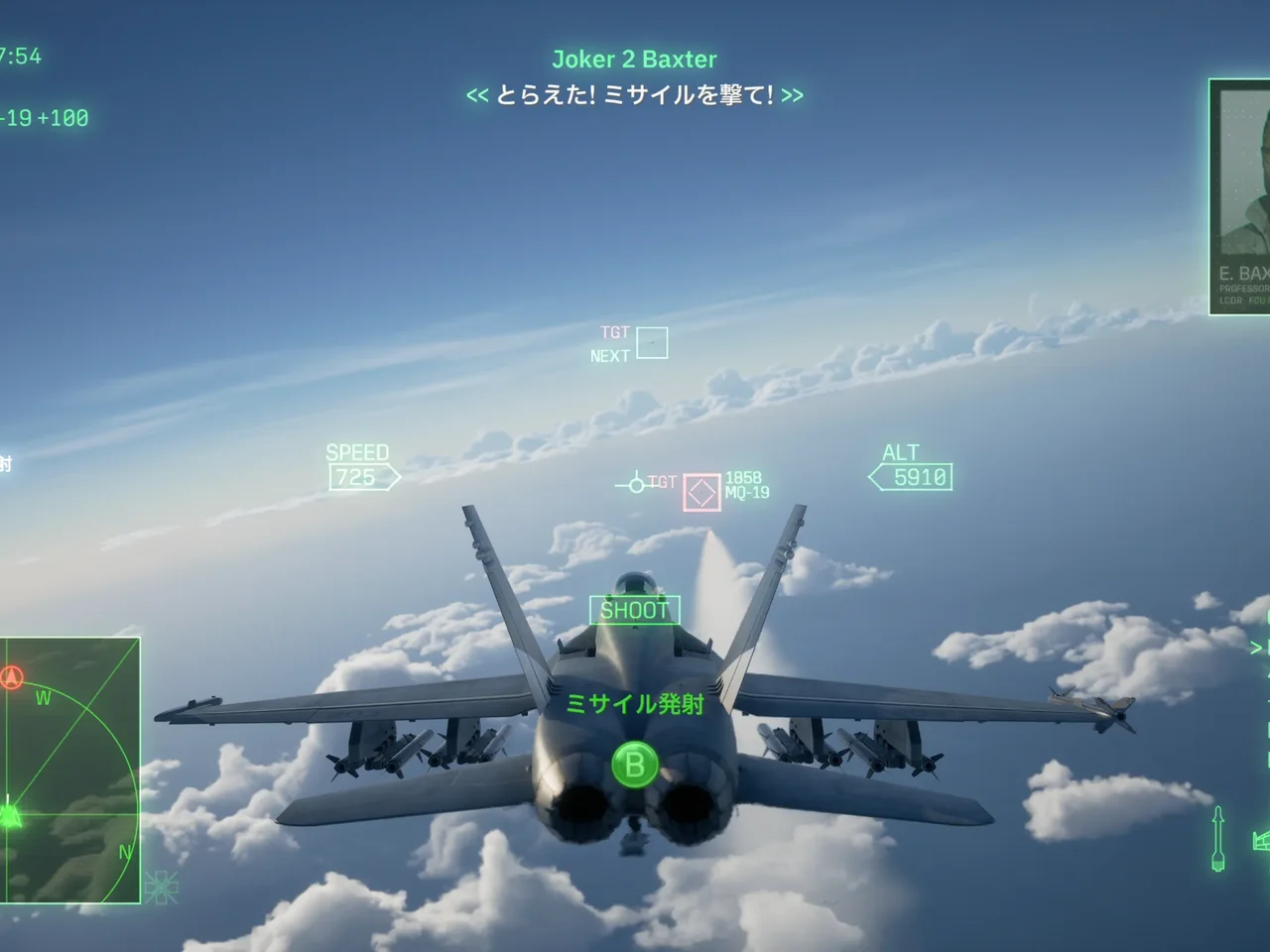
Ace Combat 8 keeps the series' lock-ons, absurd missile counts and superweapons, but sharpens flight, weapons and mission design enough to sustain a thirty-sortie campaign without letting familiarity become stagnation.
Routine, when it is tuned this well
Ace Combat 8 rarely tries to make anyone forget Ace Combat 7. Briefing, aircraft and weapon selection, takeoff, then an avalanche of air or ground targets: the skeleton remains familiar. Progress comes from aircraft response, combat readability and the way thirty missions constantly change the circumstances surrounding that core mechanic.
Lock-ons remain generous, missile counts remain wonderfully incompatible with the actual capacity of a fighter jet, and the game preserves its peculiar border between credible military vocabulary and pure arcade spectacle. Guns are more dependable, making close-range engagements less temperamental. Controls stay approachable without removing the more demanding maneuvers.
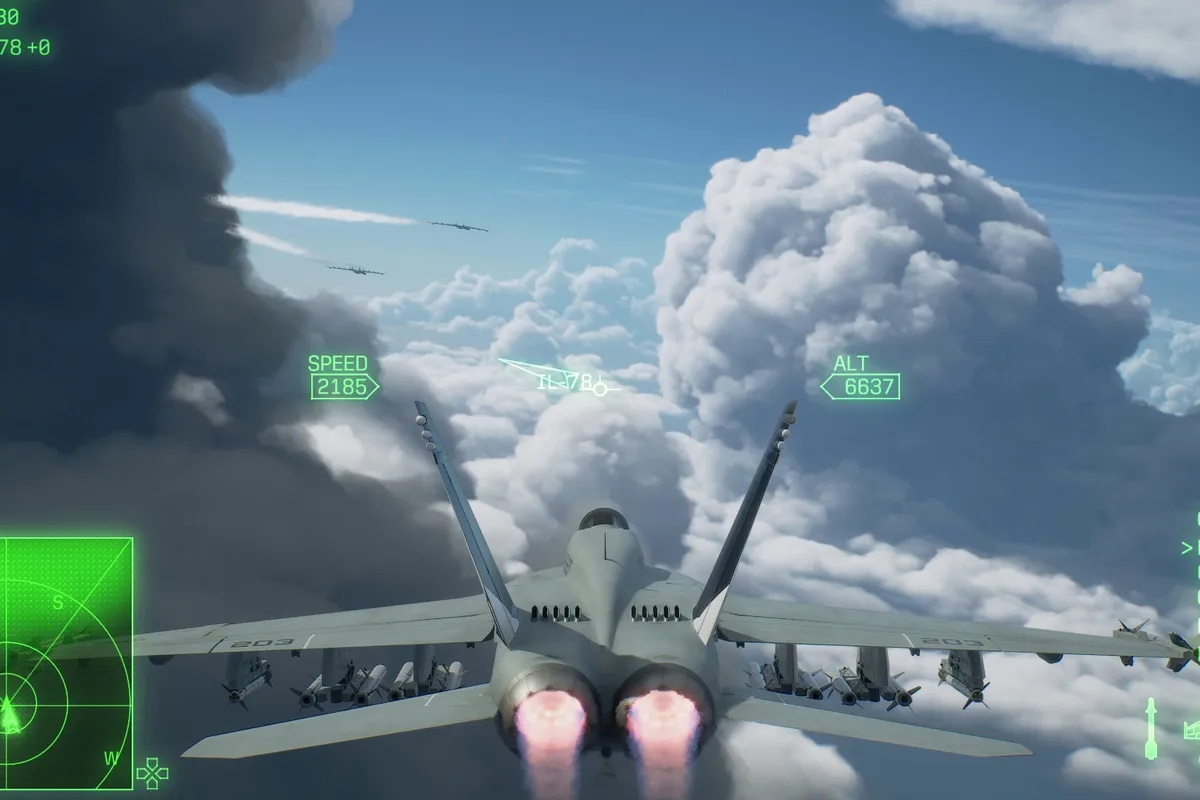
Thirty missions, not thirty versions of the same target
The campaign's strongest trick is repeatedly putting its central mechanics under different kinds of pressure. Allied defense, ground strikes, interception, multi-front battles and encounters with machines that apparently consider subtlety a design flaw rotate often enough to keep the increased length from becoming padding.
The strongest sequences arrive when scale becomes frankly unreasonable. Giant superweapons demand that players read their defenses, choose an approach and make another pass rather than simply locking the next target. Ace Combat has relied on escalation for decades, but Wings of Theve can still stage it without sacrificing control precision.
Wingmen gain presence, not a complete command system
Joker Flight stays close enough that radio communication becomes part of each mission's rhythm. Squadron commands add a useful tactical layer without turning Ace Combat into a command game. Their depth remains limited, so anyone expecting a strategic overhaul can put the whiteboard away.
That is the central paradox of this sequel. Many elements are better; very few are radically new. Even the expanded customization serves a loop that very deliberately refuses to abandon its habits.
Familiarity does not eliminate turbulence
Not every sortie carries equal weight. Conventional objectives can seem modest immediately after a monumental battle, and difficulty can jump unexpectedly between missions. Large enemy counts occasionally make encounters busier rather than more intricate.
The campaign survives those fluctuations because the act of flying rarely loses its bite. Ace Combat 8 has not discovered a new definition of arcade aerial combat. It has instead spent its energy making the old definition remarkably difficult to argue with.
Strengths
- Precise, readable and immediately satisfying arcade flight
- Thirty-mission campaign regularly changes its scenarios
- Particularly spectacular superweapon encounters
- Guns are more reliable than in previous entries
- Strong use of wingmen and radio chatter
- Soundtrack consistently matches the action
Weaknesses
- The fundamental loop changes little from Ace Combat 7
- Some missions introduce sharper difficulty spikes
- Squadron commands remain less substantial than they could be
- Conventional objectives can feel muted between enormous set pieces
Ace Combat 8 refines far more than it revolutionizes. That's fine: its dogfights are razor-sharp, its thirty missions regularly change the rules, and its military excess still gives the genre a flavor nobody else quite replicates. A few secondary systems remain timid, but Project Aces knows exactly what it is doing once airborne.