
News News Official
Tenebris Somnia launches October 16, and its pixels disappear exactly when you wish they would stay
Large pixels can be protective. They allow your brain to finish imagining a monster without forcing you to inspect exactly what is hanging from its face. Tenebris Somnia understands this advantage and removes it at the worst possible moment: a 2D horror scene can suddenly become a real creature built from makeup, prosthetics and physical materials staring directly into the camera.
 By Kader Tenebris Somnia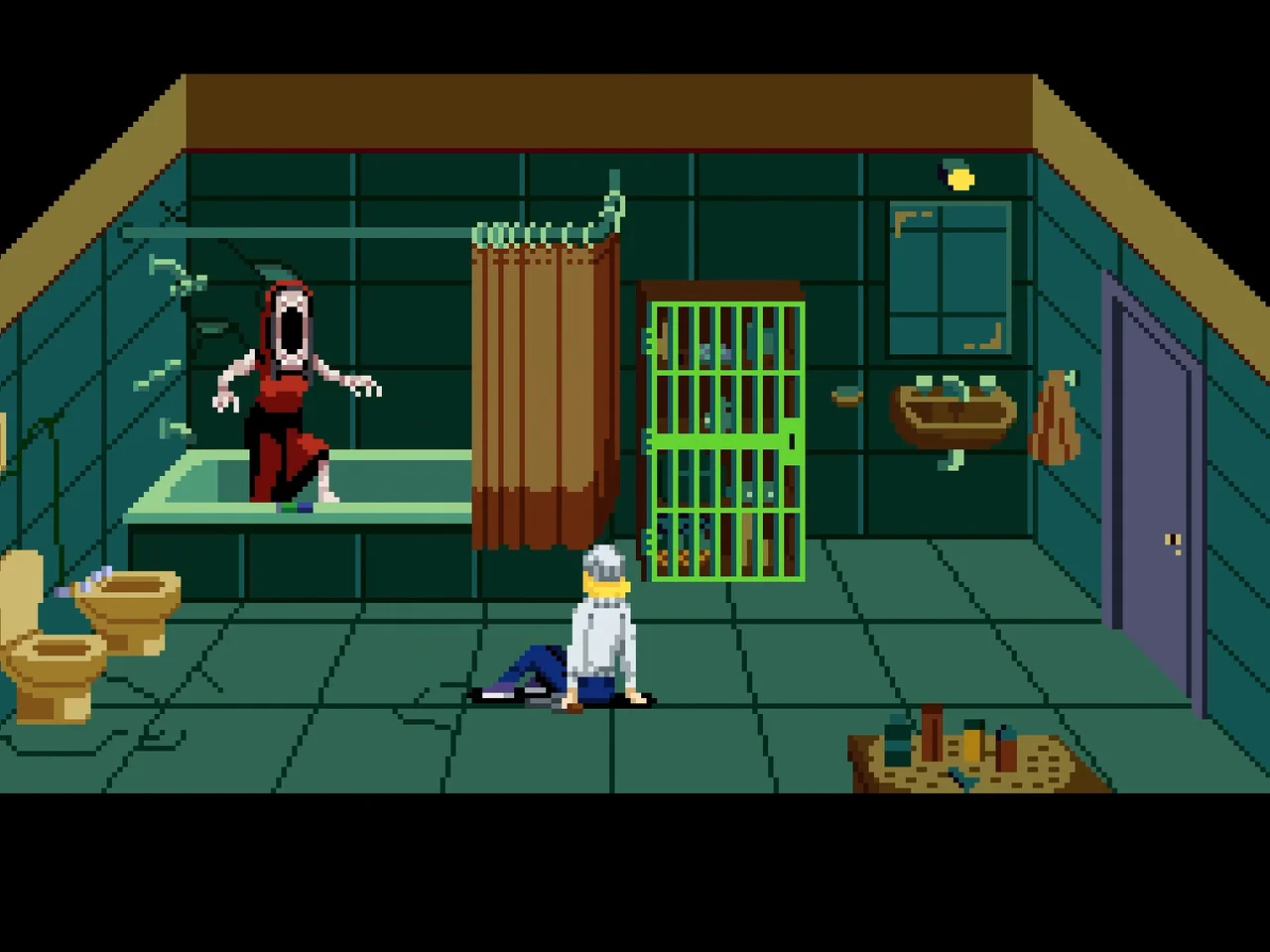
Tenebris Somnia launches October 16, 2026. New Blood Interactive now confirms a simultaneous release on PC, PlayStation 5, Xbox Series X|S and Nintendo Switch 2.
The PC Gaming Show Tokyo Direct on September 20 devoted an extended segment to how its horror is made and to the unusual transition between retro game and live-action filmmaking.
The project is developed by Andrés Borghi and Saibot Studios, published by New Blood Interactive, with FAITH: The Unholy Trinity creator Airdorf serving as executive producer.
It begins like a survival horror game that deliberately skipped several generations of 3D
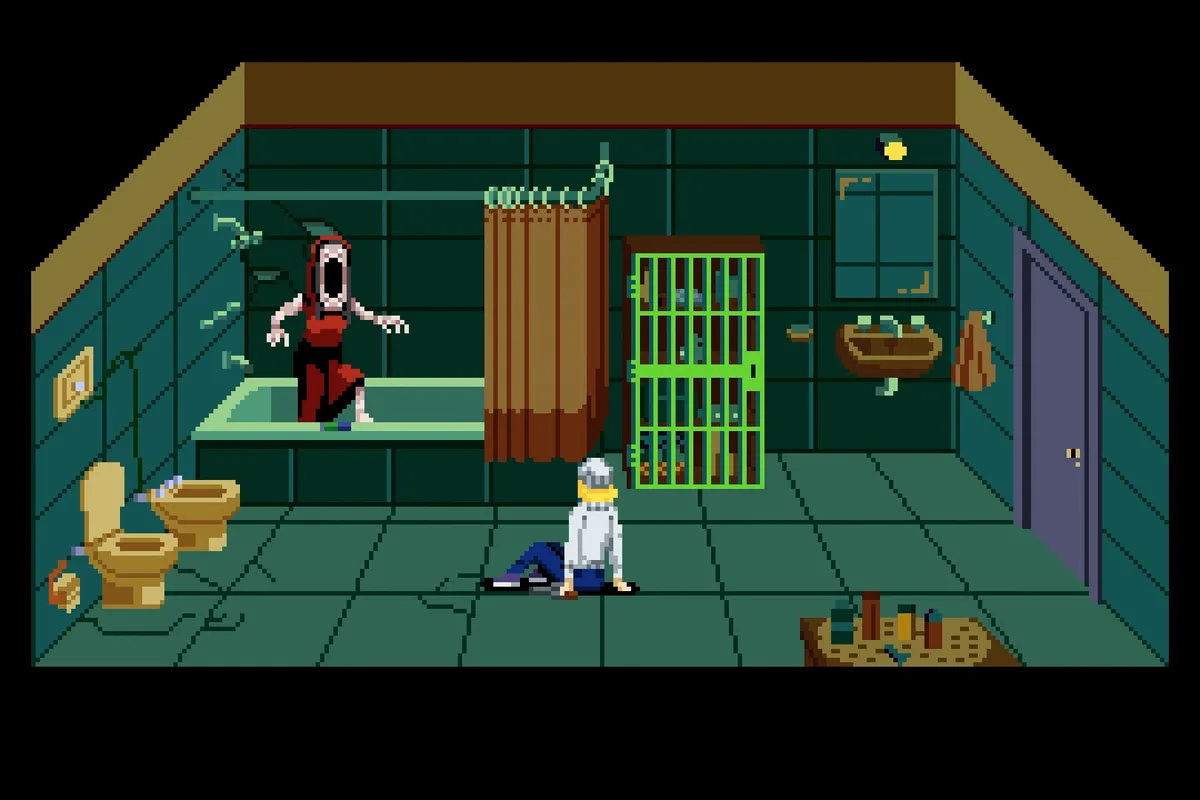
Exploration uses a deliberately sparse 2D presentation inspired by the 8- and 16-bit eras.
Players move through apartments, corridors and other unsettling spaces, solve puzzles, collect objects and fight creatures using visuals where shape and color carry more information than realism.
Saibot openly points to the lineage of Resident Evil and Silent Hill. The structure is classic survival horror: examine the environment, understand how spaces connect and think before spending whatever remains in the inventory.
The more unusual part begins when the game decides pixels are no longer enough.
The cinematics make no attempt to visually match the game
At important story moments, Tenebris Somnia completely abandons its 2D aesthetic and switches to live action.
Real actors take over the screen alongside physical sets, makeup and monsters produced by an Argentine film crew.
The production uses practical effects wherever possible. Tokyo Direct footage highlights bodily transformations built through prosthetics, makeup and physical materials rather than trying to maintain the visual abstraction of the gameplay sprites.
That creates a deliberately violent transition. Seconds earlier, a monster may have been a cluster of several dozen pixels. The cinematic then decides to explain exactly what those pixels represented.
Filming grew into a production of its own
Saibot said in 2024 that it had built a dedicated set inside a large warehouse for the filmed sequences.
One week-long shoot involved more than 30 people across cast, technicians and production staff. At the time, the developer said more than 60 percent of the game's story had already been filmed.
Steam now describes the cinematics as work from a professional, award-winning film crew from Argentina.
They are not presented as decorative introductions between chapters. The store description specifically says important secrets of the game are contained inside those sequences.
The survival half still intends to keep the magazine nearly empty
The spectacle of the live-action material does not mean the playable sections are becoming a narrative walk.
During the Tokyo Direct presentation, New Blood's Dave Oshry described an economy where players should generally have only enough health and ammunition to survive, rather than enough to feel comfortable.
Running low means returning to improvised melee weapons such as pipes and wrenches.
The Steam demo has already been used to tune that side of the game. Saibot increased wrench attack speed, adjusted revolver damage and fire rate, and revised enemy behavior following player feedback.
The contrast works because 2D horror creates a different kind of uncertainty
A creature rendered in pixel art can remain disturbing without ever becoming precisely defined.
Live action does the opposite. It draws attention to skin texture, mouths, eyes and the exact physical way a body is being distorted.
Tenebris Somnia can therefore use two forms of horror inside the same sequence. Gameplay lets players anticipate something they cannot completely identify; the film footage suddenly removes that distance.
The effect would be less distinctive if the entire game were already chasing photorealism.
Behind the creatures is a story about a relationship that went badly wrong
New Blood is still withholding most narrative specifics, but describes the emotional core as something likely to feel familiar to anyone who has lived through a troubled relationship.
The publisher's deliberately theatrical description says players may laugh, cry and then want to call an ex.
Steam confirms a female protagonist and a story where nightmares increasingly stop being easy to separate from reality.
Saibot has not publicly explained every circumstance behind the transformations seen in the trailers.
A demo already lets players test whether the media switch works
A free Tenebris Somnia demo is currently available on Steam.
The PC version asks for 5 GB of storage and targets relatively modest hardware for its playable sections. Steam currently lists English, Spanish, Japanese and Brazilian Portuguese among its supported languages.
The full game arrives October 16, comfortably ahead of Halloween.
Its most effective idea may ultimately be one of scale: spend several minutes fearing a tiny red-and-white sprite, then discover that it becomes substantially less pleasant once it has real pores.