
News News Official
Loftia opens its sky islands on November 3, with an MMO that never asks you to kill ten boars
Loftia wants to be an MMO while quietly forgetting several MMO traditions. There is no raid where twenty people hit a dragon for twelve minutes, and crafting a chair does not require grinding monsters for random drops. On November 3, Early Access instead opens a collection of floating islands where players grow food with hydroponics, adopt capybaras and build infrastructure with their neighbors.
 By Kader Loftia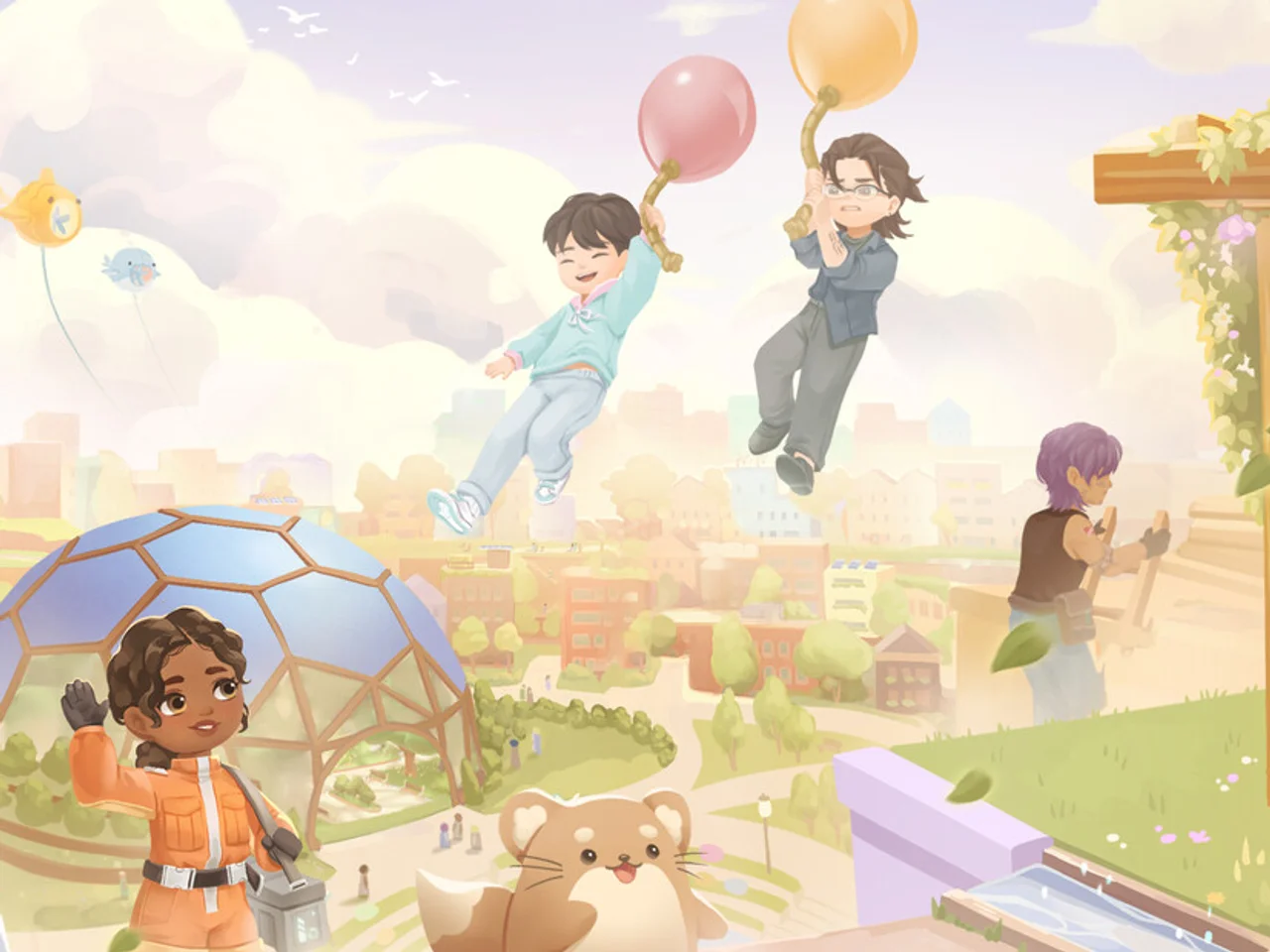
Qloud Games announced during the PC Gaming Show Tokyo Direct that Loftia will enter Early Access on November 3, 2026 at 1 PM EST.
The initial launch is through Steam on PC and Mac. Controller support and Steam Deck compatibility are also planned for Early Access.
A Nintendo Switch release is coming later without a date. Qloud Games is considering additional platforms, but none beyond those have been firmly announced.
It really is an MMO, even if Qloud prefers joking about the term
Loftia runs as a persistent online world where large numbers of people can occupy the same space.
The studio sometimes calls it a “Mediumly Multiplayer Online” game instead, a joke that also acknowledges the project is being built by an indie team rather than attempting World of Warcraft scale.
Servers remain central to the structure, but characters are not permanently locked to one. Qloud Games says players will be able to move around and join friends when needed.
The tradeoff is permanent connectivity. Loftia requires an internet connection and does not offer offline play.
Every player gets a piece of the sky
A player's home is a personal floating island that can be built, farmed and decorated.
Those islands do not have to remain isolated. Players can connect them into neighborhoods, creating shared spaces where several homes and community areas sit together.
Customization covers the avatar, home and animal companions, while character creation has no fixed gender lock.
Rescued animals can accompany players around the world and wear their own accessories. Capybaras and turtles are among the examples Qloud Games currently highlights.
Farming looks beyond the traditional field of turnips
The solarpunk identity directly affects production systems.
Loftia includes hydroponics, aquaponics and trellis farming. Tools and infrastructure can use renewable energy generated from sunlight, wind and rain.
Solarpunk is therefore more than vegetation attached to clean white buildings. Qloud Games wants sustainable technology to shape how players grow crops, craft equipment and expand their homes.
Gathered materials then feed into quests, crafting, decoration and larger world projects.
There are adventures, just not combat
One of Loftia's more unusual design choices concerns what it removes.
Expeditions beyond the city take players into abandoned factories and other biomes to scavenge resources, solve puzzles and complete platforming challenges.
Those activities are not built around combat. The Tokyo Direct presentation explicitly positions Loftia as a multiplayer world where going on an adventure does not automatically mean clearing an area of enemies.
Players can team up for those trips or explore at their own pace.
The social endgame may involve building something the entire community uses
World Progress Projects are the larger cooperative layer.
Players contribute together to shared construction goals that can change the world, unlock resources, expose additional story and open new islands.
Qloud Games has previously used a community-built wind turbine as one example.
The intention goes beyond filling a server-wide meter for a seasonal reward. These projects are supposed to make collective progress physically visible in the environment.
The cheerful trailer still hides something wrong in the sky
Tokyo Direct footage also shows cracks appearing across the floating islands and hints at a larger crisis threatening their stability.
Qloud Games has not fully explained the threat or how its narrative progression works.
It does provide another purpose for the communal systems: Loftia is not only about living sustainably, but about an entire population trying to preserve the world it has built.
It costs $29.99, with paid cosmetics afterward
Loftia launches at a $29.99 US base price with regional pricing. A limited 17 percent launch discount will temporarily reduce the US price to $24.89.
There is no subscription required after buying the game.
There will be an in-game shop and season pass. Qloud Games says both are cosmetic only and that one purchase provides access to all gameplay.
The studio also says it currently has no plans for paid DLC or expansions. New content during Early Access and beyond is intended to remain free for existing owners.
November 3 is the beginning of Early Access, not the finish line
Loftia has been in development since 2022 and raised roughly $1.3 million through Kickstarter in 2023.
Early Access launches with interface support for 14 languages including English, French, German, Japanese and Korean.
Cross-platform play with future console versions remains an aspiration rather than a confirmed feature. Qloud Games says it is researching and testing cross-play but is not promising it yet.
November 3 will instead begin answering a simpler question: can an MMO become somewhere people return every evening without needing to save the world between harvests?