
News News Official
Hozy comes to PS5 with DualSense-powered cleaning, decorating and stress-free home restoration
Hozy is bringing its deliberately relaxed approach to home restoration to PlayStation 5. Scheduled for November 9, 2026, the game asks players to clean, repair and decorate abandoned rooms without timers, scores or penalties. Developer Come On Studio has also adapted its tools for the DualSense controller, using haptic feedback, adaptive triggers and the built-in speaker to make everyday renovation tasks feel more tactile.
 By Kader Hozy
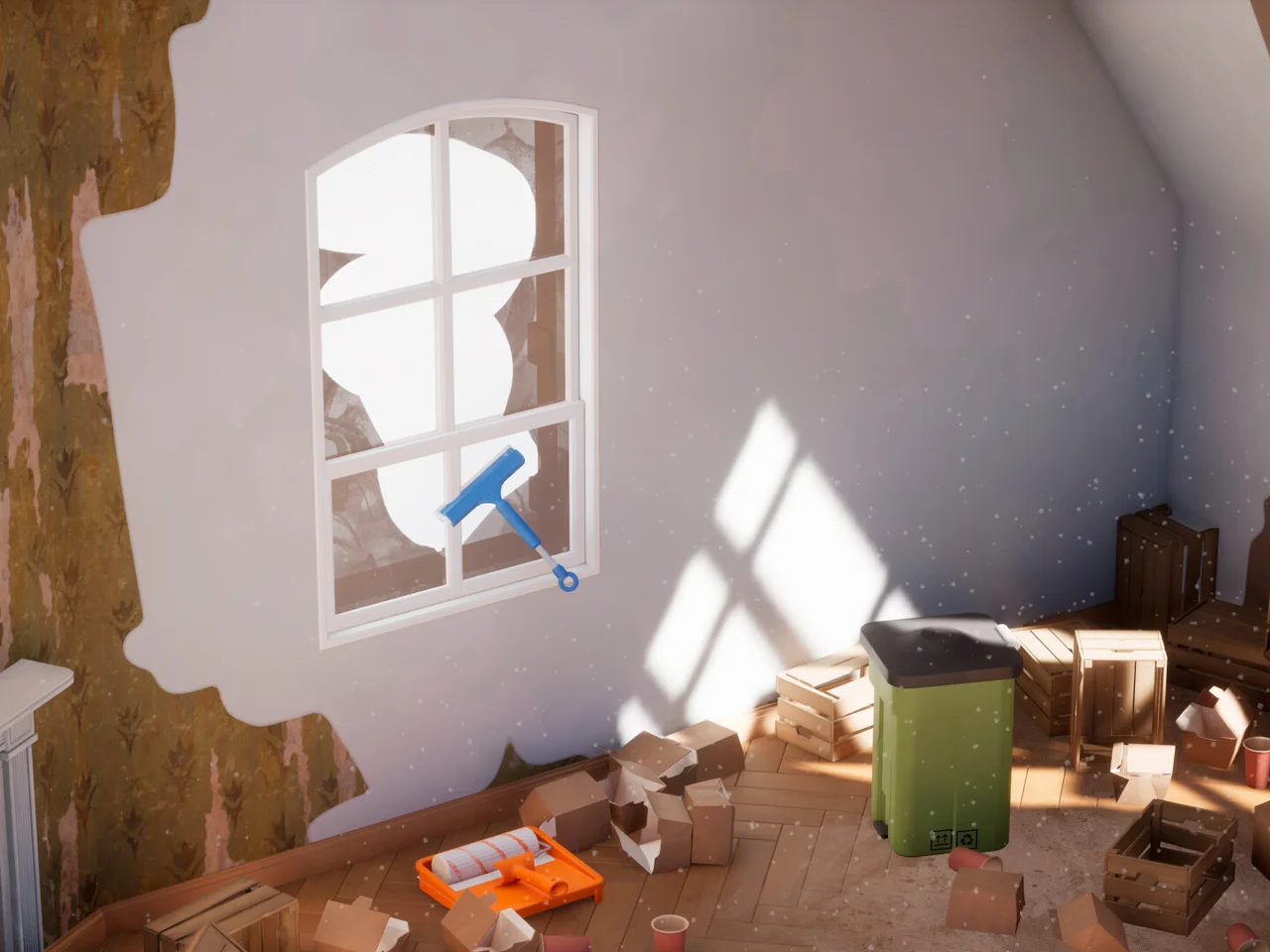
There is something satisfying about watching a neglected room become welcoming again. A dirty window gradually turns clear, a wooden floor begins to shine and an empty corner becomes a comfortable place to sit.
Hozy turns those small transformations into the entire point of the game.
Developed by Come On Studio and published by tinyBuild, the home restoration title first launched on PC through Steam on March 30, 2026. Its PlayStation 5 version is scheduled for November 9, with controller-specific features explained in a November 6 PlayStation Blog article.
The experience deliberately avoids the usual measures of performance. There are no countdown timers, scores or penalties. Players are encouraged to work at their own pace, focusing on the process rather than an external objective.
Every room begins with a little work
Hozy's levels take place in abandoned or neglected interiors around Littleville.
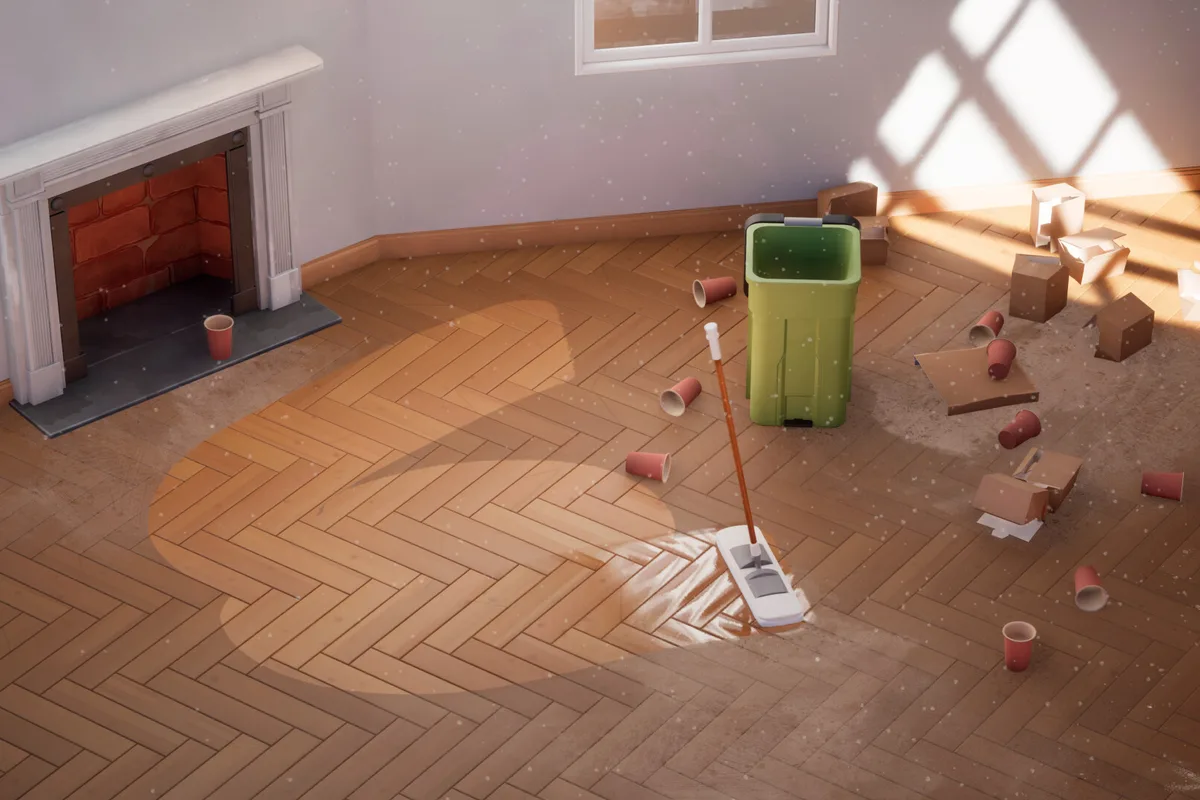
Players begin by clearing away rubbish and restoring the space. They can clean windows, mop floors, remove damaged material, repaint walls and prepare rooms for furniture.
The available tools include mops, squeegees, paint rollers and crowbars.
Each tool has a practical purpose, and the developer emphasizes the satisfaction of using it rather than treating restoration as an obstacle before the more creative parts of the game.
When the room is ready, players furnish it using a selection of decorative objects and furniture provided for that particular space.
Instead of presenting an enormous catalog, the game offers curated sets intended to work together visually.
This limits the initial number of choices, but it also makes decorating more approachable for players who do not want to spend hours comparing nearly identical items.
Objects can be arranged and positioned to create different layouts, allowing individual rooms to develop their own character.
DualSense turns ordinary tools into tactile interactions
The biggest addition highlighted for PlayStation 5 involves the DualSense controller.
Come On Studio has implemented haptic feedback for different tools and surfaces. Mopping a floor and arranging furniture are intended to produce distinct vibration patterns.
Adaptive triggers are used to recreate a sense of resistance. The example given by tinyBuild involves using a crowbar to remove floorboards, with the trigger pushing back before the material gives way.
The controller's integrated speaker adds sounds associated with the tools being used.
These features are a natural match for a game focused on small physical interactions. Rather than simply confirming a button press, the controller can communicate something about the action taking place.
However, the PlayStation Blog description establishes the intended features, not an independently measured assessment of their quality or precision.
Whether the effect remains convincing throughout an extended session will depend on the finished implementation.
Nine spaces tell a quiet story
Hozy has a narrative framework beneath its cleaning and decorating.
After things go badly in the big city, the protagonist returns to a hometown that has become quieter and more neglected.
Restoring homes offers a way to reconnect with the place and the people who once gave it life.
The main campaign comprises nine locations. Each room contains objects and details that provide clues about its previous occupants.
The spaces include family interiors, an artist's workshop and a café filled with memories.
Players can interact with more than just the items required to complete renovation tasks.
Opening a window causes the breeze to move dust particles. Lamps can be switched on, piano keys can be played and hidden notes can be discovered in drawers.
These interactions encourage observation without turning every object into a conventional puzzle.
They give the environments a sense of personal history and make the process of restoration more meaningful than a simple sequence of cleaning objectives.
Game+ and Sandbox offer different reasons to return
Completing the nine-level story does not exhaust Hozy's decorating possibilities.
Game+ lets players return to previously restored spaces and encounter alternative versions of those rooms.
Different furniture collections are available, while lighting can be changed between day and night.
Some rooms can therefore look substantially different from their original appearances.
Sandbox mode offers greater freedom.
It provides access to the game's collection of objects and allows players to combine, duplicate and arrange them independently of the sets provided during the campaign.
Wallpapers, surface colors, window frames, structural details and lighting can be customized.
The distinction between the modes is useful. The campaign introduces tools and decoration in controlled spaces, while Sandbox gives players more freedom to experiment once they understand the systems.

Sound design is part of the restoration
Hozy's audio is intended to make its environments feel responsive.
According to tinyBuild, tools, objects and surfaces have their own sounds, so interactions provide distinct feedback beyond what appears on the screen.
The music also changes dynamically as players progress through a level.
That design connects the soundtrack to the gradual transformation of a room.
A space initially filled with rubbish and damaged surfaces becomes more comfortable as it is repaired, decorated and illuminated.
The changing audio is designed to accompany that transition rather than compete with it.
Together with the controller features on PS5, sound gives the ordinary actions of cleaning and furnishing a more prominent role in the overall experience.
Relaxed design still leaves room for creativity
Removing timers and scores does not necessarily mean removing all decisions.
Players still choose how to approach a room, which objects to place and what kind of atmosphere to create.
The absence of pressure changes the reason for making those decisions.
Instead of maximizing efficiency or meeting an artificial deadline, players can simply work toward an arrangement they enjoy.
This places Hozy closer to creative relaxation games than traditional management simulators built around budgets, schedules and performance goals.
The developer's intention is to make the transformation itself rewarding.
Release plans and platform details
Hozy originally launched on Steam for PC on March 30, 2026. Its PlayStation 5 edition is scheduled for November 9, and an Xbox Series X|S version has also been announced for the same day.
On PlayStation, remote play support allows owners to access the game through PlayStation Portal using a compatible PS5 setup. This should not be interpreted as a separate native Portal edition.
The PlayStation announcement lists eleven supported languages and accessibility options including adjustable tool movement speed, camera inversion and color display settings.
tinyBuild has also outlined plans for seasonal events and additional free and paid downloadable content. Those remain future plans without confirmed release dates.
At the time of verification, the PlayStation Store listing had not independently confirmed that sales were open and still displayed an undetermined release date. November 9 is therefore the announced launch date rather than proof that the game could already be purchased.
No verified PS5 price was available from the sources used for this report.
Hozy's central idea is modest, but distinctive: make restoring a room enjoyable enough to serve as an entire game. Its PlayStation 5 version adds another way to experience that process, letting the DualSense communicate the feel of the work alongside its visual and audio rewards.