
Review
Slay the Spire 2: the deckbuilder king plays its best hand again, only sharper

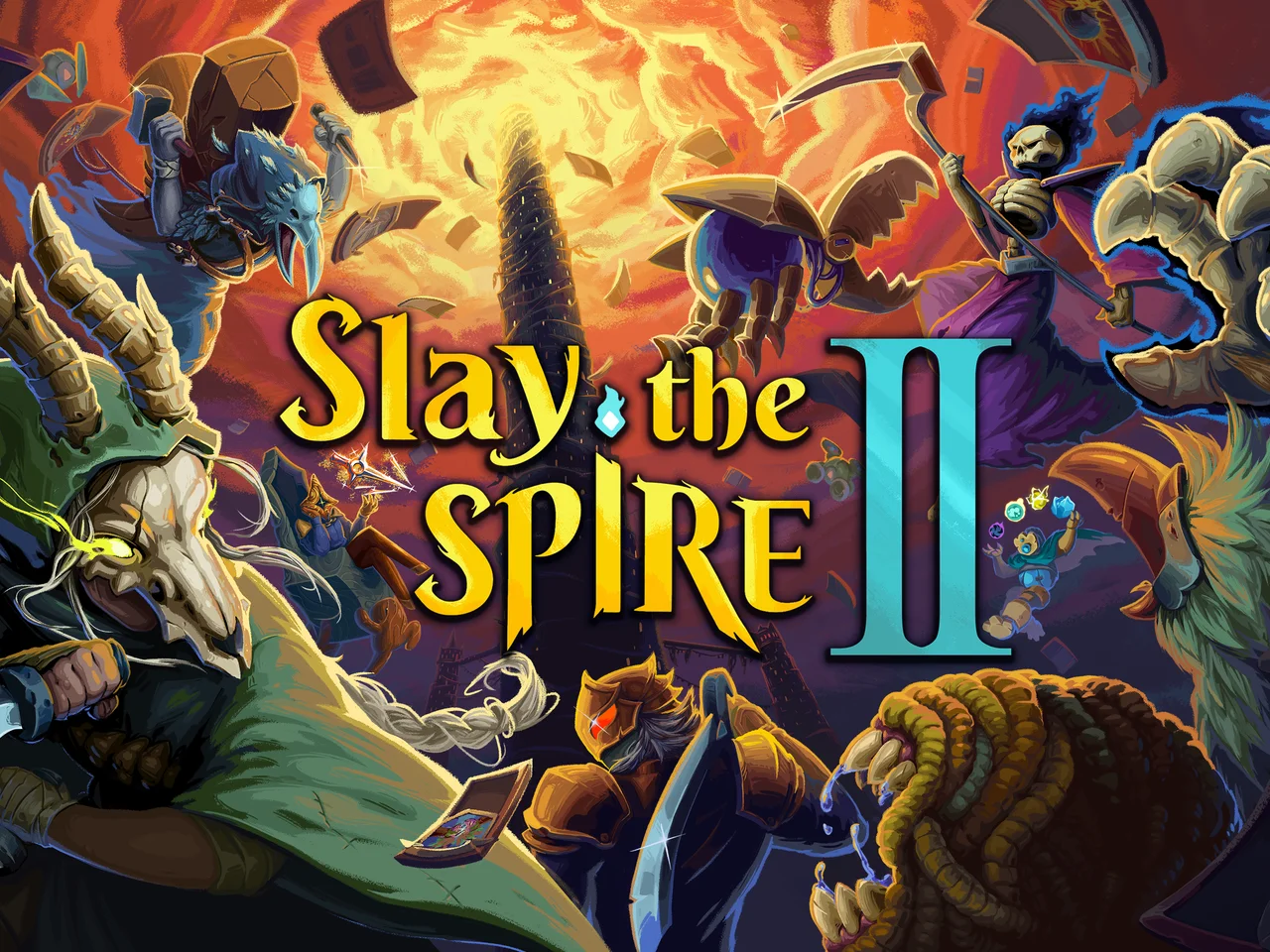
Slay the Spire 2 preserves almost the entire loop that defined the modern roguelike deckbuilder, then deepens it through Enchantments, new between-act rewards, two original characters and remarkably natural co-op. Its Early Access status becomes clearer at higher Ascensions, where some encounters and bosses can feel more punitive than strategically illuminating.
The first card feels immediately like coming home
The fundamental structure has barely moved: weak starter cards, three energy, a branching route and the possibility that a carefully assembled deck eventually does something absurd. GamesRadar+, PCGamesN, Thinky Games and Ars Technica broadly agree on that familiarity. What differs is whether familiarity is considered discipline or excessive caution.
The Ironclad, Silent and Defect remain close enough to their original identities that experienced players can recover years-old instincts almost instantly. Silent's Sly keyword is a useful example of Mega Crit's approach. Discard interactions already existed; the sequel formalizes and expands them so that a familiar archetype becomes cleaner without becoming unrecognizable.
That philosophy makes Slay the Spire 2 unusually easy to understand as a sequel and unusually hard to judge as one. It refuses to discard a near-perfect combat language merely to prove that something changed.
Enchantments make old-looking cards new problems
Enchantments layer additional properties onto cards beyond their conventional upgrades. It sounds minor next to an entirely new character, but it creates exactly the kind of combinatorial instability Slay the Spire thrives on. A support card can suddenly become an engine piece because another system has altered its role.
Thinky Games identifies that creative possibility as the sequel's central strength. The series has always been at its best when a collection of individually reasonable effects suddenly becomes unreasonable together. Slay the Spire 2 preserves that sensation while giving the player more surfaces on which to build it.
Between-act Ancient rewards pursue the same goal. They replace the old expectation that a Boss Relic will deliver a familiar post-act power spike. The new choices are more situational and often carry sharper trade-offs, making successful decks depend less on a single standardized reward.
Necrobinder and Regent justify the sequel more clearly than the veterans do
Necrobinder revolves partly around Osty, a reanimated hand that introduces another resource and another object to manage beyond the deck itself. Regent is more deliberate, asking for setup and longer-term planning around forms and power. Both feel like Mega Crit exploring character economies that would have been awkward to retrofit into the original roster.
Reception is not equally warm. Launch reviews generally welcomed their increased complexity, while more recent high-hour commentary finds Regent comparatively clumsy. Necrobinder and Osty tend to earn more immediate enthusiasm because their interactions are visible, tactile and distinct.
That disagreement is useful rather than alarming in an Early Access game. These are not solved characters yet.
Co-op is more than four cursors on the same problem
Up to four players can climb together. Each keeps an individual deck and character identity while acting within shared turns and shared route decisions. Multiplayer-specific cards and team interactions prevent the mode from becoming a simple exercise in multiplying health bars.
GamesRadar+, GameSpot, The Verge and PC Gamer all found the implementation surprisingly natural. It is slower than solo play because every energy point can become a group discussion, but that deliberation creates situations the original never could: setting up another player's combo, protecting a fragile ally or designing two decks around effects that only become exceptional together.
Recent commentary still wants more content built exclusively for multiplayer. That criticism is fair. The foundation is strong enough that the unfinished part is now obvious.
High Ascension is where Early Access becomes impossible to ignore
Launch coverage already described a tougher progression curve. Months of balance updates have since changed cards, relics, enemies and bosses, and the most contentious discussion now sits near the top of the difficulty ladder.
Recent long-term commentary criticizes parts of Act 1 for demanding the right early rewards, finds Regent awkward, and singles out Aeonglass as an Act 3 boss that can invalidate too many otherwise reasonable approaches. Recent Steam sentiment also reflects increased balance frustration even while the broader English-language history remains strongly positive.
That makes Slay the Spire 2 an unusually easy Early Access recommendation to understand and an unusually difficult game to score permanently. The underlying design is already extraordinary. Its exact difficulty and balance are still being negotiated in public.
Strengths
- The deckbuilding/combat loop remains exceptionally readable and deep
- Enchantments create new synergies without drowning the game in keywords
- Necrobinder and Regent introduce resource economies unlike the returning trio
- Events and between-act rewards demand more meaningful trade-offs
- Four-player co-op preserves the solo game's logic instead of diluting it
- Epoch progression gives players stronger reasons to experiment
Weaknesses
- Much of the first game's underlying structure remains immediately recognizable
- Several established strategies still transfer almost too comfortably
- High-Ascension balance remains highly volatile
- Aeonglass currently concentrates many complaints about overly hard counters
- Regent is considerably more divisive than most of the roster among experienced players
- Early Access means periodically relearning reworked cards and encounters
Slay the Spire 2 does not attempt to replace the formula that inspired an entire generation of imitators. It rebuilds and refines it, moving just enough assumptions to force veterans to think again. At times it is so faithful that the line between sequel and reconstruction becomes blurry, particularly with the three returning characters. Yet Enchantments, Ancients, Necrobinder, Regent and especially co-op introduce enough new decisions to prevent it from feeling like a mere expansion. Its clearest weakness is also the defining feature of active Early Access: balance moves quickly, and some challenges are still searching for the point where demanding design stops becoming punishment. Even unfinished, the underlying system remains dangerously hard to put down.