
News News Official
DLSS 5 escaped from NBA 2K27, and modders are already putting it everywhere
A DLL buried inside NBA 2K27's PC early-access build went from an unused file to a working Control experiment within hours. It has since spread across games that were never designed to support DLSS 5.
 By Nolind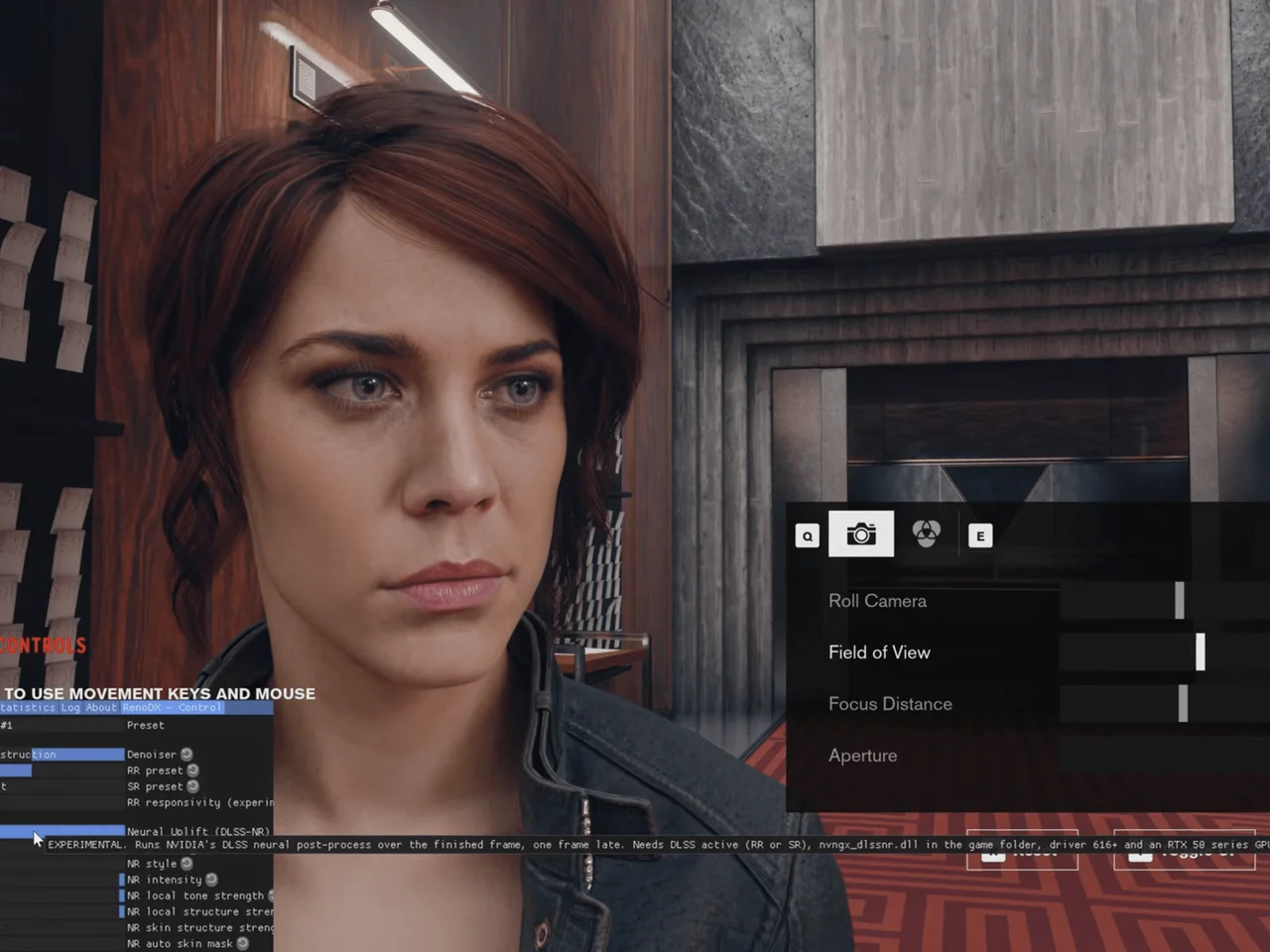
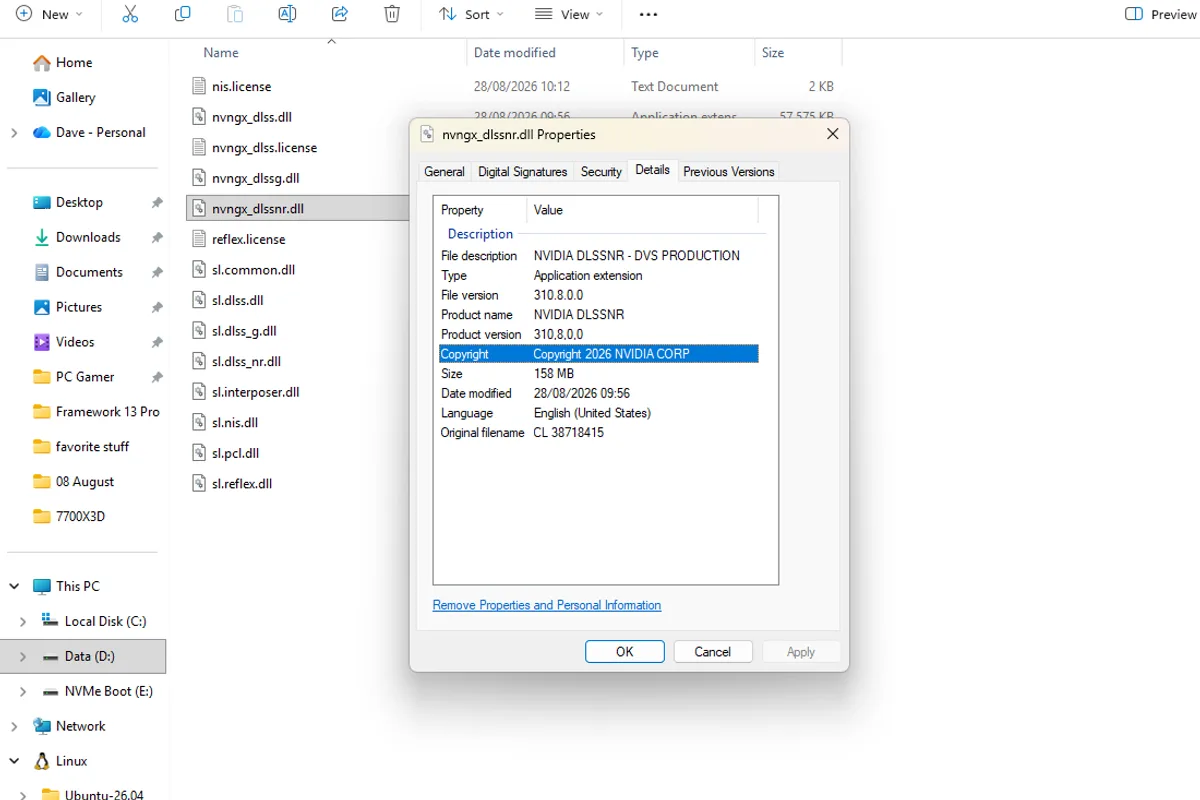
The file at the centre of the story is nvngx_dlssnr.dll, identified as NVIDIA DLSSNR version 310.8.0.0 and roughly 158 MB in size. NBA 2K27 does not expose a Neural Rendering toggle, but members of the RenoDX modding community found a way to connect the library to other rendering pipelines.
Control was the first major demonstration. By August 27, the experimental implementation could alter the rendering of Jesse Faden's character model through several adjustable styles. The interesting part was not merely that it worked. It was how quickly the same technique moved elsewhere.
A neural renderer that does not seem particularly interested in which game it is running in
Community demonstrations have since appeared in Cyberpunk 2077, Red Dead Redemption 2, The Last of Us Part II Remastered, Hogwarts Legacy, Black Myth: Wukong, GTA V, Starfield, Silent Hill 2, Monster Hunter Wilds and other titles. Skyrim and even GTA: San Andreas have joined the experiment.
None of those examples should be described as official DLSS 5 support. Their developers did not build these integrations, and NVIDIA has not certified them. RenoDX is effectively attaching an experimental NVIDIA runtime to rendering pipelines that were never prepared for it.
That rough compatibility does fit something NVIDIA clarified earlier this year. DLSS 5 takes a rendered 2D frame and motion vectors as input. Material properties are inferred from that image rather than read directly from a game's PBR data, geometry or material definitions.
The model can preserve geometry while still changing a face
That distinction is already becoming one of the central arguments around DLSS 5. In Control, increasing the Neural Rendering effect changes skin detail, shadows and the apparent treatment around Jesse's eyes. NVIDIA can accurately say that the underlying geometry remains untouched while a player can equally accurately say that the character looks different.
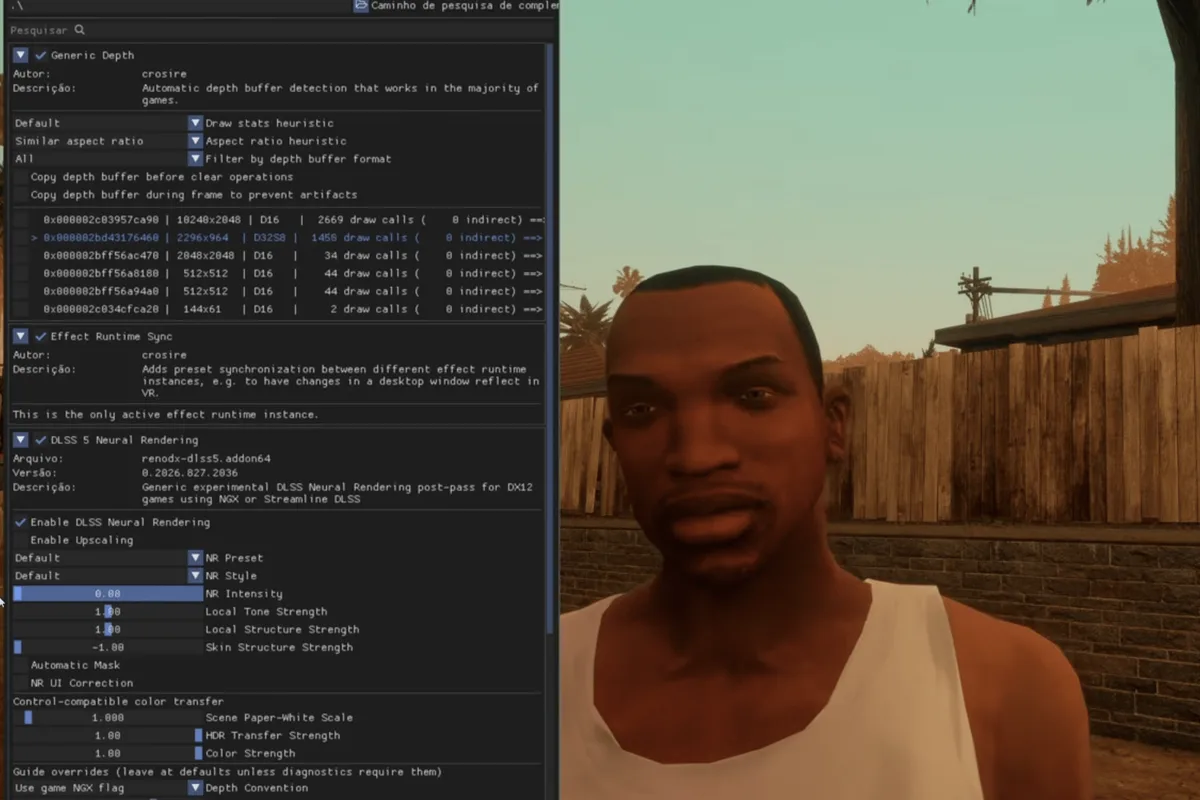
The GTA: San Andreas experiments make the idea almost comically obvious. CJ's face, surrounding materials and lighting visibly shift as different parameters are applied. There was no Rockstar art pipeline approving any of this. A 2004-era scene is simply being interpreted by a 2026 neural model.
Official integrations are supposed to work differently. NVIDIA says developers will be able to adjust intensity and image characteristics and use masks to keep Neural Rendering away from particular objects or regions. These community mods are useful partly because they show the effect without that production discipline.
The performance numbers are real observations, not real DLSS 5 benchmarks
Control testing on an RTX 5070 Ti has been cited with performance falling from roughly 71 fps to 35 fps when the experimental effect is enabled on character models. A separate Cyberpunk 2077 test reported by VideoCardz showed 1440p raster performance moving from 138 to 68 fps, Ray Tracing Ultra from 111 to 55 fps and path tracing from 71 to 45 fps.
Those figures are useful for one thing: the current model can be expensive. They cannot establish the performance cost of NVIDIA's final implementation. The DLL is pre-release software, the games are unsupported, settings differ between testers, and RenoDX introduces another layer into the pipeline. Reported VRAM growth when switching presets may itself be a framework bug.
The official version is still somewhere ahead
NVIDIA announced DLSS 5 on March 16 and described it as a real-time neural rendering model for photoreal lighting and materials. Its official game list includes Assassin's Creed Shadows, Hogwarts Legacy, Resident Evil Requiem, Starfield, The Elder Scrolls IV: Oblivion Remastered and several other titles.
The company still says DLSS 5 will arrive in fall 2026. Until those integrations appear, this leak is best treated as a fascinating stress test of the underlying idea: neural rendering removed from the developers who are supposed to decide how much of it belongs in the image.