
Review
Silent Hill: Townfall — the CRTV turns escape into a survival system
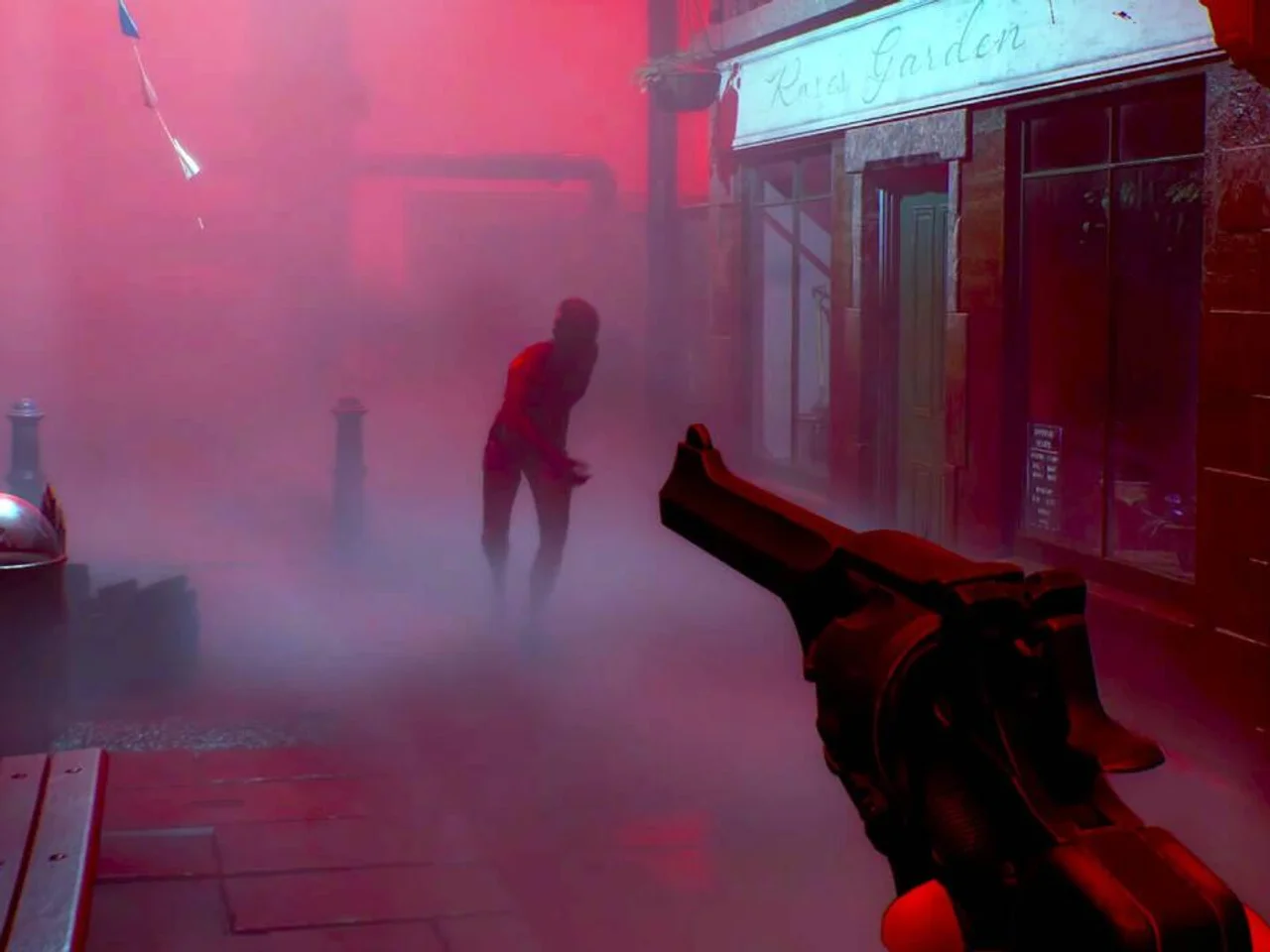
By moving to first person and building encounters around observation, the CRTV and evasion, Screen Burn gives Silent Hill an unusually coherent gameplay loop. Townfall is less convincing when its stealth becomes repetitive or excessively punishing.
The CRTV is more than a horror prop
Townfall's most convincing mechanical decision is not simply the switch to first person. It is the way that perspective feeds a loop based on checking sightlines, listening for danger and deciding whether an encounter should be avoided at all. St. Amelia's fog removes long-distance certainty, while limited weapons keep direct aggression from becoming the obvious answer.
The CRTV binds those ideas together. It can help locate threats, expose unstable signals and participate in puzzle solving, forcing attention onto a small handheld screen while the rest of the environment remains dangerous. That divided attention gives the device a genuine gameplay function instead of treating it as a new version of Silent Hill's familiar radio purely for atmosphere.
Stealth creates tension, then occasionally exhausts it
Townfall is at its best when an encounter resembles a compact spatial puzzle. A creature blocks a route, another path provides cover, a radio or thrown object can create noise, and a firearm remains available as an expensive final answer. Fragile melee weapons and loud guns make escape a system rather than an absence of combat.
The same emphasis also produces the game's clearest weakness. Reviewers repeatedly describe sections where enemy awareness becomes harsh or prolonged stealth begins to drag. When detection leads to a long reset or a restrictive chase, the careful decision-making that normally defines Townfall can shrink into trial and error.
Enemy variety is not consistently strong enough to disguise that repetition. The creatures remain threatening because visibility is poor and their proximity is uncomfortable, but repeated avoidance makes their rules increasingly familiar. The fear survives longer than the surprise.
Puzzles keep the exploration meaningful
The puzzle design is a stronger companion to the CRTV. Clues are frequently embedded in documents, old technology and ordinary spaces rather than presented as isolated puzzle rooms. The result rewards the same habit the stealth system encourages: slow down and actually read the environment.
A few late-game solutions are described as unusually opaque, yet the broader structure holds together. Townfall has a clear mechanical identity built from vulnerability, observation and imperfect information. It does not need heavy combat to justify its first-person camera, and its best encounters demonstrate why.
Strengths
- The CRTV intelligently connects exploration, stealth and puzzles
- First person meaningfully supports the game's vulnerability
- Survival encounters reward observation and distraction
- Puzzles are largely integrated into the environment and story
Weaknesses
- Some stealth sequences become overly long or punishing
- Enemy detection can be frustrating
- Creature variety wears thin over time
- A few late puzzles become excessively obscure
Townfall gives its first-person perspective a real purpose. Its CRTV, stealth and puzzles form a survival-horror loop where understanding a space matters more than clearing it. A handful of rigid sequences expose the limits of that approach, but the underlying design has enough identity to stand on its own.