
Review
Rivage: smart puzzles caught in an overly restrictive loop
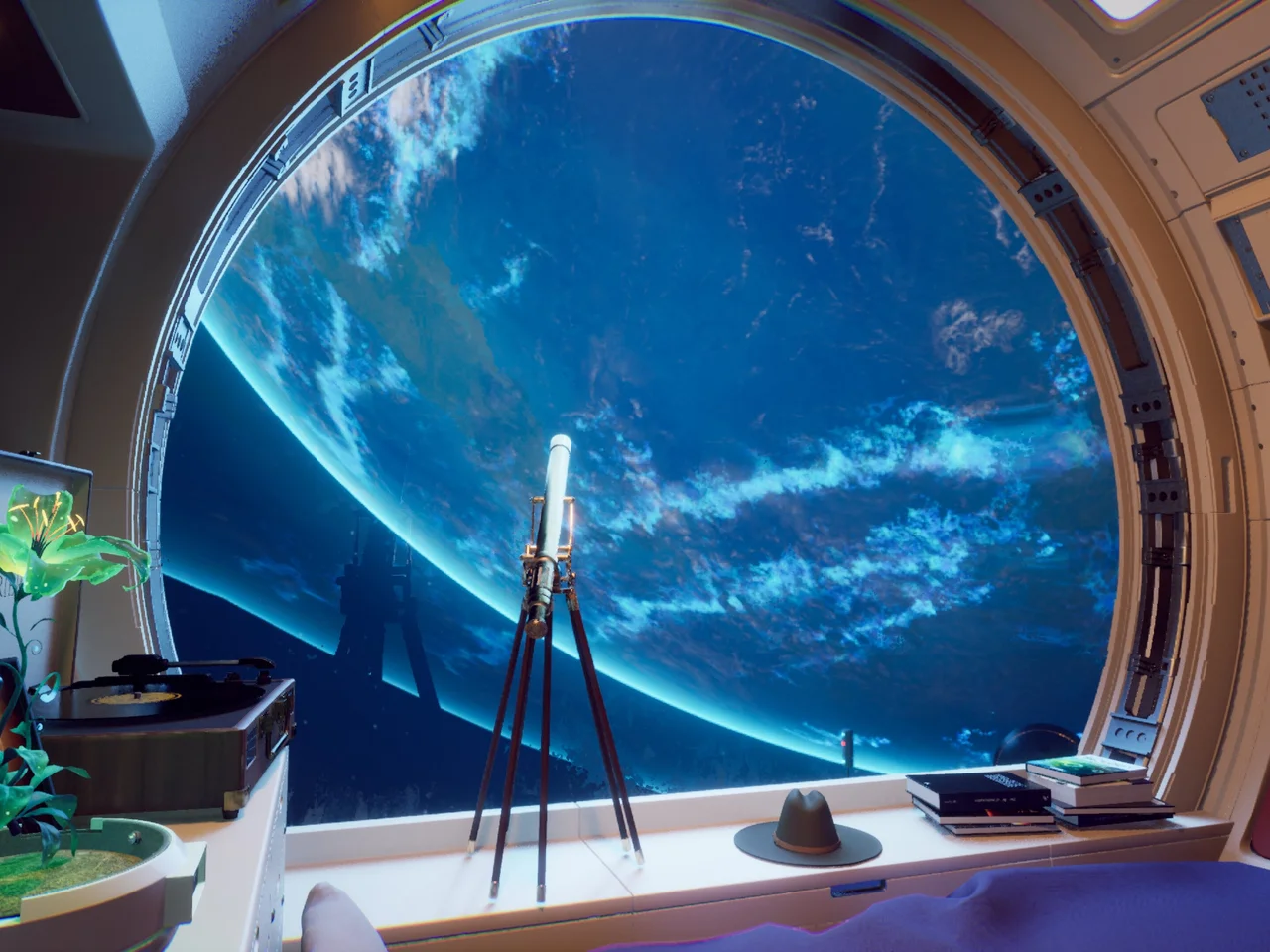
Rivage has genuine design ideas, especially its K9 system that turns discovered information into persistent progress. Yet limited power, layered access restrictions and several opaque puzzles too often make the time loop feel like an obstacle rather than the engine of the game.
The best loop is the one that changes what you know
Rivage's strongest system is not the reset itself. It is K9, the mechanism that lets knowledge survive it. Passwords, recordings, screenshots and useful discoveries can remain available after the day begins again, so progress is measured partly by how much of A.R.E.S. you have learned to read.
At its best, that turns limited power into route planning. Opening one section of the station can close off another option for the current loop, and an apparently useless detail may become the missing half of a puzzle several rooms later. Rivage is particularly good when it trusts those connections instead of announcing them.
Then the restrictions start piling up
Access levels, power consumption and repeated travel do not always create interesting decisions. Several reviews describe the same underlying problem from different directions: the loop can become busywork. Knowing the answer does not necessarily mean being allowed to act on it immediately. Sometimes the player must repeat a route simply because the station's systems demand another reset.
That friction matters because the puzzle design is already deliberately demanding. Rivage offers environmental clues, mechanical problems, codes, spatial reasoning and object manipulation instead of leaning on one reusable formula. The variety is one of its strengths, but the rules of engagement can change sharply from puzzle to puzzle.
A few challenges reportedly depend on knowledge the game does not properly teach, including familiar real-world puzzles and games. Others bury a simple answer beneath clutter or weak signposting. With no robust hint system to soften those moments, being unable to infer what Rivage wants can be far more irritating than being unable to solve the puzzle itself.
A clever game that keeps getting in its own way
The critical split around Rivage makes sense. One player can see a demanding escape-room structure that refuses to hand out solutions; another can hit the same sequence and find an arbitrary obstacle course. Both reactions are supported by the way the game is constructed.
K9 prevents the entire idea from collapsing under repetition, and the best puzzles make excellent use of accumulated knowledge. Rivage simply spends too much time adding doors between those moments. Its puzzle design has imagination. Its progression structure needed another editing pass.
Strengths
- The K9 system effectively preserves codes, clues and discoveries between loops
- Strong variety across environmental puzzles
- A.R.E.S. genuinely rewards observation and exploration
- The best puzzles reward deduction rather than mechanical execution
Weaknesses
- The time loop creates too much backtracking and artificial restriction
- Some puzzles rely on outside knowledge or trial and error
- The lack of hints makes a few roadblocks disproportionately frustrating
- Power and access restrictions sometimes stack rather than complement each other
Rivage has the right pieces without always fitting them together cleanly. When an earlier observation suddenly unlocks a new route and K9 prevents solved work from becoming busywork, its loop is genuinely effective. When another trip across A.R.E.S., another power restriction and an opaque puzzle pile up, that same structure starts taxing curiosity. Inventive and frequently satisfying, but considerably less elegant than its best ideas.