
Review
Dragon Shelter: The Dragons Can Cook, but the Game Design Is Still Looking for Its Recipe

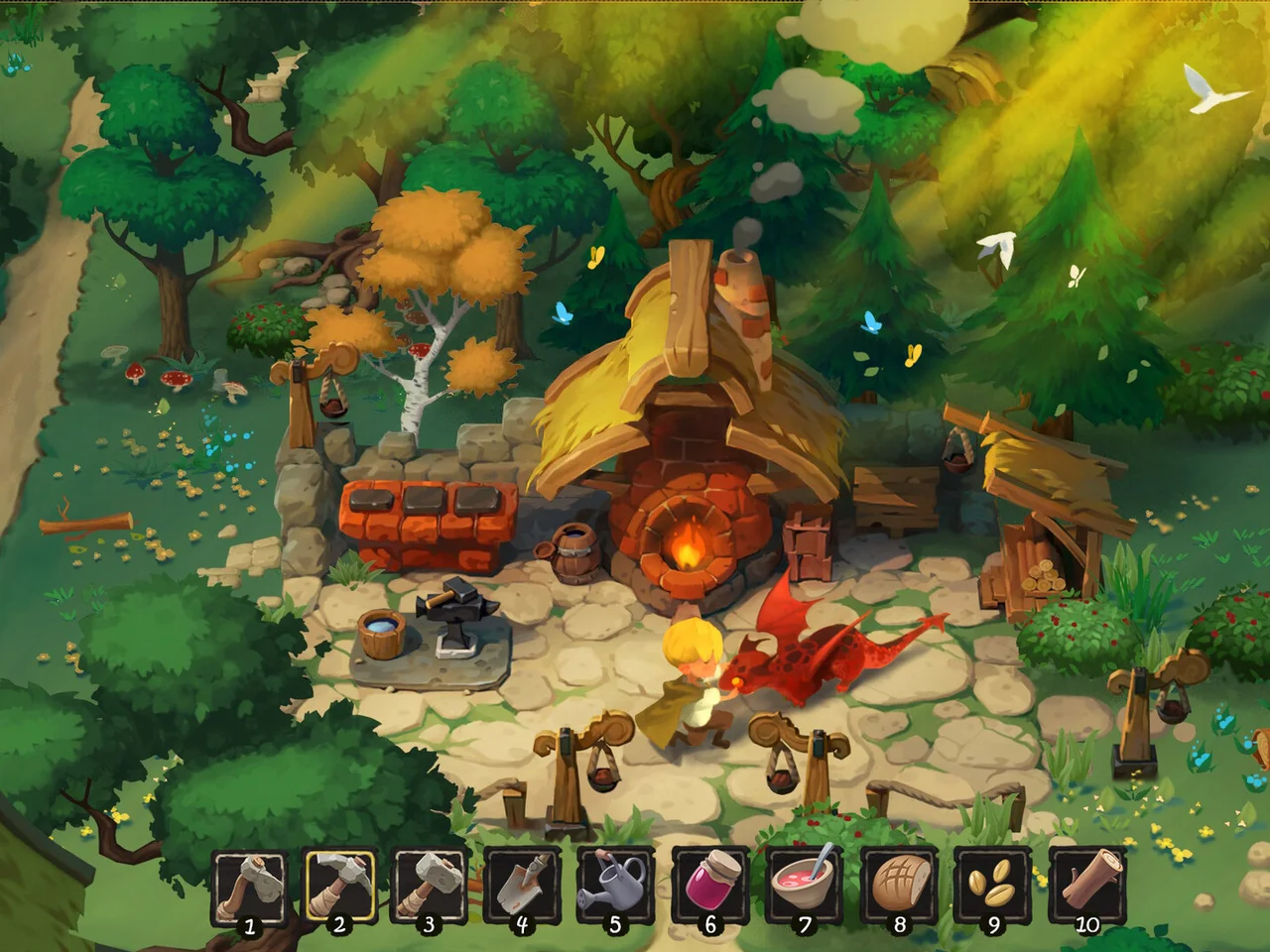
Manual cooking and later dragon-assisted automation give Dragon Shelter its strongest idea. The problem is that once the system is established, too much of the loop collapses into orders, walking and chores the little winged assistants eventually perform on your behalf.
Cooking is the right idea, and then the game slowly hands it over to the dragons
Dragon Shelter does not treat cooking as another box in a crafting menu. Recipes require ingredients to be collected, processed at different stations, placed into containers and heated through several visible steps. It is tactile enough to immediately distinguish the farm from the usual one-button production chain.
Dragons initially make that system better. A water dragon can handle one operation while the player prepares the next, and later companions contribute to farming, gathering and other chores. PC Gamer and GameObserver both found genuine charm in creatures that participate in the work instead of functioning purely as collectible mascots.
The system then develops a strange contradiction. Multiple reviews found that dragons eventually perform much of the kitchen work themselves, while interfering with their sequence can create confusion or waste. The game's most distinctive manual mechanic gradually becomes something players are encouraged to supervise rather than perform.
The farm increasingly exists to feed a delivery business
The economic chain is easy to understand: farming and gathering provide ingredients, ingredients become meals, meals fulfill villagers' requests, and those requests produce trust, money, services and reconstruction. GameObserver finds that structure compact enough not to overstay its welcome and values the visible improvement of the town.
The Wand Report and Gameliner are much harsher about what happens after the novelty fades. Progress repeatedly returns to cooking and delivering food. More residents create more requests, and earning the money for future seeds can itself require additional meal production. The loop is coherent, but coherence alone does not prevent repetition.
There are other systems — seasons, crops, fertilizer, gathering, repairs, decorating and dragon care — yet many feed back into the same kitchen funnel instead of opening genuinely independent forms of play.
Cozy does not have to mean passive
Some simplifications are smart. Tools do not wear out, orders are forgiving about deadlines and the game generally avoids turning every day into an efficiency test. Those choices support the relaxed fantasy rather than undermining it.
The problem comes when relaxation becomes a lack of options. Several reviewers describe stretches where crops are still growing, quests are waiting on materials and the village offers little spontaneous activity. Gameliner reports occasionally sleeping through time simply because meaningful alternatives were scarce.
After a full fourteen-day spring, PC Gamer also found the world smaller than expected, with the farm and compact village dominating the early experience and residents functioning largely as quest sources. A smaller game is not inherently a problem, but it narrows the freedom players normally expect from a farming sim.
The strongest pieces are already visible
The critical spread says a lot. GameObserver lands at 7/10 and values the compact rebuilding loop. Games.ch also sees a generally enjoyable construction sim. Bonus Action, Gameliner and The Wand Report are far less forgiving, focusing on unfinished mechanics, repetition and a lack of identity.
There is still a clear area of agreement. The dragons are appealing, the cooking concept has merit and restoring the location is visually rewarding. The debate begins when those strengths have to support the full progression structure.
That makes Dragon Shelter feel less like a game with no ideas than one that has not learned how to prioritize them. Its best mechanics are present. They simply need more space, more supporting activities and fewer reasons to bake another batch of potatoes because the quest board says so.
Strengths
- Cooking involves actual preparation steps rather than a single crafting button
- Dragons can assist with farming, gathering and food preparation
- Farm and village restoration provides visible progression
- Indestructible tools and forgiving order deadlines support the cozy tone
- Colorful art gives the dragons plenty of personality
Weaknesses
- The loop becomes excessively dependent on food production and request fulfillment
- Dragons sometimes automate the most interesting mechanics instead of expanding them
- Limited room for self-directed activity outside prescribed objectives
- Interface and tutorials leave several important rules poorly communicated
- Progression and economy can slide into grinding
Dragon Shelter has one genuinely strong idea: turning cooking into a production chain shared with dragons. Unfortunately, it dilutes that idea inside a narrow structure where feeding villagers unlocks more requests that lead back to more cooking. The charm works more consistently than the loop does. It can be pleasant, but there is not yet enough mechanical depth for the dragons to carry the whole farm.