
Review
Big Walk: getting lost with friends finally becomes a mechanic
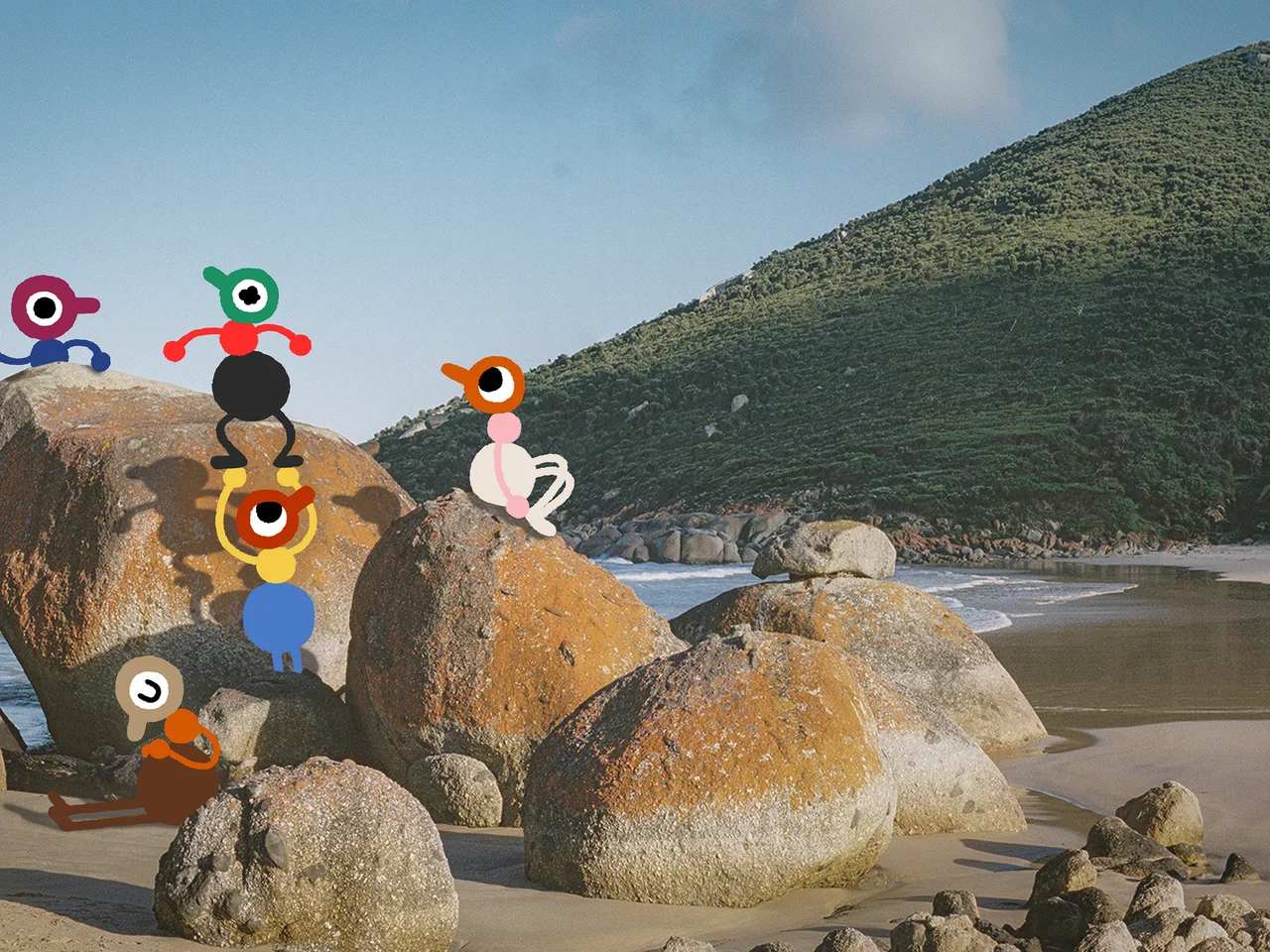
Big Walk strips away maps, noisy objectives and over-equipped heroes until only the essentials remain: walking, talking and figuring things out together. House House turns proximity voice chat, gestures and even getting separated into genuine co-op mechanics.
Big Walk understands that losing sight of a friend can be more useful than adding another quest marker.
A voice becomes quieter over the next hill. Someone waves from a ridge. Another player is carrying the one tool nobody else remembered to bring. House House repeatedly turns ordinary multiplayer inconvenience into the actual material of play.
Voice has geography
Proximity chat is not a social feature pasted onto the experience. Voices fade with distance, echo through corridors, become muffled by walls and crackle through walkie-talkies.
PC Gamer praises the way those restrictions gradually force players to develop more deliberate communication. An external group call can keep everyone connected, but it also removes some of the game's most interesting uncertainty.
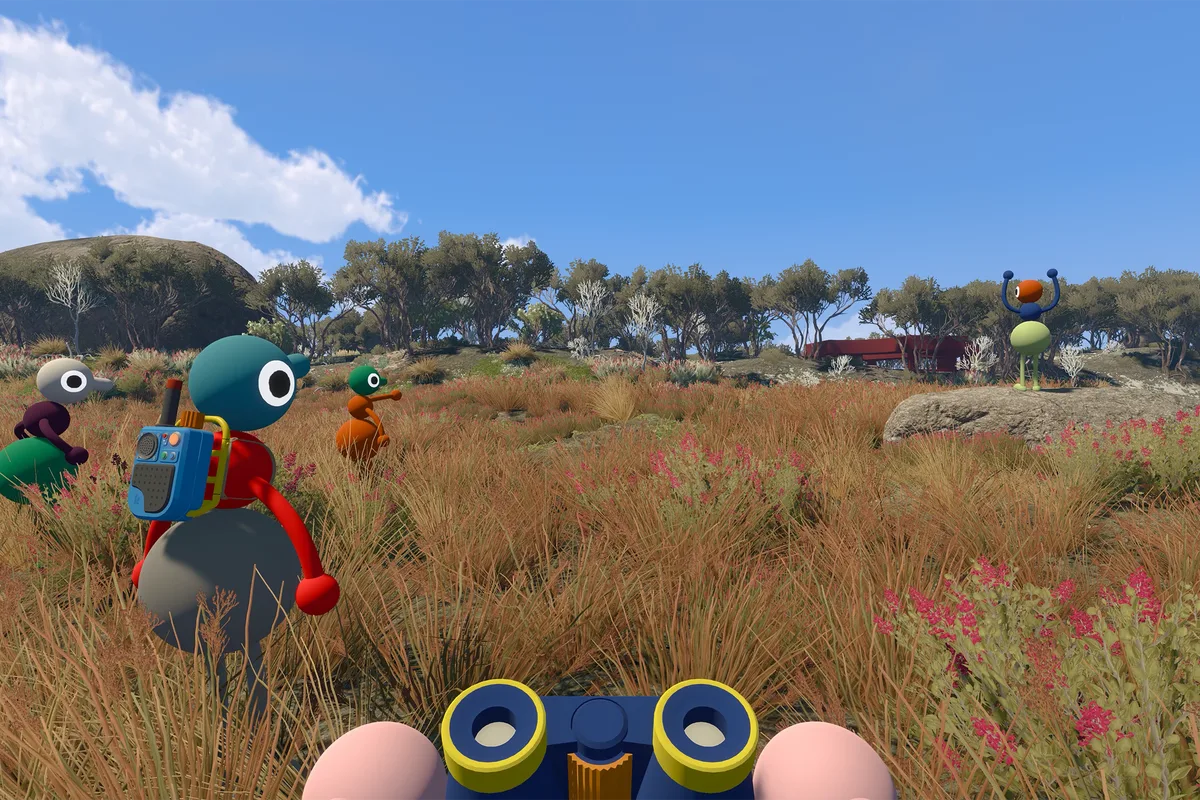
Then the game takes speech away
Gestures and physical tools become important precisely because conversation cannot solve every situation. GameSpot highlights the emergent language that forms between friends: a movement or noise gradually acquires meaning because the group has already failed together several times.
That learning belongs to the players rather than an upgrade menu.
Different group sizes change the social problem
The host selects a world tuned for two, three or four-plus participants, while as many as twelve people can join a session.
Two players create a focused collaboration. Larger groups create overlapping conversations, wandering subgroups and the constant possibility that someone is confidently solving an entirely different problem.
The empty space is part of the argument
Final Weapon finds some of the literal walking excessive. Game Informer and The Guardian are more receptive to the stretches between puzzles because they create room for conversation and unscripted behaviour.
Both readings are useful. Big Walk only works if hanging out is valuable before the next mechanism arrives.
It is multiplayer with an ending
House House explicitly describes Big Walk as a handcrafted adventure intended to be completed with a group. That distinguishes it from multiplayer games built primarily around retention.
The island can be revisited, but the design is comfortable allowing a shared trip to remain a finished memory.
The requirement is real
There is no solo mode. Two players are mandatory, online connectivity is required and the intended communication design assumes access to voice.
That makes Big Walk less universally accessible than many puzzle adventures. It also prevents the central idea from being diluted into something it was never designed to be.
Strengths
- Proximity voice chat is fundamental to the game design
- Exceptionally inventive cooperative puzzles
- Gestures become genuinely useful communication
- Strong balance between discovery and improvisation
- Sessions adapt to different group sizes
- A multiplayer adventure with an actual ending
Weaknesses
- No solo mode
- Long walking stretches can disrupt pacing
- Requires available partners and ideally microphones
- External voice chat can undermine part of the intended design
Big Walk succeeds because its restrictions do more than complicate puzzles: they create a relationship between players. Distance, silence, gestures and mistakes become tools. No solo mode and some very long stretches inevitably narrow the audience, but House House has made one of the most distinctive co-op games in years.