
News News Official
Warhammer 40,000: Dark Heresy launches January 28, 2027, as Owlcat prepares to close its beta
The Inquisition has set a date. Owlcat Games announced on November 9, 2026, that Warhammer 40,000: Dark Heresy will launch on January 28, 2027, for PC, PlayStation 5 and Xbox Series X|S. Following Rogue Trader, the studio is returning to Games Workshop's universe with a greater emphasis on investigations and moral decisions. Players will begin as low-ranking acolytes, assemble an unconventional warband and investigate heresy throughout the Calixis Sector.
 By Hugat Warhammer 40,000: Dark Heresy
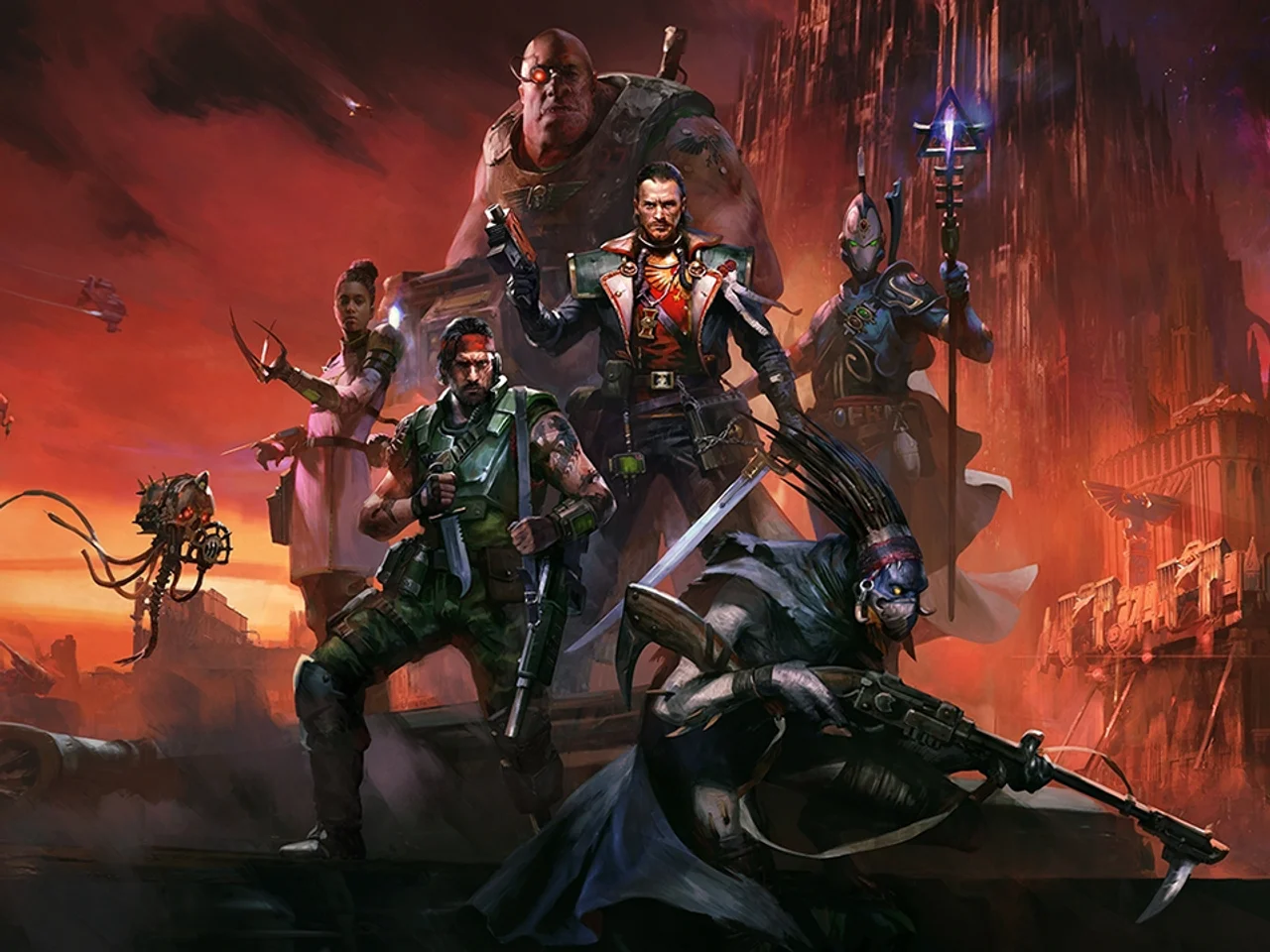
Nobody in Warhammer 40,000 particularly wants to attract the attention of the Inquisition. In Dark Heresy, players will be joining the organization and deciding who deserves suspicion, interrogation or punishment. Owlcat Games has confirmed January 28, 2027, as the release date for its next role-playing game. The launch covers Windows PC through Steam, GOG and the Epic Games Store, alongside PlayStation 5 and Xbox Series X|S. A Nintendo Switch 2 version is also planned, but Owlcat has not announced its release date. The developer explicitly says more information about that edition will follow.
The announcement includes a new release-date trailer and details about the end of the current beta. It also provides an opportunity to distinguish Dark Heresy from Warhammer 40,000: Rogue Trader, even though both games share a developer and setting.
This time, you aren't running a dynasty
In Rogue Trader, players commanded a powerful merchant dynasty, explored distant star systems and made decisions affecting entire populations. Dark Heresy approaches the Imperium from a different position. Its protagonist begins as a relatively low-ranking Inquisition acolyte tasked with investigating suspicious events. The Calixis Sector provides the setting. Its cities range from impoverished districts to grand towers occupied by imperial elites, with cults, conspiracies and servants of Chaos operating throughout society.
Progression will therefore involve more than improving weapons and developing combat skills. Players must investigate conflicting interests, evaluate unreliable information and decide what to do when an apparent answer may conceal a larger conspiracy. It is an interesting change of perspective for Owlcat. After giving players control over a powerful dynasty, the studio is exploring how extraordinary authority can operate through individuals who do not necessarily know the truth.
Investigating heresy before passing judgment
The investigative system is a central part of the game's official description. Players will examine cases, question suspects, gather evidence and reconstruct conspiracies. Companions can contribute information and offer different interpretations of the evidence, making their usefulness extend beyond combat. In a setting where fear of heresy frequently provides justification for violence, investigations are unlikely to be morally comfortable exercises.
Owlcat emphasizes that players may pursue the truth regardless of the consequences or sacrifice innocent people when they believe doing so serves a greater purpose. Those choices are intended to affect the narrative. The extent of the consequences will need to be assessed in the finished release, but the developer's ambition is clear. Investigations are not simply about identifying the correct answer. They are also about accepting responsibility for what happens after a conclusion has been reached.
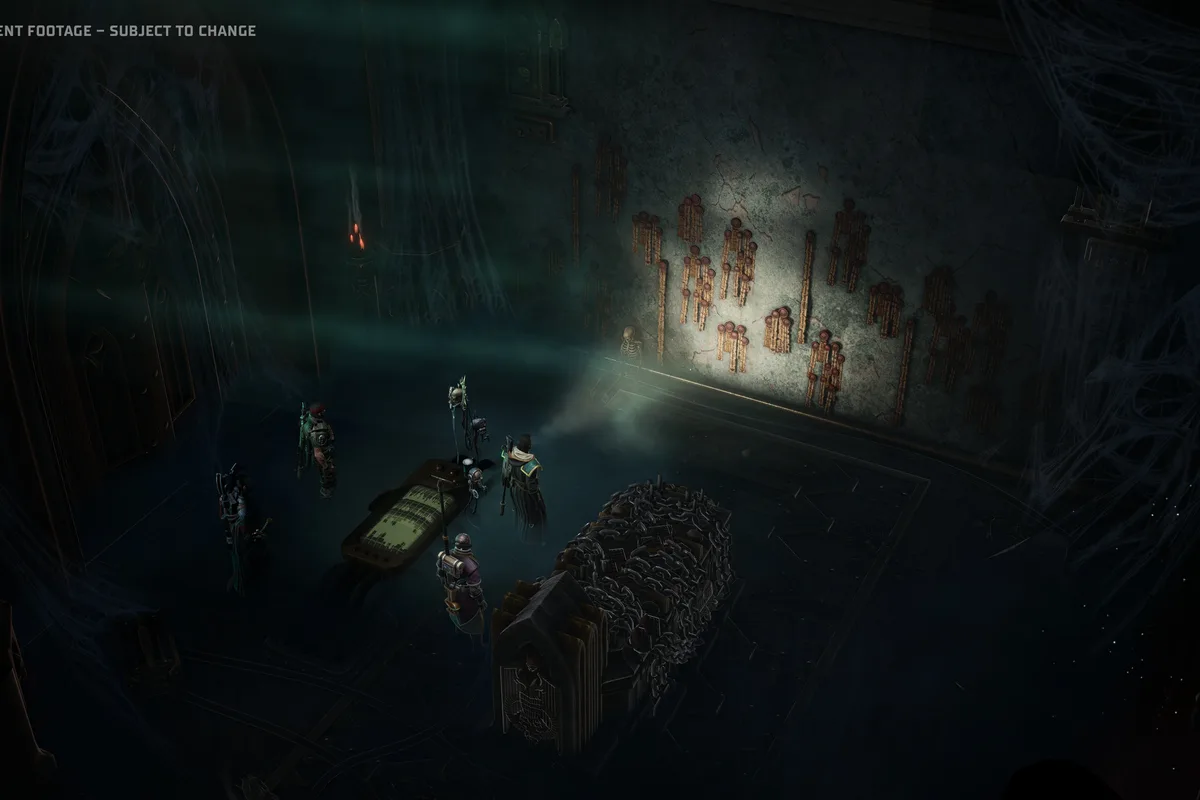
This development screenshot illustrates exploration and investigation. Elements shown before release may still change.
An Inquisition warband full of questionable allies
Players will not investigate alone. One of Dark Heresy's distinctive features is the ability to recruit characters whose presence in an imperial organization might seem ideologically contradictory. Cogg is an Ogryn, an imposing abhuman fighter. Saro is a psyker, while Discordance is a Pariah whose unusual nature interferes with psychic powers.
The announced companions also include Laarthyr, an Aeldari corsair, and Ra'akhti, a Kroot mercenary. Both belong to alien species that the Imperium generally regards with hostility. Other recruits include Haymar, a fighter from Catachan; Chorda, a Rogue Trader; and Touma, whose motivations are less clearly explained in the current materials. The roster creates opportunities for ideological conflict as well as tactical variety.
Each companion has particular abilities that can be used in combat and may also offer useful knowledge during investigations. This means selecting a companion need not be limited to choosing whoever deals the most damage. Their perspectives, personal interests and knowledge could prove just as important to solving an important case.
Turn-based combat is being reworked
Owlcat is retaining the turn-based tactical combat associated with its previous RPGs, but Dark Heresy is not presented as a straightforward reuse of Rogue Trader's systems. The developer highlights an expanded morale system. Characters can be affected by the psychological pressure of battle, potentially changing their behavior without simply reducing their health to zero. Cover, positioning and lines of sight also remain important. Targeting enemy weak points offers another way to approach difficult encounters.
That direction is particularly appropriate for an Inquisition-focused game. Intimidating an opponent, disrupting an enemy group or forcing a surrender can be as meaningful as eliminating every hostile character. The question is how consistently those mechanics will work throughout the adventure, especially against its most powerful enemies. The release-date trailer illustrates the project's direction but should not be treated as a complete demonstration of the final combat systems.
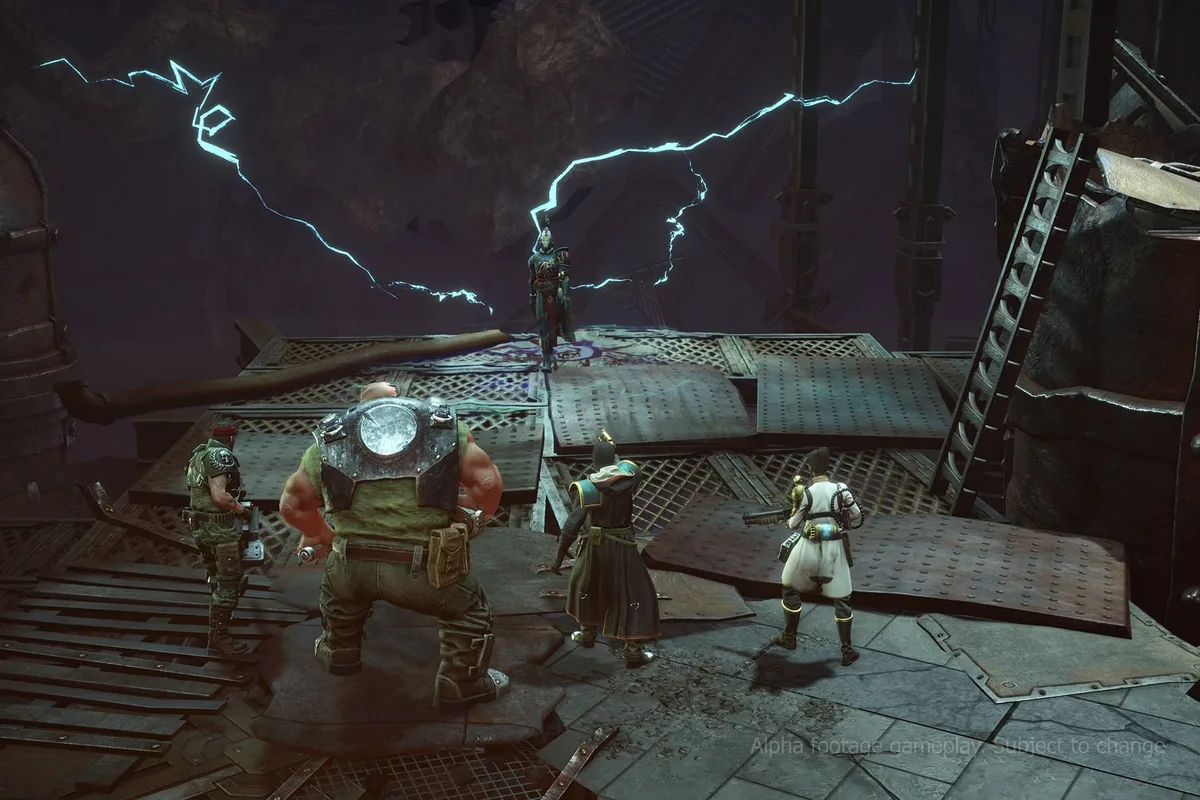
Turn-based encounters remain central to Owlcat's design, with positioning, targeting and morale among the highlighted mechanics.
The beta ends January 7
Players already participating in the beta now have a confirmed deadline. Owlcat says the current test will close on January 7, 2027, as the developer prepares for the full release later that month. The beta is available to eligible Founder's Pack owners, and those packs will remain on sale through Owlcat's official website until early January.
Different editions offer different rewards, including beta access and additional benefits. Customers who purchased the physical Collector's Edition have also been asked to verify their shipping addresses in their Owlcat accounts. The studio plans to begin shipping those editions shortly after the game's release. January 7 is the announced closure date of the current beta, not a statement that every form of preorder will end on that day.
The test is also distinct from the commercial version. It contains development-stage content rather than the complete launch experience. Owlcat has not announced universal free access to this beta for all interested players.
One million Steam wishlists are not one million sales
The release-date announcement follows another notable milestone. In October, Owlcat revealed that Dark Heresy had surpassed one million Steam wishlists. That figure demonstrates considerable interest ahead of launch, especially for a traditional, systems-heavy role-playing game. However, it does not mean the title has received one million preorders or that one million purchases are guaranteed. Adding a game to a wishlist is not a financial transaction.
The figure nevertheless suggests that Owlcat has attracted an attentive audience following Pathfinder: Kingmaker, Pathfinder: Wrath of the Righteous and Rogue Trader. The commercial question will be how many interested players decide to purchase Dark Heresy when it becomes available.
French subtitles are confirmed, but not French voice acting
The Steam listing confirms French interface text and subtitles. Full audio is listed for English, with no French voice track currently announced. That distinction matters in a story-driven RPG where dialogue, interrogations and written evidence play significant roles. Steam also lists single-player and online cooperative functionality. However, further detail is needed about exactly how cooperation will work in the finished game, particularly when it comes to shared narrative decisions.
The store page contains recommended PC hardware specifications, but there are no independent performance results for the final release yet. It would also be premature to guarantee specific frame rates or technical modes on PlayStation 5, Xbox Series or Nintendo Switch 2. Owlcat's November 9 announcement does not provide a complete platform-by-platform technical comparison.
The Inquisition's return will be defined by consequences
January 28, 2027, is now the confirmed release target for Warhammer 40,000: Dark Heresy on PC, PlayStation 5 and Xbox Series X|S. Switch 2 players will have to wait for another announcement. Beyond the schedule, the most compelling part of the project remains its focus on investigation. Warhammer 40,000 games have often explored warfare and survival in an exceptionally brutal universe. Owlcat wants the process of gathering evidence and passing judgment to become a substantial part of the experience.
The result will depend on how effectively investigations, narrative choices and tactical encounters influence one another. If a decision about a suspect genuinely affects companion relationships and subsequent missions, Dark Heresy could establish a strong identity distinct from Rogue Trader. In the Imperium, the Inquisition can condemn entire worlds. Whether players will still want to exercise that authority after examining the evidence is a much more interesting question.