
News News Official
Thief: The Dark Project Remastered launches December 3 with a new story campaign and collector's editions
Garrett returns on December 3, 2026. Atari and Nightdive Studios have confirmed the release date for Thief: The Dark Project Remastered on PC, PS4, PS5, Xbox Series X|S, Nintendo Switch and Switch 2. More than a visual restoration of the influential 1998 game, this edition includes The Tarnished Mirror, a new campaign created with developers from the Thief community, alongside several physical collector's editions.
 By Maëlle Thief: The Dark Project Remastered
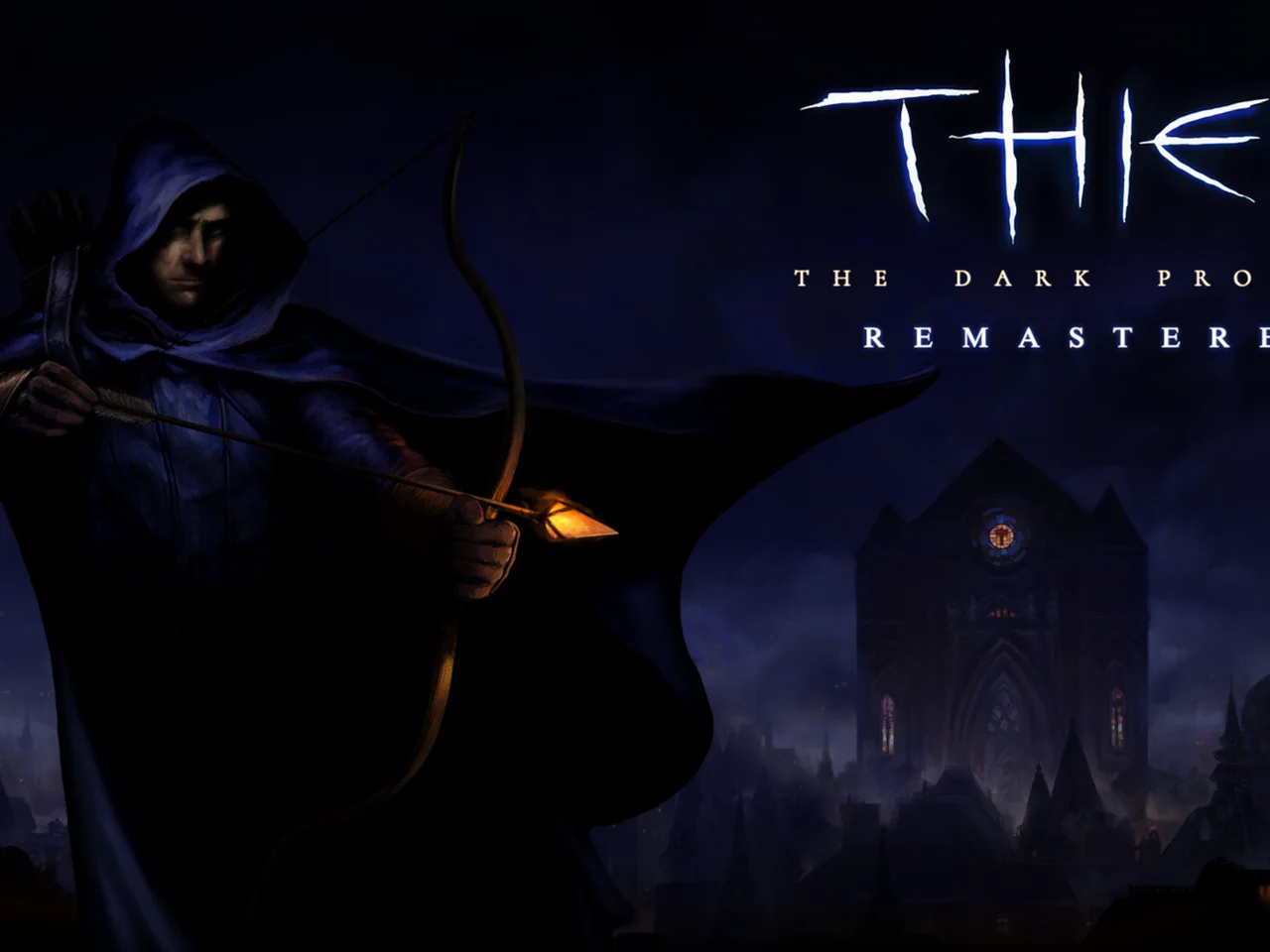
Some games teach players to eliminate every enemy in a room. Thief: The Dark Project taught them to avoid entering that room when someone might notice. Twenty-eight years after its original release, Garrett is preparing to return to the shadows.
On November 2, Atari, Nightdive Studios and Eidos-Montréal announced that Thief: The Dark Project Remastered will launch December 3, 2026. Previously revealed in June, the project had been targeting a less specific winter release window.
The precise date is only part of the announcement. The remaster will also include The Tarnished Mirror, a new story campaign that was not part of either the original game or the expanded Thief Gold release from 1999.
The Tarnished Mirror bridges the first two Thief games
The additional campaign comes from creators involved with Thief: The Black Parade, a well-known community project praised for its elaborate missions and commitment to the original game's design principles.
Nightdive and Eidos-Montréal are therefore collaborating with people who already have extensive experience building within the series' distinctive world.
The Tarnished Mirror tells a self-contained story set between Thief: The Dark Project and Thief II: The Metal Age. Its premise starts with an apparently ordinary theft before expanding into imprisonment, uneasy alliances and a journey toward a submerged necropolis.
The official announcement describes Lovecraftian horror influences. Additional factions and enemies will accompany the journey into increasingly unsettling environments, with level design intended to take advantage of the remaster's technology.
Importantly, Atari says the campaign is being welcomed into the franchise's official narrative continuity. What began as a collaboration with community creators is therefore becoming recognized Thief content rather than remaining an unofficial expansion.
Several details remain undisclosed, including the campaign's length and exact mission count. The developers have also yet to explain how the new narrative will connect the two original games without changing their established events.
The remaster will continue supporting custom campaigns on PC, including community creations such as The Black Parade. The Tarnished Mirror is intended to complement that history rather than displace the unofficial projects that have sustained interest in Thief for decades.
The complete original game and Thief Gold return
Long before Dishonored and many modern first-person stealth adventures, Thief: The Dark Project established an unusually demanding relationship between the player and the environment.
Staying hidden was not simply a matter of keeping enemies at a distance. Lighting and sound were fundamental mechanics. Moving across a noisy surface, stepping into a brightly lit area or attracting a guard's attention could ruin an otherwise carefully planned robbery.
In contrast, studying patrol routes, finding quieter pathways and moving through darkness allowed players to navigate dangerous spaces without fighting.
Players control Garrett, a master thief trained by the Keepers, a secretive order concerned with maintaining balance in the world. His tools include a blackjack for silent incapacitations, a sword for emergencies and specialized arrows that can support different infiltration strategies.
Nightdive's restoration combines the original game's twelve missions with the three additional missions introduced in Thief Gold. That expanded edition also included five additional enemy types, revisions to existing content and other improvements.
The historical missions retain three difficulty settings, with different objectives depending on the selected level. Higher difficulty is not simply about making enemies stronger; mission requirements can also change.
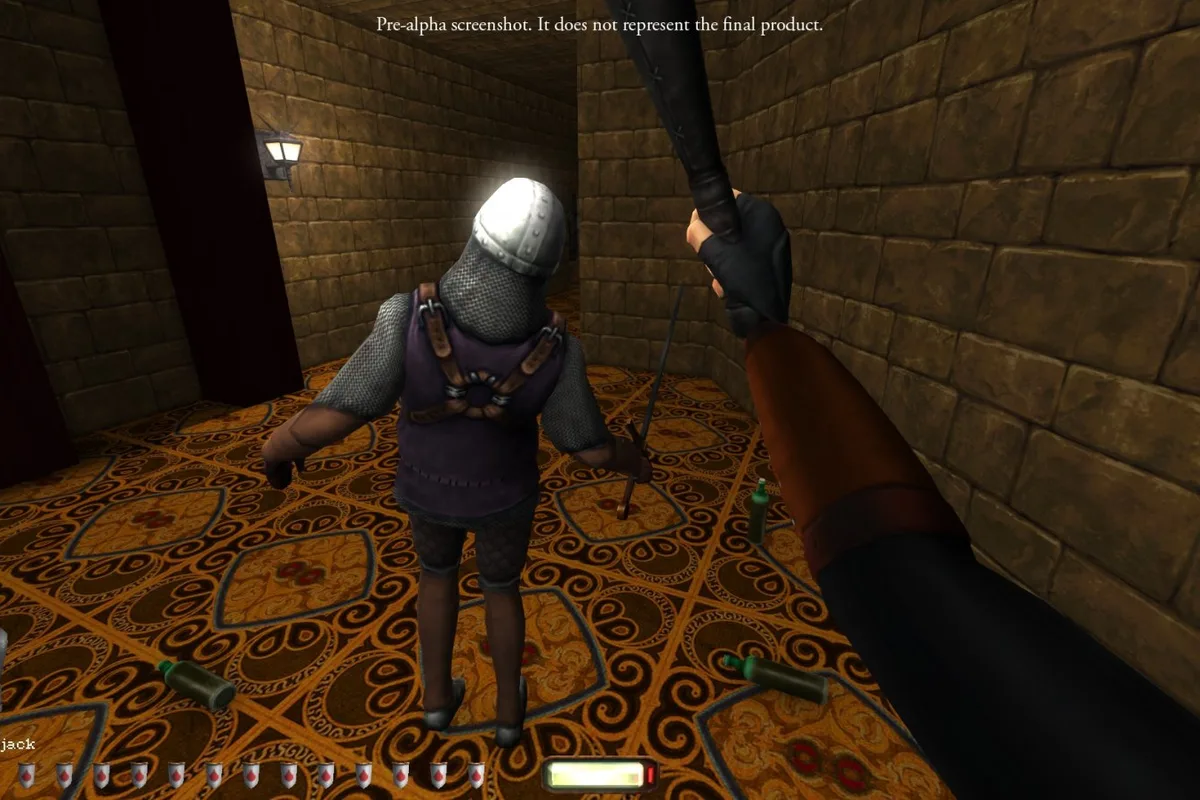
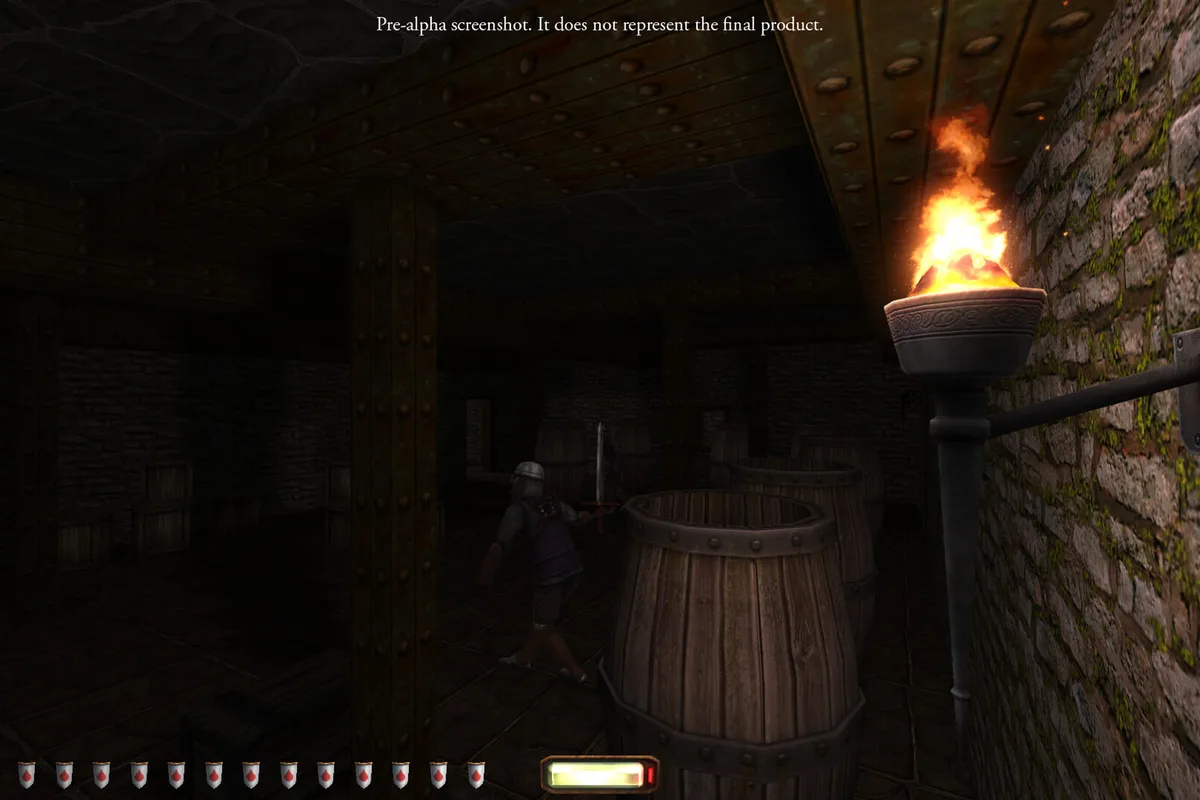
The developers are preserving the game's labyrinthine environments and its emphasis on observation. Early promotional screenshots show an aesthetic that remains close to the original, supported by revised lighting, models and textures.
That distinguishes this project from a remake attempting to redesign every level and gameplay system. Thief: The Dark Project Remastered aims to make the original experience more accessible while preserving the features that made it influential.
KEX Engine, 4K support and modern controls
As with several earlier restorations, Nightdive Studios is using its proprietary KEX Engine. The announced improvements include revised textures, three-dimensional models, animations and cutscenes, along with smaller fixes to the original level design.
The publisher advertises support for resolutions up to 4K and frame rates up to 120 FPS. Those figures describe maximum capabilities, not confirmed simultaneous performance targets for every platform.
Controller support has also been modernized. Compatible hardware can use vibration and motion or gyro controls, while new weapon and item wheels offer quicker access to Garrett's equipment.
A mission selector will allow completed levels to be replayed. The remaster also includes achievements or trophies and an archival Vault featuring material related to the game's original development.
For PC players, integrated support for custom campaigns is especially significant. Thief has a long history of ambitious fan-made content, and Nightdive intends to preserve access to that material.
These additions should make some older interface conventions less cumbersome without fundamentally changing how the missions work. Improved controls do not automatically mean less demanding guards or simplified routes.
The final results remain to be evaluated. In particular, the announced capabilities of KEX Engine cannot establish exact performance on Nintendo Switch or the other console versions.
Digital editions start at €29.99
Thief: The Dark Project Remastered will be offered digitally in Europe for €29.99. A €34.99 Digital Deluxe Edition includes the game, official soundtrack, an illustrated remaster diary and an excerpt from a forthcoming Thief: The Dark Project novelization.
Physical editions are planned for PlayStation 5 and Nintendo Switch 2. In the United States, the Standard Physical Edition is priced at $29.99, while the $39.99 Steelbook Edition adds a metal case and printed manual.
The $69.99 Deluxe Trapezoid Edition takes inspiration from the distinctive oversized PC packaging of the original 1998 release. It includes a Steelbook, printed manual and a remaster diary inside a trapezoid-shaped collector's box.
Physical preorders have opened, although the announcement does not guarantee that every edition will ship on December 3. Retail delivery schedules should therefore be distinguished from the digital launch date.
Atari has also confirmed a useful arrangement for Nintendo players. The announced physical Switch 2 editions are playable on the original Nintendo Switch, while owners of the Switch edition can upgrade to the Nintendo Switch 2 version for free.
PC players will be able to purchase the game through Steam, Epic Games Store and GOG. The remaining announced platforms are PlayStation 4, PlayStation 5 and Xbox Series X|S, with Xbox Play Anywhere support.
The Epic Games Store listing confirms French text localization, while the listed audio language is English. A French voice dub should not be assumed from the currently available information.
The December release has become something more interesting than a routine restoration. By incorporating The Tarnished Mirror, Nightdive is bringing part of the community's creative legacy into the officially recognized Thief universe.
For Garrett, the return date is settled. What remains to be seen is whether the combination of faithful restoration and original content can preserve a distinctive kind of tension: one in which a noisy floor tile may be more dangerous than a room full of armed guards.