
News News Official
Quarantine Zone goes back to Miami before the collapse, and this time infected survivors may still be worth saving
Quarantine Zone: The Last Check mostly asks one question: who gets through the gate? Miami Zero makes that decision significantly messier. The free October 15 prequel returns to the original infection site, when the disease is poorly understood and a contaminated survivor may not automatically be somebody waiting for a bullet.
 By Kader Quarantine Zone: The Last Check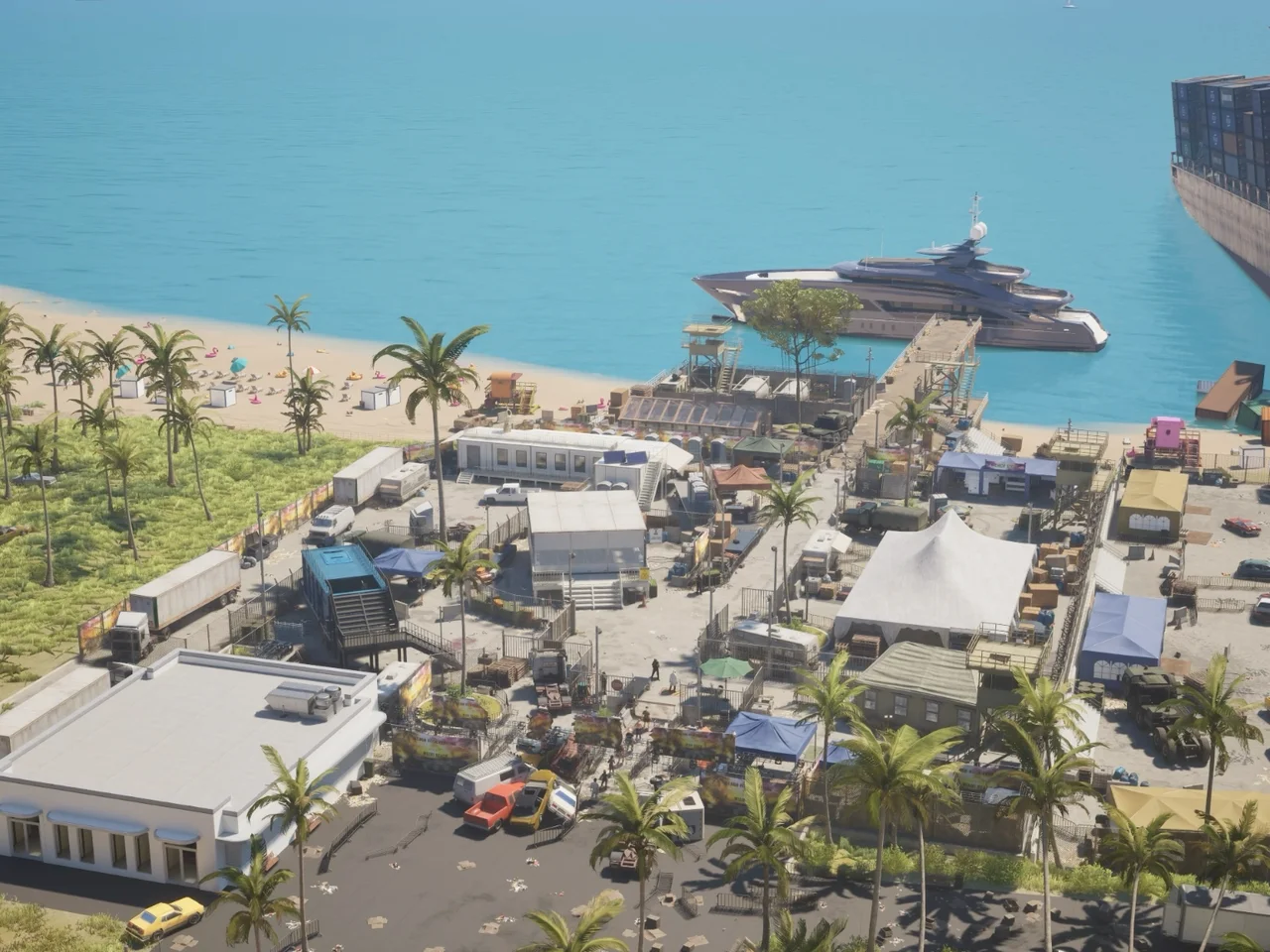
Brigada Games revealed Quarantine Zone: Miami Zero during the PC Gaming Show Tokyo Direct on September 20. The new campaign launches October 15, 2026 as free DLC for Quarantine Zone: The Last Check.
The developer is unusually explicit about the price: there is no extra charge and no limited promotional period. Owners of the base game will receive Miami Zero without buying a separate expansion.
Its story moves backward from The Last Check and relocates the operation to Miami, described as the original infection site.
The checkpoint remains, but the binary decision starts breaking down
This time the player is a first responder working during the earliest stage of the crisis.
Survivors still need screening. Vitals have to be checked, contraband seized, explanations heard and unfamiliar symptoms separated from much more ordinary human behavior.
Miami deliberately complicates that reading. Brigada jokes about the local party scene, but the mechanical idea is clear: some symptoms can have more than one explanation.
A sniffle, strange behavior or altered physical response does not automatically mean somebody carries the new virus.
The laboratory is actually looking for treatment this time
The largest new system is medical research and development.
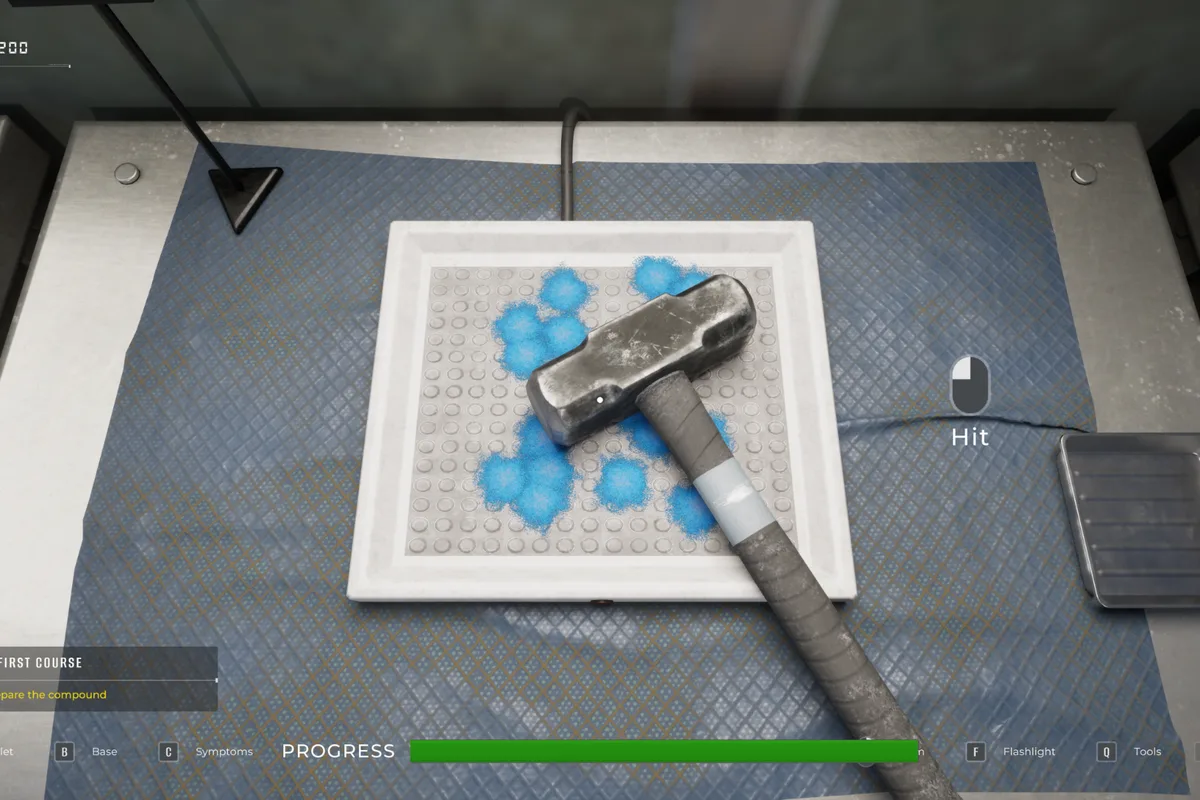
Brigada says players will test potential cures, experiment on live subjects and try to develop medical responses to a disease whose behavior is still being discovered.
The base game already uses its laboratory to analyze symptoms, samples and people. Miami Zero changes the purpose: identifying an infected survivor is no longer necessarily the end of the process.
That changes what a positive diagnosis means. In The Last Check, correctly detecting infection primarily protects the camp. During the prequel, the same person may also become part of the search for a treatment.
New tools are necessary because nobody understands the virus yet
Miami Zero introduces new inspection techniques, tools and symptoms that do not appear in the original campaign.
The studio has not published a complete equipment list yet, so it would be premature to turn a few trailer shots into a full inventory.
What is confirmed is that medical diagnosis occupies a larger role and that the campaign contains dozens of exclusive survivors.
Those characters are built around the Miami setting, with local personalities and situations rather than simply recycling the existing population.
The new base occupies the remains of a cancelled music festival
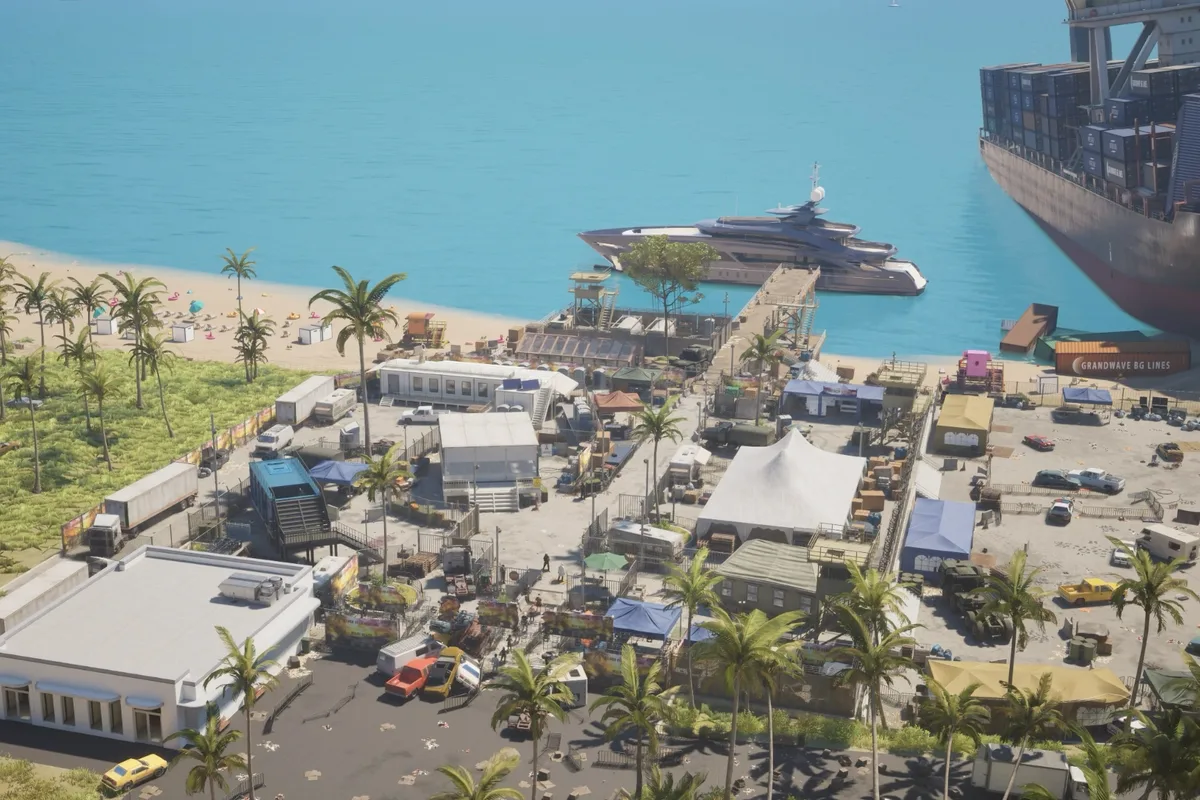
Miami Zero's operation is established on the beachfront site of a cancelled music festival.
The setting immediately looks different from the grey militarized checkpoint of the main campaign: palm trees, temporary festival infrastructure, beaches and bright blue water surround a place that has only just begun collapsing.
That contrast communicates a different phase of the outbreak. Society has not yet had enough time to learn how to look like a bunker.
A yacht turns survivors into an escape plan
A large yacht is docked at the end of the pier. If controlling the outbreak becomes impossible, it represents the last escape route.
There is one obvious problem: it is not ready to leave.
Survivors accepted through the gate can be assigned to repair the vessel, creating what Brigada explicitly calls a new ship-repair metagame.
That gives every accepted person another potential value. They are not simply another mouth consuming limited resources; they can directly contribute to preparing the camp's evacuation.
That makes admission decisions considerably nastier
This is where Miami Zero's new systems start colliding.
A sick survivor might be an infection risk, a candidate for experimental treatment or simply another worker capable of helping repair the ship.
Accepting that person increases danger while potentially accelerating the escape plan. Rejecting them protects the camp immediately but costs manpower.
Quarantine Zone already works because every inspection converts a human being into a collection of probabilities. Miami Zero adds another question afterward: once you know what somebody is, what can you still do with that information?
Apparently the shark tank is also an option
Brigada's official announcement ends its survivor description with a distinctly Quarantine Zone choice: send them to the ship, or send them to the shark tank.
The developer has not yet explained the complete mechanical role of that second option.
It would therefore be premature to invent an elaborate execution system from one line of marketing. The confirmed point is simply that the shark tank is one of the decisions being highlighted for the campaign.
The expansion arrives nine months after the original PC launch
Quarantine Zone: The Last Check launched on PC on January 12, 2026 before reaching Xbox Series X|S on July 15.
The base game puts players in control of a checkpoint where they screen survivors, manage food, fuel and medicine, strengthen defenses and investigate people displaying unknown symptoms.
Miami Zero keeps that foundation but returns to a point where those procedures have not yet become routine.
That is arguably the strongest reason to make a prequel: not merely to explain what happened earlier, but to remove some of the certainty the player spent the original game learning.
Ground zero opens October 15.