
Review
Tears of the Kingdom: the sandbox that turns every problem into a system

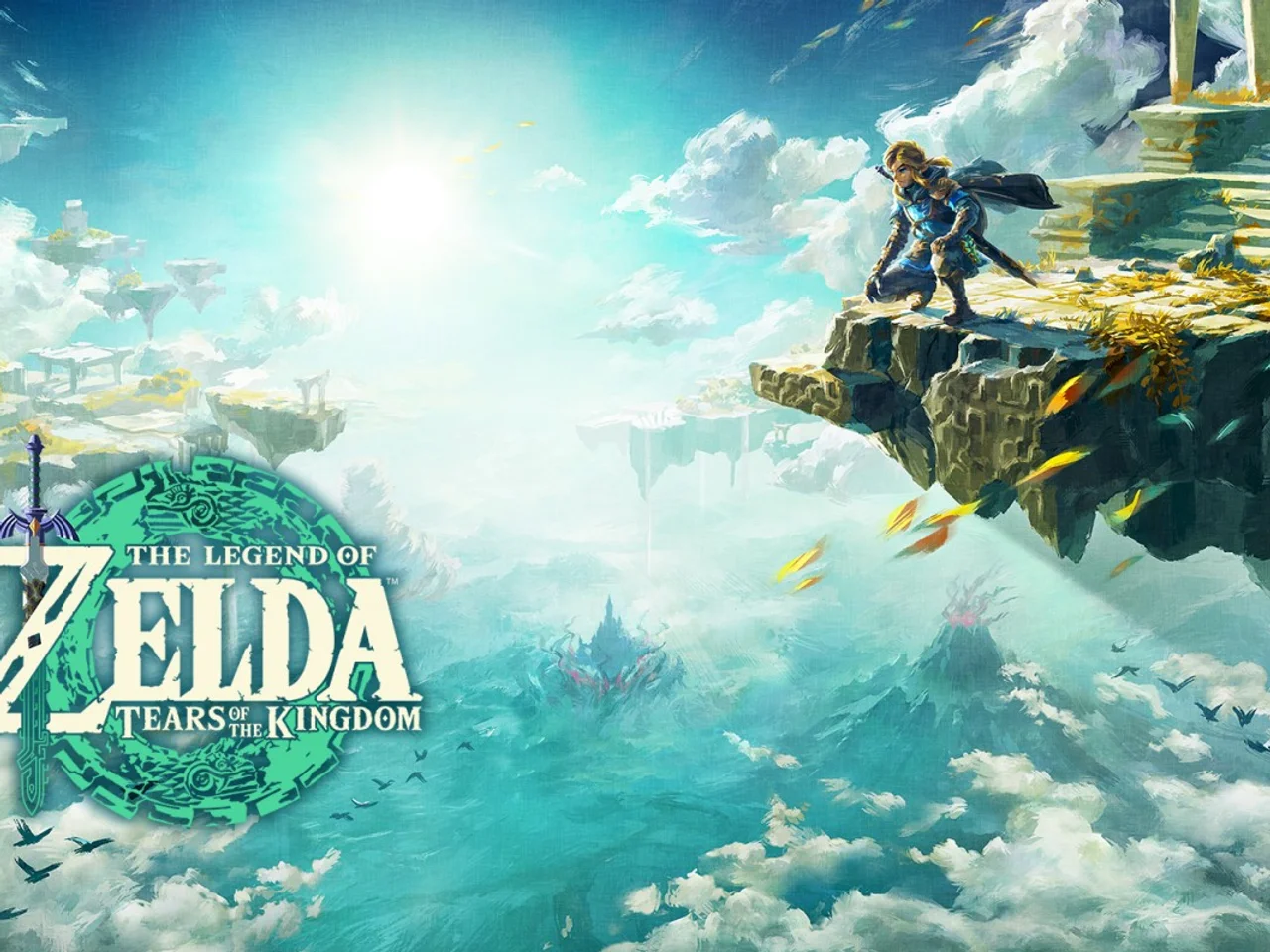
Nintendo returns to Breath of the Wild's Hyrule while radically changing what can be done inside it. Ultrahand, Fuse, Ascend and Recall turn adventure into a playground where experimentation often matters more than finding the intended answer.
The most important thing about Ultrahand is not that it lets Link build vehicles. It changes the status of obstacles. A gap, a slope or a suspended object is no longer merely a designer-authored problem with a disguised designer-authored answer. It is material.
A physics system willing to lose arguments
Tears of the Kingdom repeatedly allows the player to win disputes with its level design. Planks can become bridges, wheels can become crude machinery, fans can turn scrap into aircraft, and Recall can make a moving object retrace its history. Many solutions feel less like discovering a password and more like convincing several rules to cooperate.
That distinction is what separates the game from a construction gimmick. Its systems operate across shrines, combat, traversal and the open world rather than inside isolated building challenges.
Fuse gives loot a job
Weapon durability survives from Breath of the Wild, but Fuse changes the economy around it. Monster parts are no longer only ingredients or things to sell. A horn is effectively a weapon component waiting for a base, while environmental objects can turn otherwise disposable gear into specialized tools.
It gives combat rewards a satisfying mechanical loop. Kill something dangerous, recover a valuable part, and that part visibly changes the next weapon.
The interface is less elegant than the idea. Arrow attachments in particular can mean scrolling through an increasingly absurd inventory, and Tears of the Kingdom asks players to manage objects often enough for that friction to matter.
Hyrule is reused, not merely repeated
Returning to the same kingdom works because familiarity becomes part of the design. Surface landmarks have history. The sky changes how Link approaches them from above. The Depths create an inverted, hostile layer below them, initially turning exploration into navigation through darkness.
The Depths eventually reveal a more repetitive structure than Hyrule's surface. Enemy camps and rewards recur, and the thrill of mapping the darkness becomes more procedural. It is the clearest example of enormous scale producing thinner material at the edges.
Freedom can become its own exploit
The same tools that make the game exceptional can flatten parts of it. Once a highly efficient flying machine or traversal technique is understood, geography becomes negotiable. Some puzzles can be bypassed so aggressively that solving them as authored starts to feel voluntary.
Nintendo mostly accepts that cost. The game would be less interesting if every possible shortcut had been fenced off.
The rare sequel that changes the verbs
Major critics were unusually aligned. GameSpot emphasized open-ended design and player creativity; IGN described a sequel that transforms its predecessor's foundation; The Guardian highlighted the pleasure of discovering what the systems permit.
The familiar map can obscure how radical the change is. Tears of the Kingdom looks like Breath of the Wild from a distance. In the hands, it asks different questions.
Strengths
- Ultrahand and Fuse create an exceptionally broad problem-solving space
- Systemic physics that genuinely accommodates improvised solutions
- Exploration greatly expanded by the sky and Depths
- More authored dungeon-like challenges without abandoning freedom
- An unusually strong discovery-experiment-reward loop
Weaknesses
- Repetitive menu navigation, especially when attaching items to arrows
- The strongest tools can trivialize some traversal and puzzle challenges
- The Depths become more repetitive in structure and rewards over time
- Some old irritations, including weapon durability, remain despite Fuse
Tears of the Kingdom keeps some of Breath of the Wild's irritations and creates a few of its own, particularly an overworked inventory and systems powerful enough to bypass parts of the challenge. Those flaws barely dent an extraordinary piece of systemic game design. Few games hand over this many tools while remaining so good at surviving the player's ridiculous ideas.