
Review
Dead by Daylight Ten Years Later: The Multiplayer Slasher That Refuses to Die

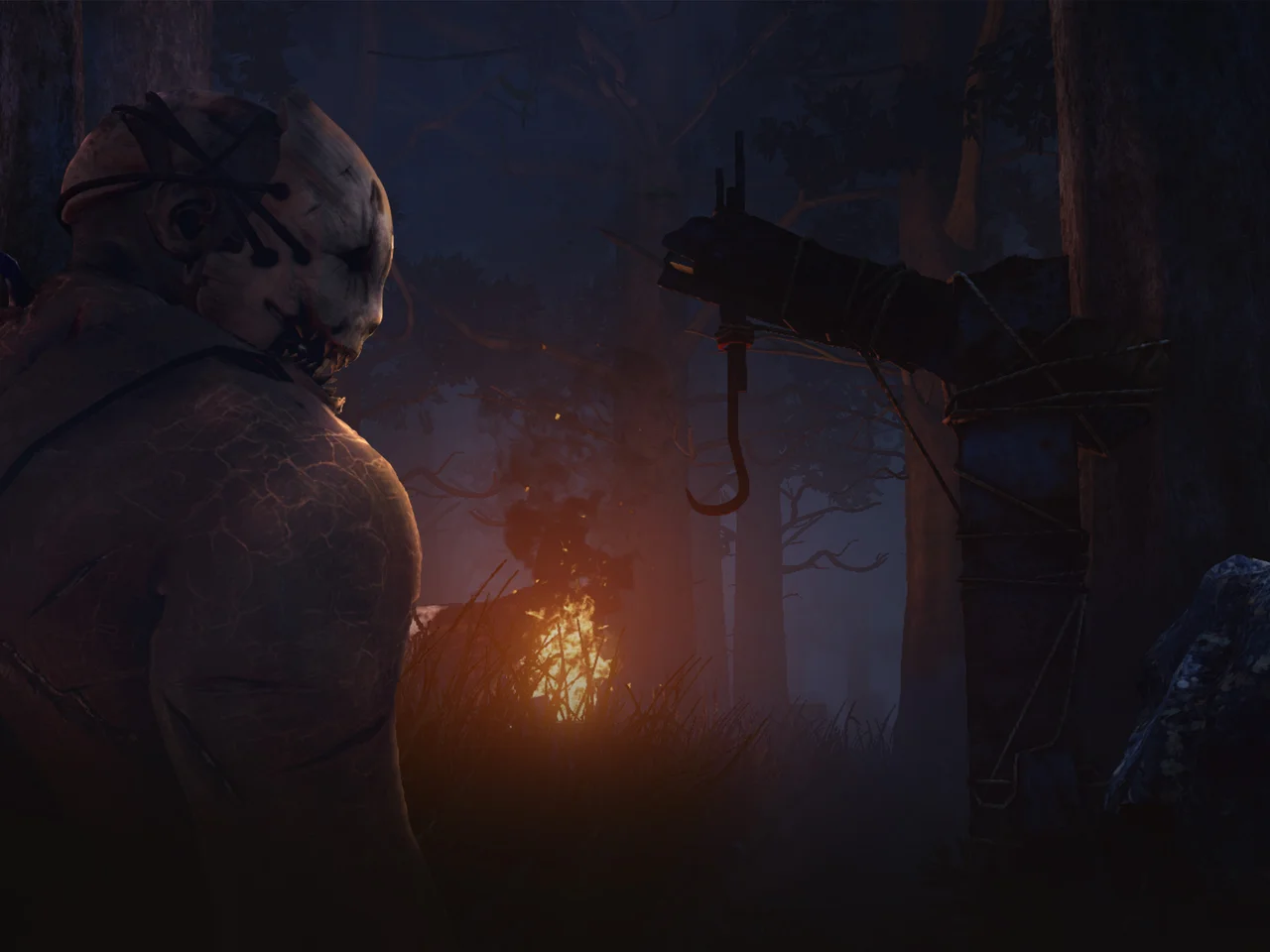
Beneath the generators and meat hooks, Dead by Daylight has grown into a remarkably deep game of prediction and counterplay. Its strongest moments now come less from raw fear than from reading another player, although that depth brings a heavy progression layer and an almost impossible balancing act.
A tiny ruleset with a huge skill ceiling
Dead by Daylight still starts with an almost comically straightforward objective. Four Survivors repair five generators and open an exit. One Killer tries to stop them, down them and put them on hooks. The remarkable part is how little the game needs to add before that simple setup turns into a competitive language of its own.
PC Gamer highlighted the mind games hidden inside high-level chases, and that remains the clearest explanation of the game's lasting appeal. A window is not merely an escape route. A pallet is not simply a temporary obstacle. Every piece of terrain becomes information: what the other player expects, which route they think is safe and whether a sudden change of direction can force an error.
The Killer roster keeps rewriting the chase
Behaviour entered its tenth-anniversary year with more than forty Killers and fifty Survivors. The raw quantity sounds excessive until the Killer side starts changing the rules of movement itself. Ranged attacks, teleportation, traps and other bespoke powers force Survivors to reconsider habits that work perfectly against another opponent.
That variety is why repetition rarely comes entirely from the objective structure. Generators are still generators. Hooks are still hooks. The opponent standing across the map can make familiar terrain behave differently.
Mastery comes at a cost
The horror does not survive knowledge untouched. Early matches can feel like frantic slasher scenes; veteran matches can resemble a competitive board state rendered in trees, windows and wooden pallets. GameSpot and PC Gamer both identified versions of that transformation in their later reviews. The fear becomes calculation.
Dead by Daylight benefits enormously from that transition because calculation gives it longevity. It also makes the onboarding problem worse. Years of perks, progression systems and accumulated strategy now sit between a beginner and the version of the game its longest-serving community actually plays.
Asymmetry never becomes tidy
Balance remains permanently awkward because the Survivor team itself is a variable. Four strangers with limited communication and four coordinated friends create very different matches. Then skill level, Killer selection, builds and map knowledge enter the equation.
No static balance sheet can make all of those conditions identical, and Dead by Daylight is arguably healthier when it stops pretending they are. Its best rounds are memorable because somebody misreads the situation, improvises, takes an unnecessary risk or turns an apparently solved chase into chaos.
Behaviour's 2026 anniversary plans make the long-term bet explicit: no clean sequel reset, but continued expansion of the existing foundation. After ten years, the foundation still deserves it.
Strengths
- Chases built around prediction, routing and mind games
- Two sides that genuinely play like different games
- An enormous roster of Killers, Survivors, powers and perks
- Simple match objectives hiding a considerable skill ceiling
Weaknesses
- System mastery gradually strips away much of the original fear
- Progression and build management can overwhelm newcomers
- Solo players, coordinated groups and veteran specialists create persistent balance tensions
- Optimal play can sometimes be less entertaining than the messy horror fantasy
Dead by Daylight has long since outgrown its clever asymmetric-horror pitch. It is now a five-player game of chases, feints and matchup knowledge with far more mechanical depth than its simple objectives suggest. Familiarity inevitably weakens the horror and the surrounding meta can become exhausting, but very few multiplayer games squeeze this many distinct situations out of such a compact ruleset.