
Review
Stellaris in 2026: Ten Years of Systems, and Still One More Galaxy to Start

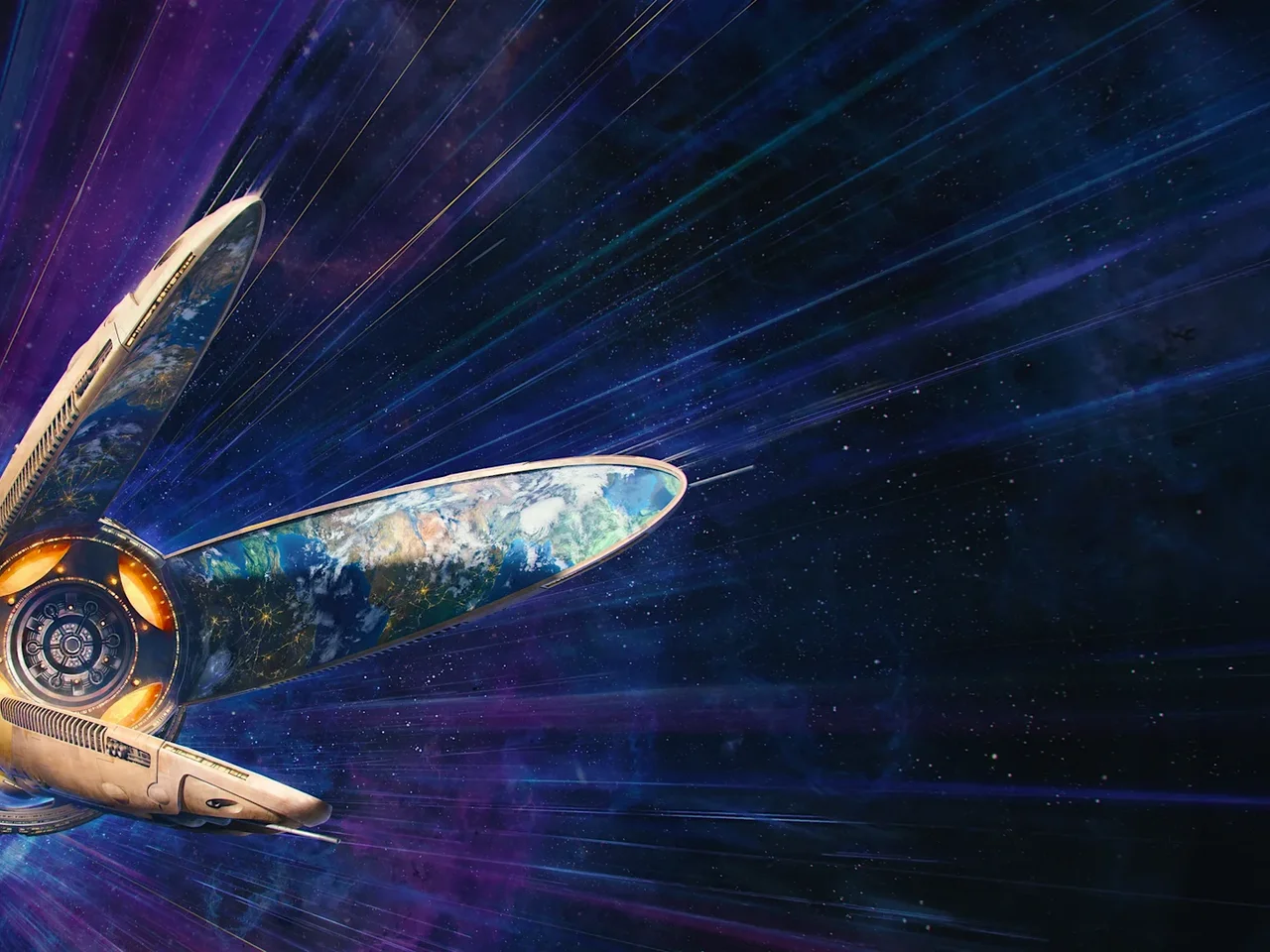
The Stellaris of 2026 barely resembles the game reviewed in 2016. Diplomacy, vassalage, crises, ascension systems, population reworks, nomadic empires and dozens of additional mechanics have filled many of the original game's empty stretches. The price is intimidating complexity, but its ability to turn a custom empire into a unique campaign remains exceptional.
The best moment is still when the map means almost nothing
PC Gamer and Game Informer agreed on Stellaris' central strength back in 2016: its opening. One known star, a few science vessels and a galaxy filled with anomalies were enough to create a genuine feeling of entering the unknown.
Ten years later, that phase has lost remarkably little. Many systems have grown around it, but sending a scientist into an unsurveyed system remains more exciting than numerous mechanics added years later.
Procedural generation works because it is constantly interrupted by authored fragments. A small anomaly can become a technology, a character, a disaster or simply the first memorable anecdote of an empire that did not exist twenty minutes earlier.
The empty midgame criticized in 2016 barely resembles the modern game
PC Gamer originally identified a significant loss of momentum once exploration slowed. Game Informer similarly found the galaxy less compelling after borders hardened and conquest became the dominant activity.
Modern Stellaris demonstrates how much changed. Galactic institutions, vassals, archaeology, enclaves, councils, espionage, midgame crises, megastructures, ascension paths and event chains create far more activity between wars.
Quiet stretches still exist. A stable diplomatic bloc may leave players accelerating through uneventful years. The difference is that emptiness is no longer the defining structural problem.
Building an empire remains more interesting than discovering one optimal build
Stellaris is as much strategic role-playing as conventional 4X. Ethics, civics, origins, species traits and government structures allow a campaign to begin with an idea rather than a collection of numerical bonuses.
PC Gamer's tenth-anniversary retrospective identifies this support for different player fantasies as one of the foundations of its longevity. A fungal hive, isolationist machine state or pacifist trading bureaucracy can genuinely operate under different constraints.
DLC has massively expanded that variety. It has also made the distinction between the base game and the complete experience increasingly difficult to understand.
Nomads finally removes borders from the equation
The June 2026 Nomads expansion is perhaps the clearest recent example of Stellaris' structural flexibility. Nomadic civilizations do not play a conventional territorial game. They inhabit moving Arkships, establish Waystations and gather resources while traveling through other empires' space.
PC Gamer responds strongly to the new fantasy and narrative origins such as The Sacred Path and Forever Cruise, while criticizing Waylines and Operational Reserves for becoming awkward or poorly communicated.
The larger achievement is difficult to dismiss. Ten years after release, Stellaris can remove a rule that once appeared fundamental to its genre and still produce a recognizable campaign.
More possibilities also mean more things to forget
The modern problem is accumulation. Even PC Gamer's 2026 anniversary feature notes how intimidating the game has become to return to after time away.
The developers acknowledge the same transition. Stellaris started as one of Paradox's more approachable grand strategy titles. It now carries ten years of interfaces, exceptions and interconnected systems.
A new player can ignore much of that depth. The interface is not always good at explaining which depth can safely be ignored.
A forgettable campaign can consume fifty hours; the next can justify another hundred
That variability helps explain the game's long-term audience. Steam still shows very positive English-language lifetime reviews in September 2026, even while more recent reactions are noticeably cooler after several disruptive update cycles.
Stellaris does not provide the tactical precision of an RTS. It provides something else: the possibility that a minor diplomatic choice in 2240 becomes the reason for a galactic war a century later.
That ability has aged remarkably well.
Strengths
- Extremely flexible empire creation supporting radically different playstyles
- Exploration, anomalies and first contact remain among the genre's strongest experiences
- Campaigns constantly generate memorable emergent stories
- Diplomacy, federations, vassals, crises and ascension have substantially enriched mid and late game
- Semi-random research still forces adaptation instead of rigid build orders
- Nomads proves the game can still challenge its own fundamental rules after ten years
Weaknesses
- Ten years of additions have made onboarding considerably less approachable
- Some mechanics overlap or are explained across different interfaces
- Space combat remains largely decided by preparation, economy and fleet strength beforehand
- Micromanagement can become heavy across very large empires
- The cumulative cost of the DLC catalog is substantial
- New ideas sometimes arrive before older systems are perfectly balanced
Stellaris has gradually become a science-fiction strategy platform rather than merely a 4X. Its best mechanic is still the one present at launch: create a civilization, enter the unknown and watch decisions, events and neighbors transform the original idea. Ten years of updates have given far more substance to the mid and late game that early reviews criticized, while Nomads proves in 2026 that Paradox can still challenge something as fundamental as territorial ownership. That accumulation has a cost: crowded interfaces, opaque interactions and an enormous amount of knowledge required to separate crucial systems from peripheral ones. The complete DLC ecosystem is also extremely expensive. Even with those problems, few strategy games produce campaigns remembered so vividly for what actually happened inside them.