
News News Official
Fallosophy is out, and two flipper buttons are all you get for the climb
Fallosophy has no interest in making pinball comfortable. There is no score to chase, no ball saver waiting underneath a mistake and no upgrade tree promising that gravity will eventually become less rude. Reliable Plumbing Services released the game on Steam on September 25, asking players to move through centuries of Western philosophy with a ball, two flipper controls and the knowledge that a bad fall can erase a great deal of climbing.
 By Kader Fallosophy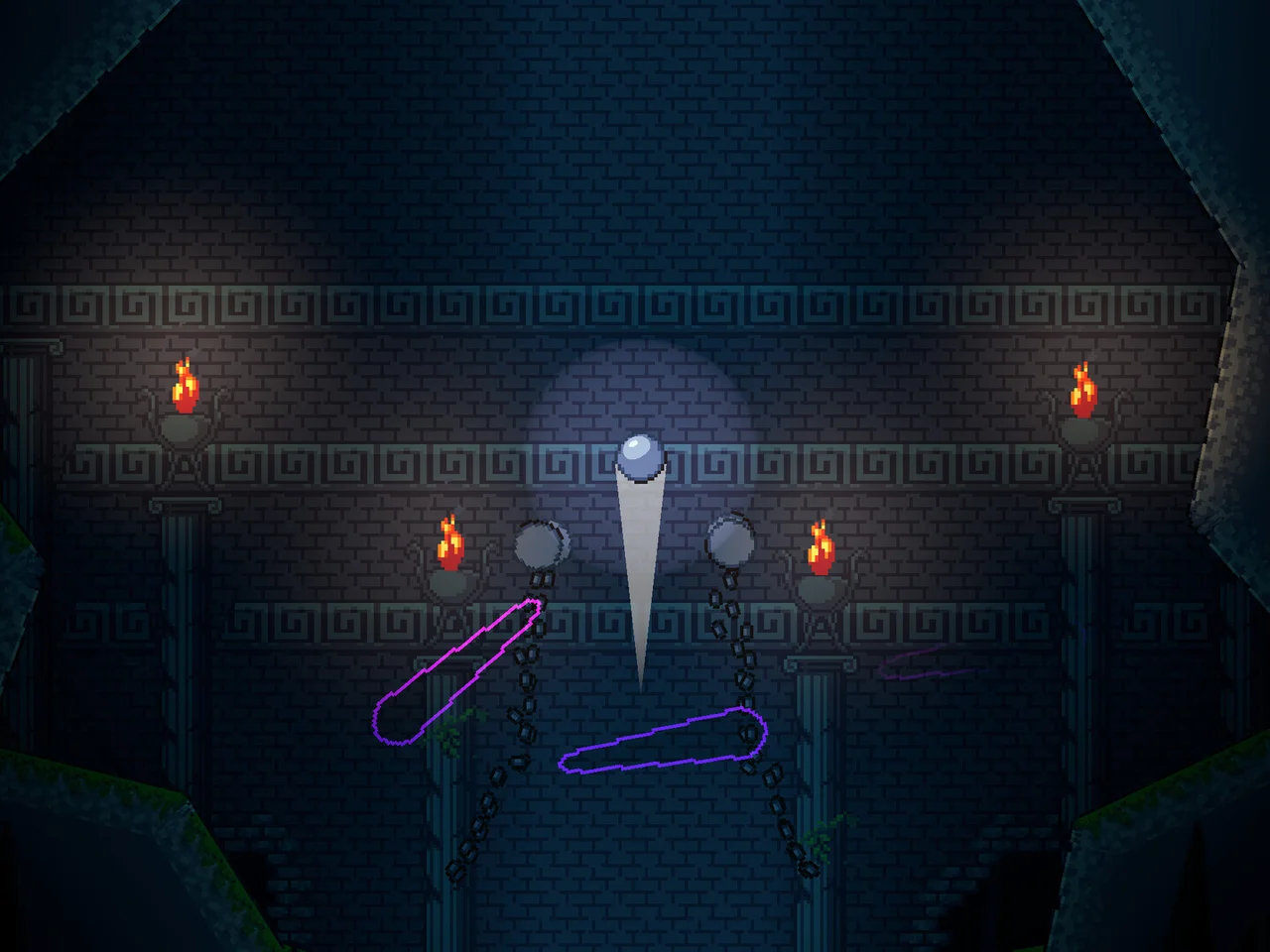
The full game is now available for Windows. Steam currently lists a 10% introductory discount at $9.99 in the US store through October 9, while the free demo released in March remains downloadable.
Baetyl, described as a lone spark of thought, is the object being sent upward. Blue and orange mechanisms respond to separate controls, and learning how flippers, plungers, rebounds and momentum interact is effectively the game's progression system. There are only two gameplay buttons. Knowing what to do with them is the less minimalist part.
Failure is allowed to stay failed
Reliable Plumbing Services is unusually explicit about what Fallosophy refuses to provide. It is not structured as a Metroidvania, so players do not unlock traversal abilities and return to previous areas. There are no combat encounters, no power upgrades and no shortcut to enlightenment.
It is not conventional score-driven pinball either. The objective is upward movement, and falling means physically losing the height already gained. The Steam description warns that a single mistake can cost minutes or even hours of progress.
That makes techniques such as cradling the ball, judging rebounds and catching the edge of a flipper more than arcade flourishes. They are the vocabulary required to stay alive in a game where the punishment for misunderstanding momentum is simply to demonstrate the lesson again from somewhere much lower.
The level order is an intellectual timeline
The climb begins among imagery inspired by Classical Antiquity and moves through Medieval philosophy toward modern thought and beyond. Fallosophy uses that historical progression as its physical geography rather than placing philosophical references on top of an unrelated platformer.
The opening invokes Plato's cave as Baetyl moves from darkness toward light. A figure calling itself the Philosopher King provides guidance from below. The game's own description makes clear that this relationship changes during the ascent: his apparent wisdom increasingly begins to resemble control.
The environment carries some of that argument without stopping the climb for a lecture. Architecture changes with the eras, doctrines become visual material and the repeated movement from ignorance toward understanding is represented by the most literal metaphor available: go up.
A demo, ten thousand wishlists and a second player
The public testing period began well before launch. Fallosophy's Steam demo arrived on March 5 and covers the opening climb from Classical Antiquity into the early Medieval region. Reliable Plumbing Services said more than 1,000 people played it on its first day, followed immediately by a patch addressing early bugs including a dialogue-parser problem affecting French and several other Windows language configurations.
By May 18, the studio said Fallosophy had passed 10,000 Steam wishlists. Its June appearance at the Women-Led Games Showcase then brought two announcements: a Q3 release window and local co-op.
That multiplayer mode divides the machine rather neatly. One player operates the blue flippers and contraptions while the other gets the orange set. A game already based on precision and patience can therefore outsource half of its mistakes to someone sitting beside you.
The date was narrowed to September 25 in an official Steam announcement on September 5. Steam now lists the game as released on that date, with single-player, shared/split-screen co-op and Remote Play Together support.
Steam first, Switch later
The climb is also heading to another platform. Fallosophy's official site lists a Nintendo Switch version for Q4 2026. A specific Switch release date has not yet been announced.
The Steam edition supports multiple interface languages including English, French, German, Italian, Japanese, Korean, Simplified Chinese and Irish. Its published PC requirements are deliberately modest, with 500 MB of storage and Intel HD 4000-class graphics listed as the minimum baseline.
For anyone uncertain whether losing an hour of progress to one badly judged bounce sounds philosophical or simply infuriating, the free Steam demo remains the useful part of the proposition. Everyone else can now discover how far two buttons can carry a pinball through human thought before gravity provides its counterargument.